Hazard vs. Risk: What’s the Difference in Construction?
A hazard tells you what can cause harm. Risk tells you how likely and severe that harm could be under actual site conditions. Here’s how to identify both and put the right controls to work.

A hazard is something with the potential to cause harm. Risk describes how likely that harm is and how severe the outcome could be in the conditions you actually have. The distinction matters on a construction site: identifying a hazard tells you what can hurt someone; assessing risk helps you decide what must be controlled first. This guide explains hazard vs. risk, gives construction examples, and shows how to turn a job hazard analysis into action.
What is a hazard in construction?
A hazard is a source, situation, or activity that can cause injury, illness, property damage, or another loss. Hazards exist whether or not an incident has happened. An unguarded edge is a fall hazard. A damaged extension cord is an electrical hazard. Silica-containing dust is a health hazard. The hazard is the condition or source—not the probability that someone will be harmed by it.
Construction hazards change as work progresses. A safe area in the morning can become a struck-by exposure after material delivery, an electrical exposure when temporary power is installed, or a caught-between exposure when mobile equipment enters the zone. Hazard identification therefore has to be continuous, not a form completed once at mobilization.
Common construction hazard categories
- Falls from elevations or into openings
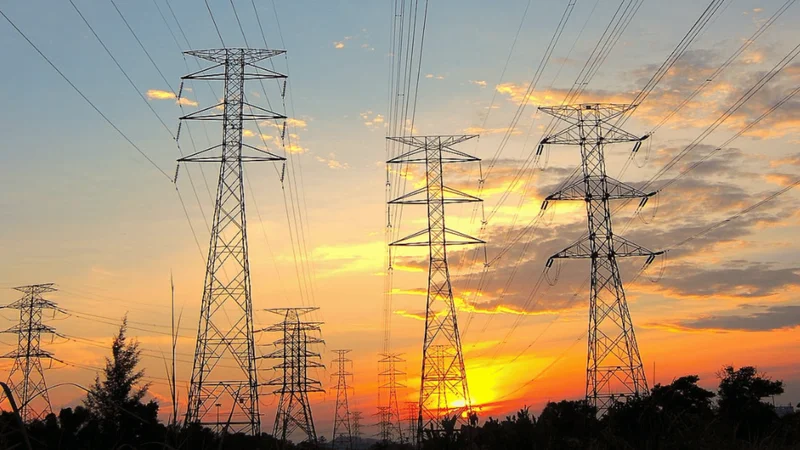
- Contact with energized parts, damaged cords, or overhead power lines
- Struck-by hazards from vehicles, suspended loads, tools, and materials
- Caught-in or caught-between hazards involving equipment, trenches, or moving parts
- Chemical and dust exposure, including silica and welding fumes
- Noise, heat, cold, ergonomic strain, fire, and confined spaces
What is risk in construction?
Risk is the level of concern created when a hazard meets real exposure. A practical assessment considers the likelihood of an incident, the severity of the possible outcome, how many people may be exposed, and how often or how long exposure occurs. OSHA’s hazard-identification guidance tells employers to consider severity, likelihood, and the number of workers who may be exposed when prioritizing controls.
Risk is not a fixed property of the hazard. The same open edge presents a different risk when it is protected by a compliant guardrail than when an unprotected crew works beside it in poor weather. Controls change exposure and likelihood; the potential consequence may remain severe. That is why a low current risk rating never justifies ignoring a serious recognized hazard.
Examples of construction risk
- A low-use scaffold with a complete guardrail system may present less fall risk than an unprotected leading edge used all shift.
- A locked, de-energized, and verified circuit presents a different risk than exposed energized work.
- A reversing loader in a separated equipment zone presents less struck-by risk than the same loader moving through a congested pedestrian route.
- A small spill of a known product may be manageable with routine controls; an unknown airborne release may require evacuation and specialist response.
Hazard vs. risk: the practical difference
Use two questions. First: What can cause harm? That identifies the hazard. Second: Given the task, people, environment, and controls, how likely is harm and how serious could it be? That assesses the risk. Keep the two steps separate so a familiar task or a low score does not make the underlying hazard disappear.
Many teams use a risk matrix that combines likelihood and severity into low, medium, high, or critical ratings. A matrix is a prioritization aid, not a substitute for judgment or compliance. Define the rating criteria, train people to use them consistently, and escalate any uncertainty involving fatal or life-altering potential.
How to complete a job hazard analysis
A job hazard analysis (JHA), also called a job safety analysis (JSA) by many contractors, breaks a job into steps, identifies the hazards in each step, and assigns controls. OSHA provides a current JHA resource guide, but there is no single form that fits every trade and task. On Canadian jobsites, the FLHA field guide shows how crews apply that task-level assessment at the workface before work begins.
- Define the task, location, crew, equipment, materials, and changing conditions.
- Break the task into observable steps without making the list so detailed that it becomes unusable.
- Identify energy sources, exposures, line-of-fire conditions, and foreseeable failure modes at each step.
- Assess who can be exposed, along with potential severity, likelihood, frequency, and duration.
- Select controls, name the competent or qualified people required, and assign an owner.
- Brief the crew before work, capture questions, and revise the JHA when scope, conditions, or methods change.
Choose controls in the right order
Do not jump straight to PPE. OSHA’s hazard-prevention guidance follows the hierarchy of controls: eliminate the hazard where feasible, substitute a safer method or material, use engineering controls, add administrative or work-practice controls, and use PPE for remaining exposure. More than one layer is often necessary.
- Eliminate or substitute. Prefabricate at ground level instead of working at height, or use a less hazardous product where feasible.
- Engineer the exposure out. Install guardrails, machine guards, ventilation, barriers, or equipment separation.
- Control the work. Use permits, access rules, spotters, sequencing, training, and supervision.
- Protect the worker. Select task-appropriate PPE, confirm fit and condition, and train workers in its limits.
Turn assessments into a working record
A useful assessment connects the field to follow-through. Record the task and site, hazards, initial risk, selected controls, residual risk, responsible person, crew acknowledgement, and any corrective actions. When a near miss, inspection, or scope change reveals something new, update the assessment instead of leaving a superseded form in circulation. SALUS digital forms, inspections, and corrective actions keep that loop visible across sites.
US and Canadian requirements are not interchangeable
In the United States, federal OSHA standards and the General Duty Clause create hazard-specific duties, while state-plan states may impose additional requirements. OSHA recommends systematic hazard identification and JHAs, but the exact document, cadence, and retention rule depend on the hazard, standard, state, contract, and company program. Verify the rules that apply to the work.
In Canada, most construction workplaces are regulated provincially or territorially, not by US OSHA. Federal rules apply only to federally regulated workplaces. Use the applicable provincial or territorial authority, workers’ compensation requirements, and site rules; the Government of Canada provides a jurisdiction overview, and CCOHS offers general risk-assessment guidance.