

Find the risk. Close the loop. Prove it.
Construction risk assessment software should do more than store an FLHA or JHA. SALUS connects hazard registers, inspections, incidents, and corrective actions; assigns every follow-up to a named owner; and preserves proof of closure while Rosie watches every open loop.
Operational safety isn't more safety — it's the same protection with the risk closed faster, easier, and provable.
Live board
Open risk · Portfolio · 14 sites
Standards deployed everywhere at once
Field intel multiplied
Corrective actions owned by named people
Rosie watches every open loop
Trends visible before incidents
Growth makes risk harder to see, not easier.
An FLHA, JHA, or isolated hazard register captures one moment. The field reports and hears nothing back, the office assigns and can't verify, and every new worksite makes the risk picture harder to connect across inspections, incidents, corrective actions, and proof.
Turn scattered hazards into a closed-loop system.
Tap a signal to see the loop close — every action traces to the form, inspection, or incident that created it.
Risk isn't controlled by reading one report at a time — it's controlled by closing every loop.
See where risk gets controlledWhere risk gets controlled.
Your best practice, on every job.
Procedures, forms, and controls deploy company-wide in one action — your newest apprentice gets the controls your best foreman would write.
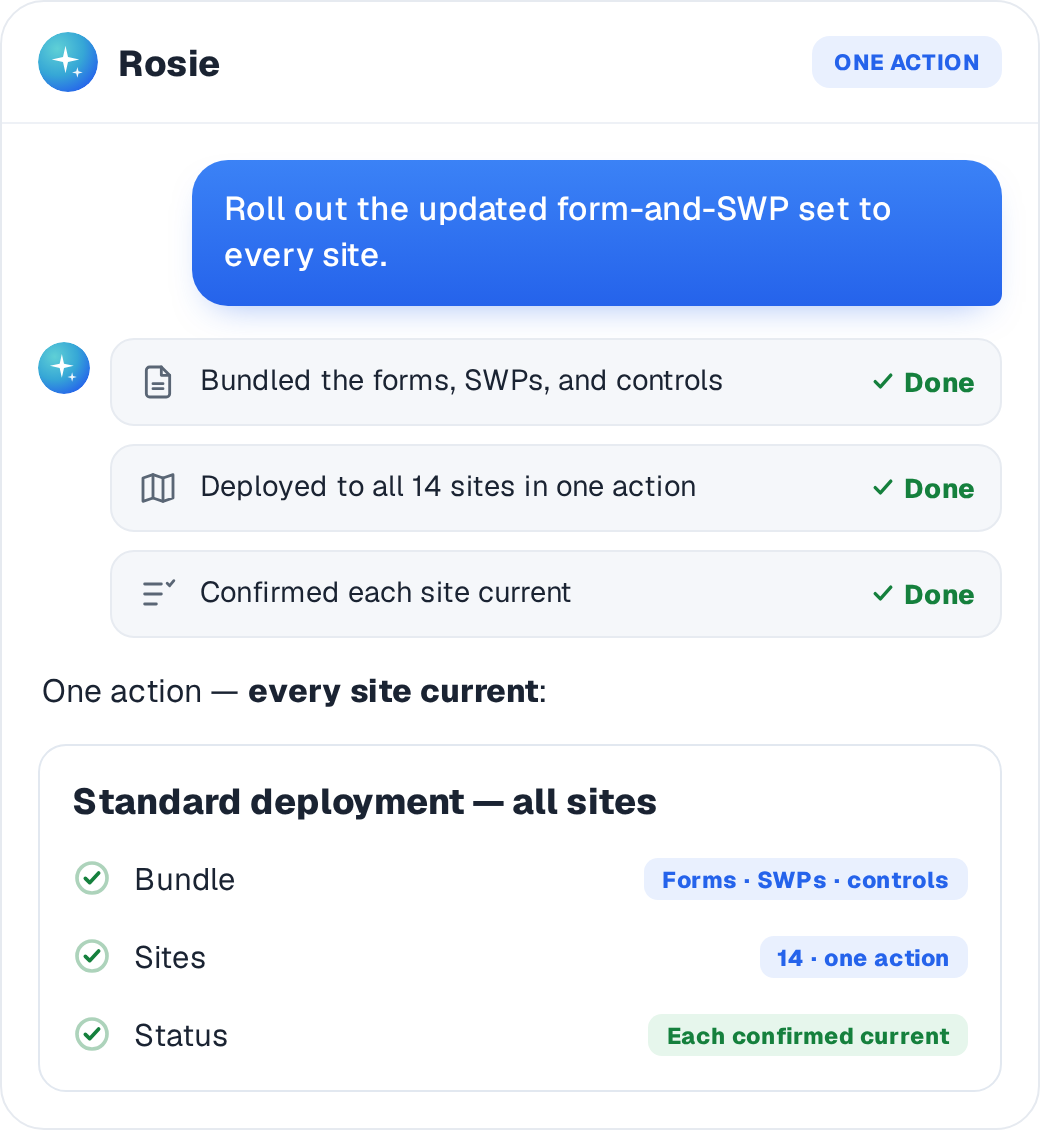
Forms & SWPs
Procedures, forms, and controls push company-wide in a single action — no site rebuilds the standard.
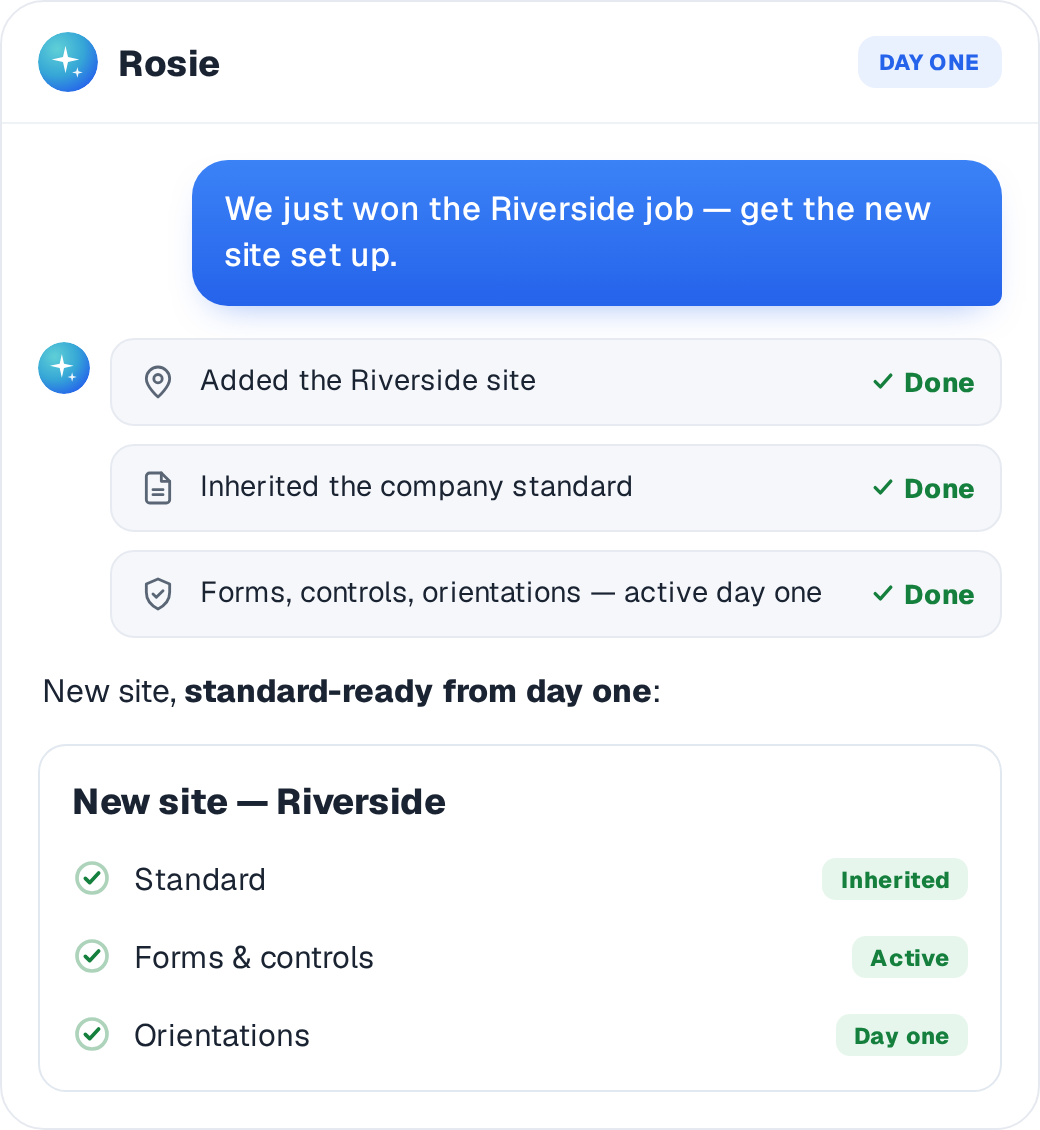
New sites
A new site inherits the full standard from day one — no weeks of setup, no gaps while it spins up.
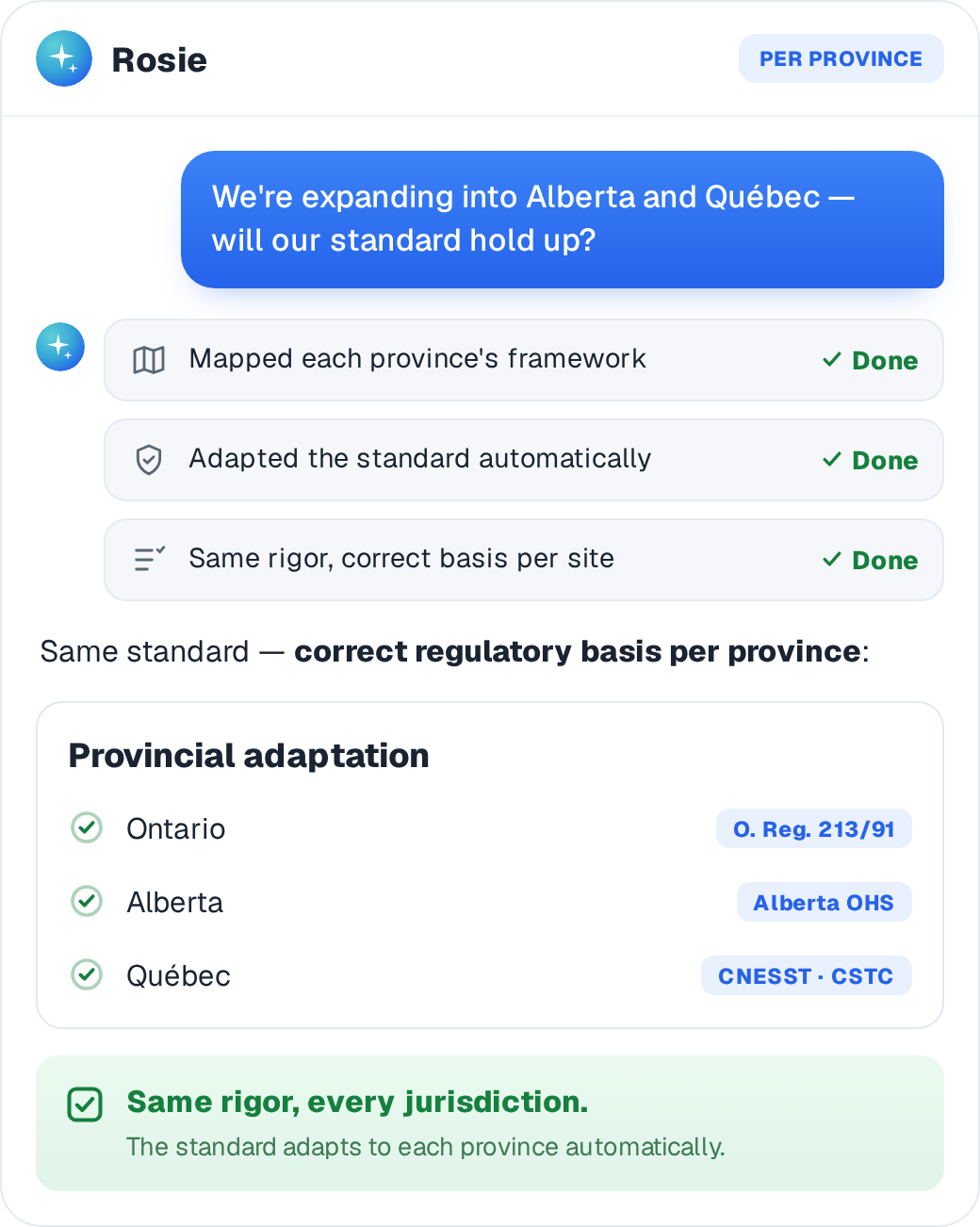
Provinces
Ontario, Alberta, BC, and Québec differences are handled centrally, so every site runs the same rigor under the right framework.
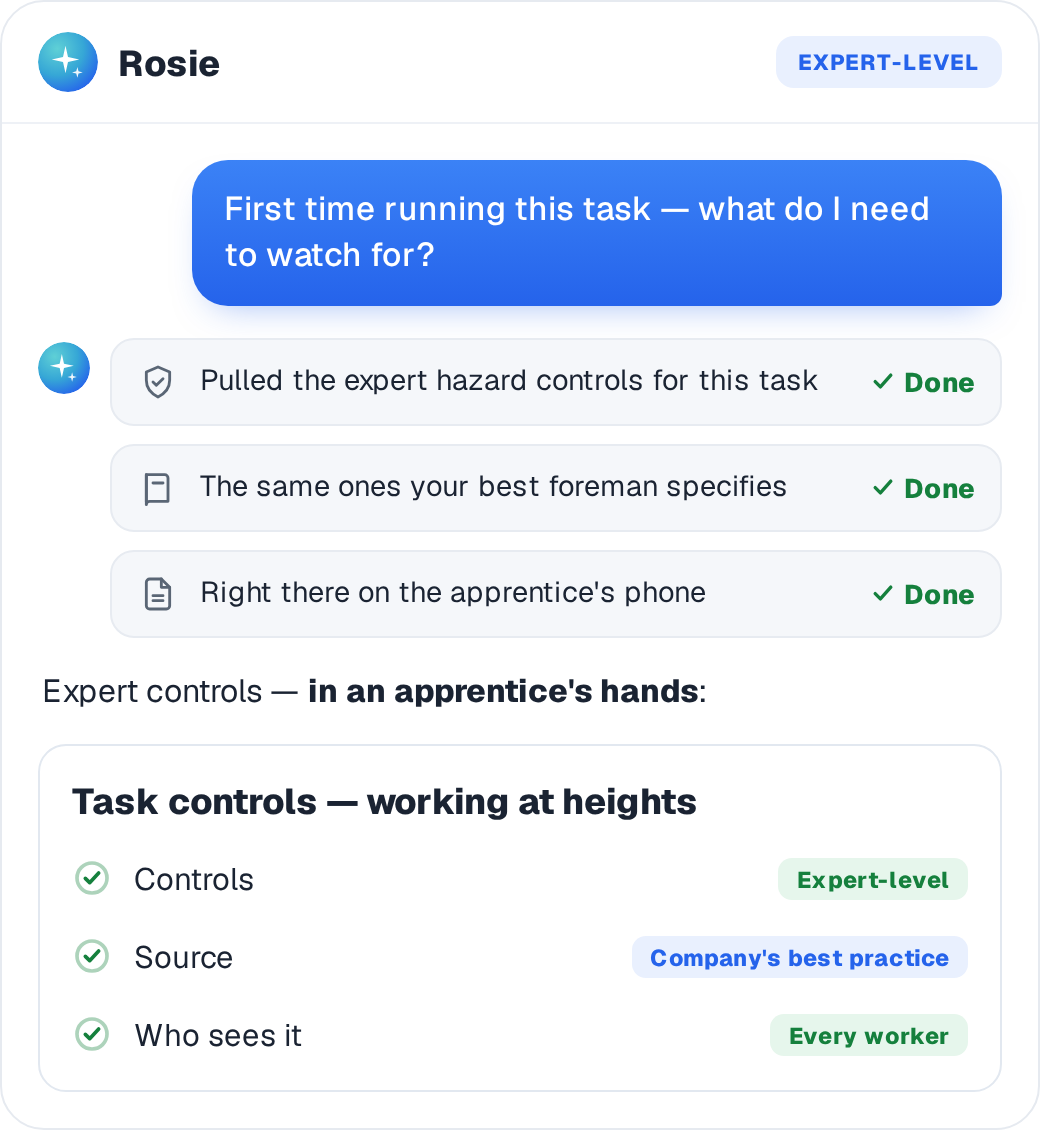
Apprentices
Your newest apprentice works from the controls your best foreman would write — best practice, not individual memory.
Adoption is the risk multiplier.
QR access and Rosie capture mean crews actually submit hazards, near-misses, and observations — more and better data is the leading indicator.
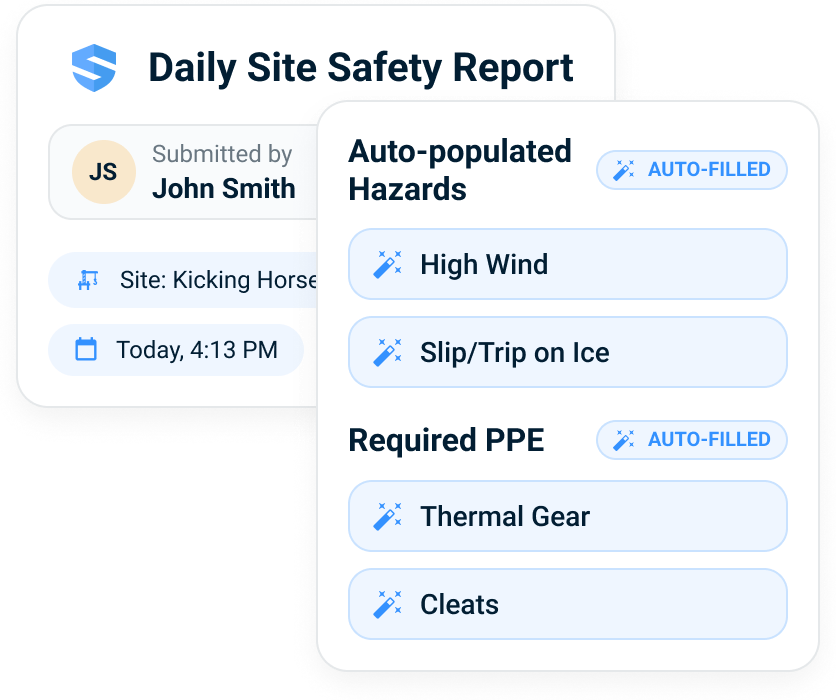
Near-misses
Captured in ~90 seconds from any phone — the leading indicator crews finally have time to report.
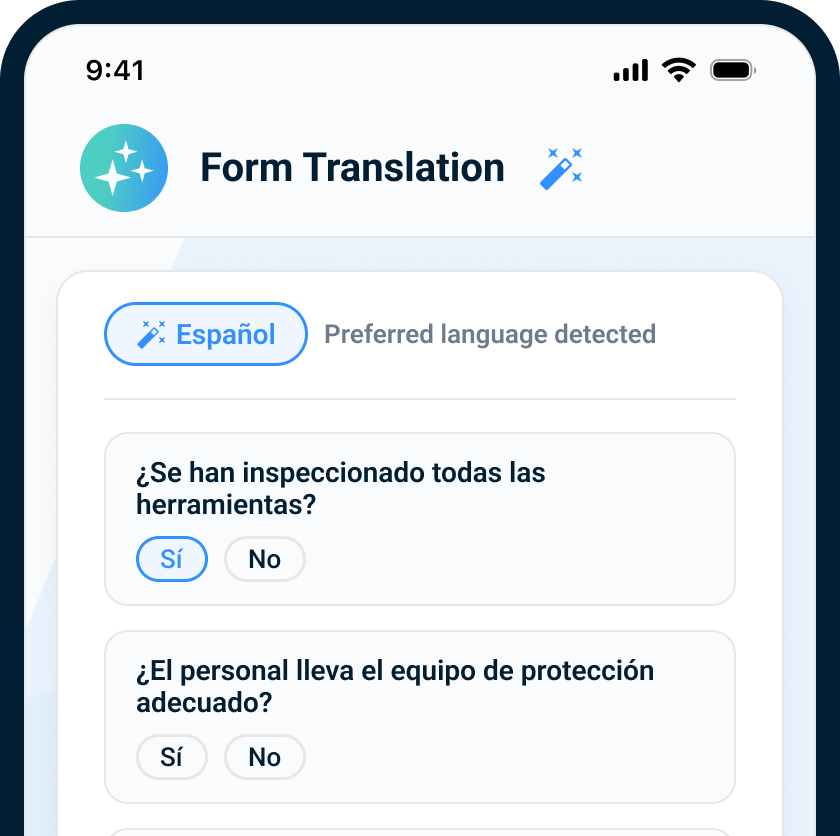
Observations
Submitted in any language; Rosie translates so the office reads one clean record.
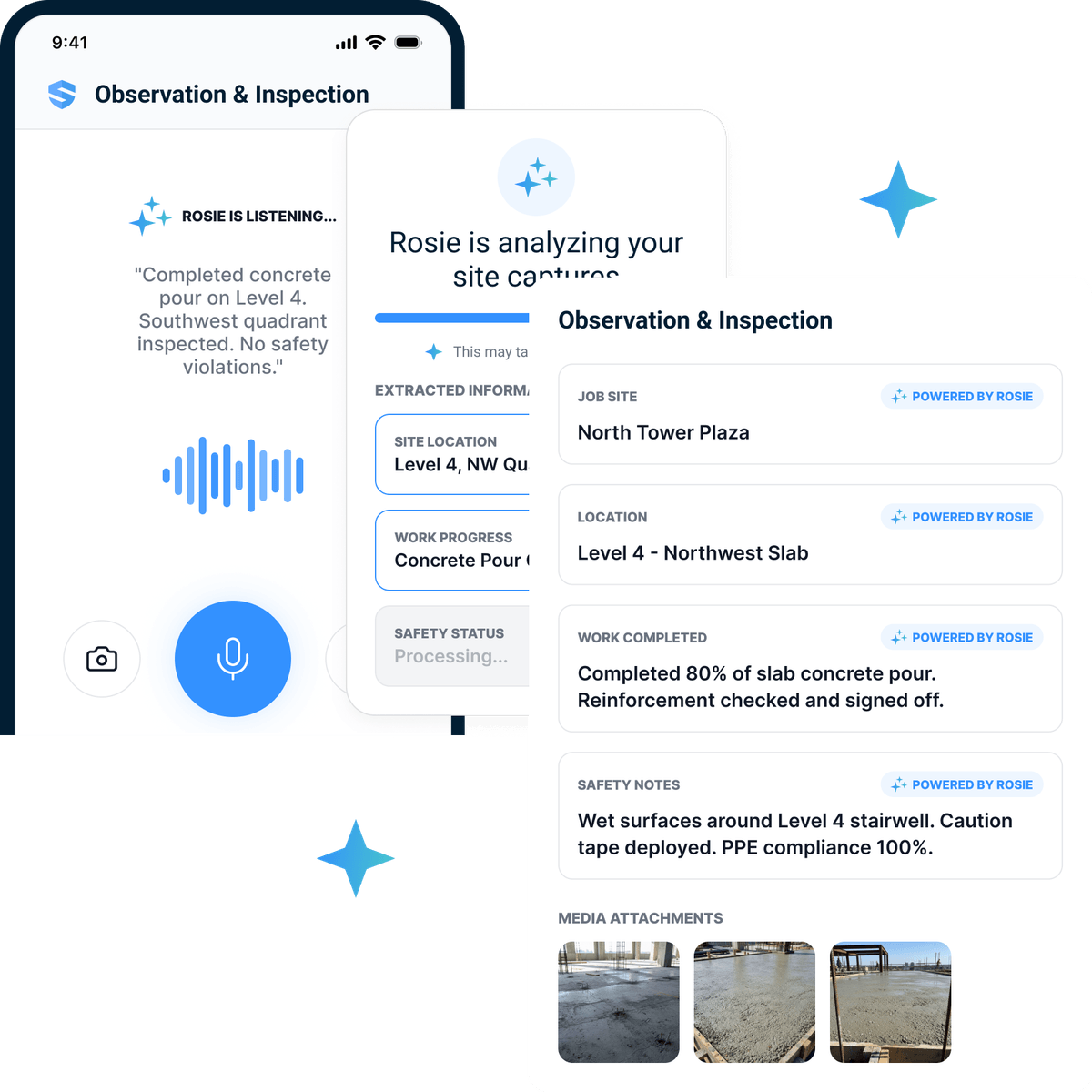
Inspections
Spoken on the walk; Rosie structures the findings and opens the corrective actions.
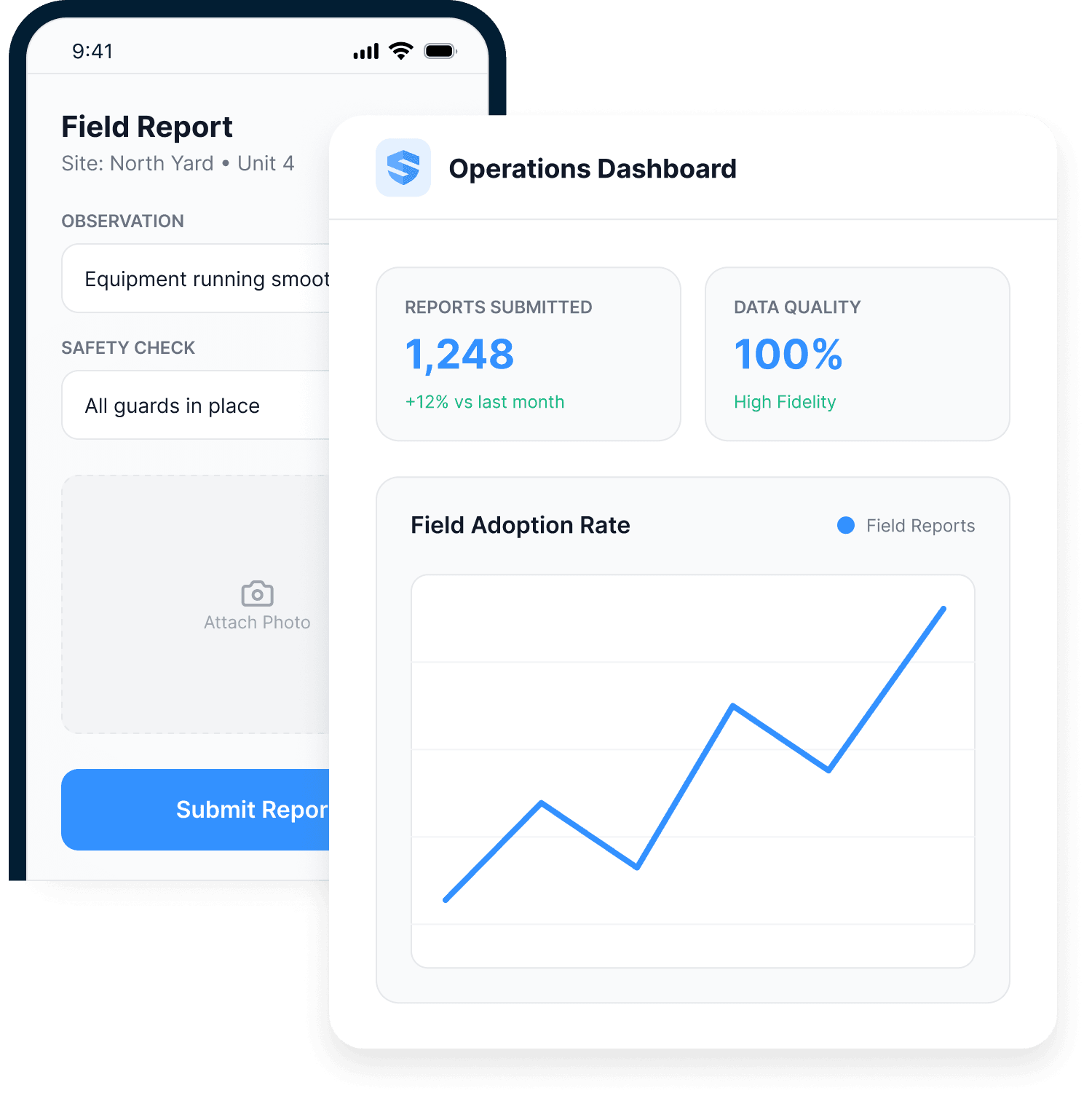
Adoption
Adoption rises from 40% to 80% (Aquicon) — more and better data is the leading indicator.
The loop stays open until a specific human closes it.
Corrective actions carry a person's name, a due date, and photo-verified closure — across your whole portfolio, internal and sub.
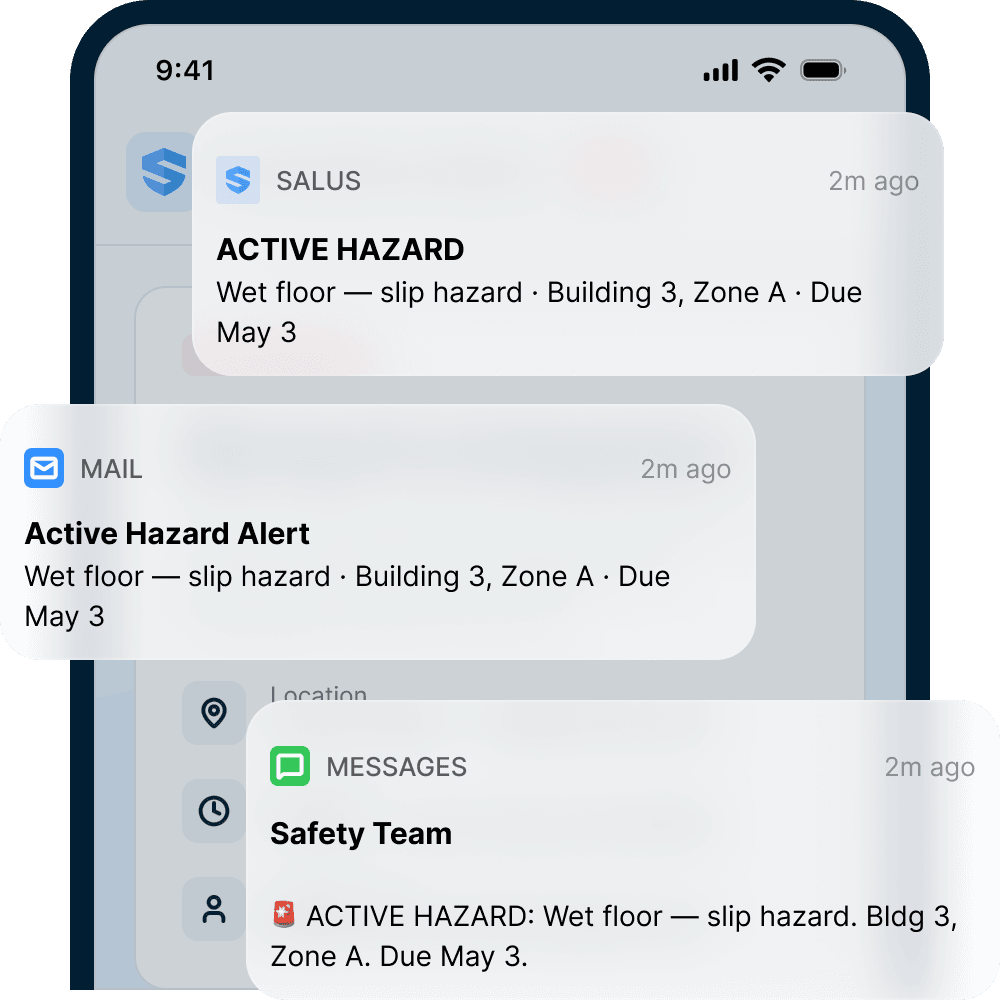
Assigned to people
Every corrective action carries a person's name and a due date — not “the company,” a human.
Tracked to close
Viewed, dispatched, and closed — each transition logged with a timestamp.
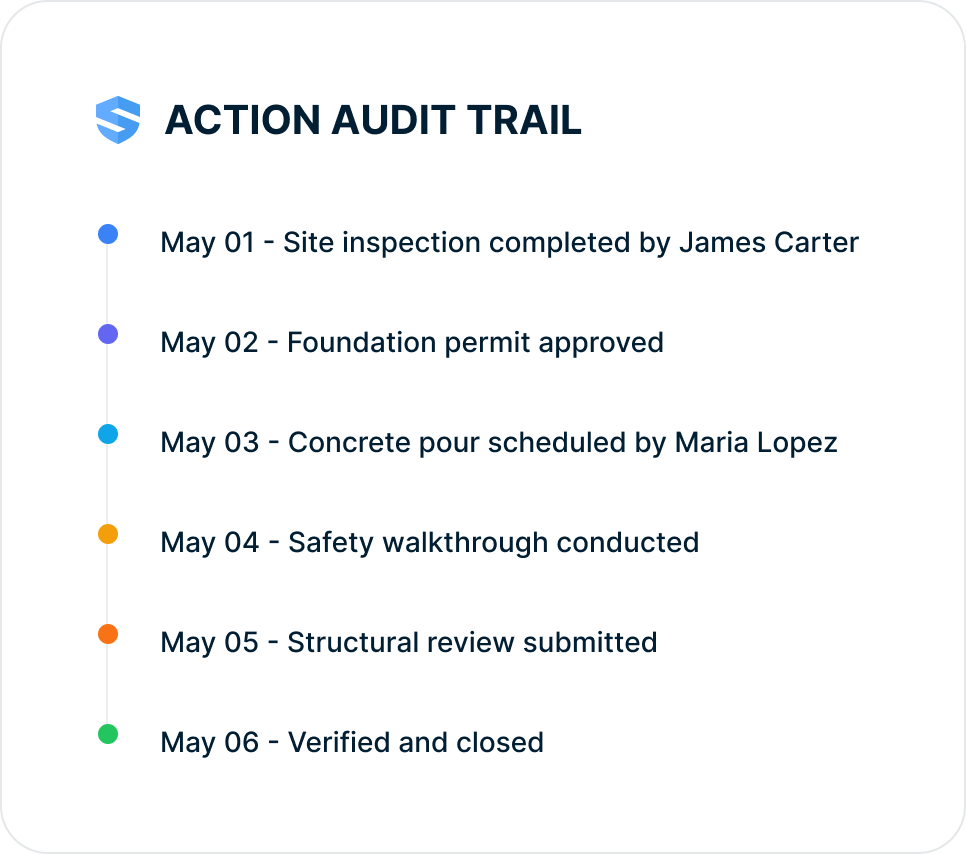
Photo-verified
Closure requires photo evidence — the fix is shown, not asserted.
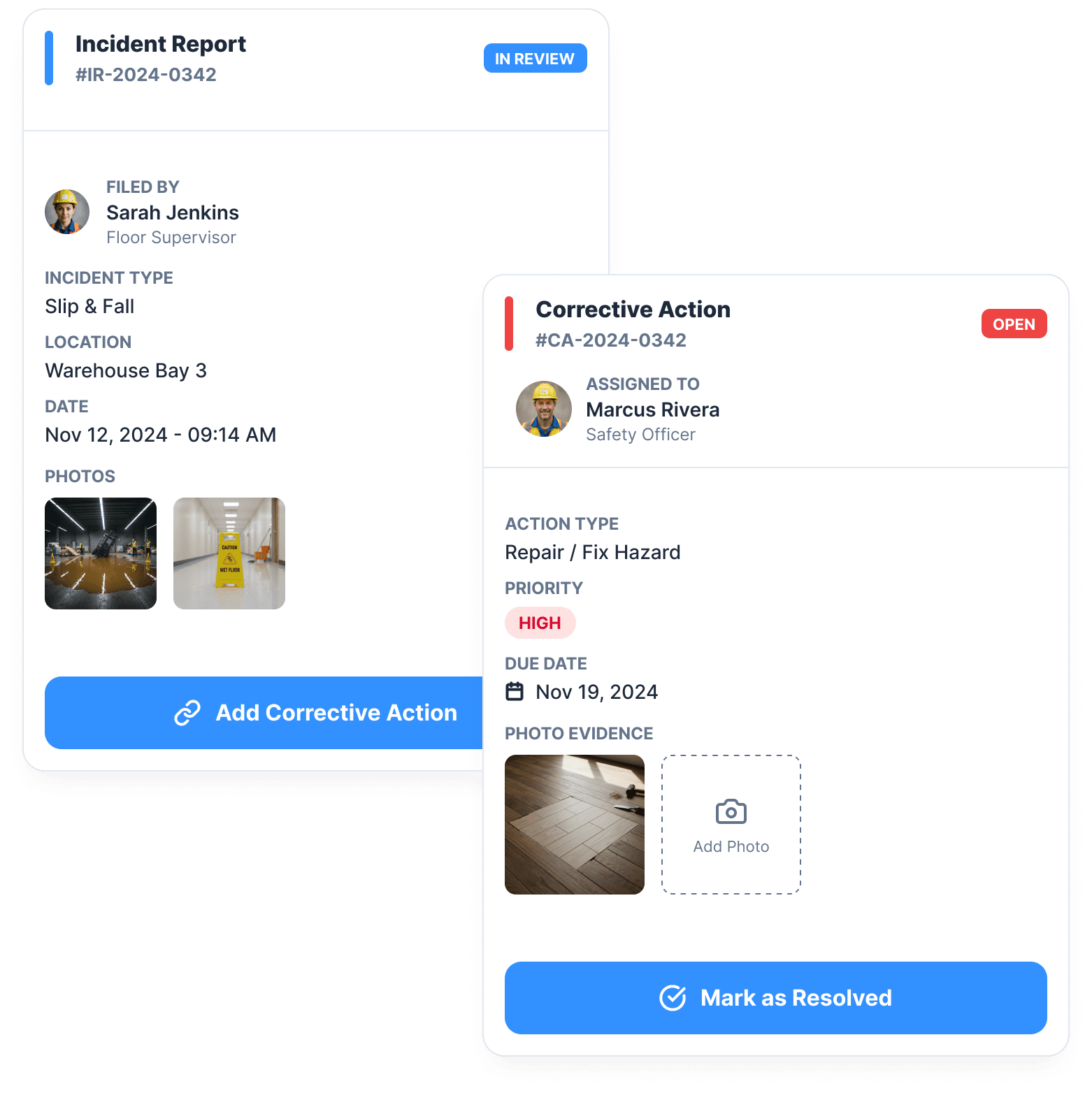
Escalation
Overdue items escalate automatically and surface by trade, so the lagging sub is visible.
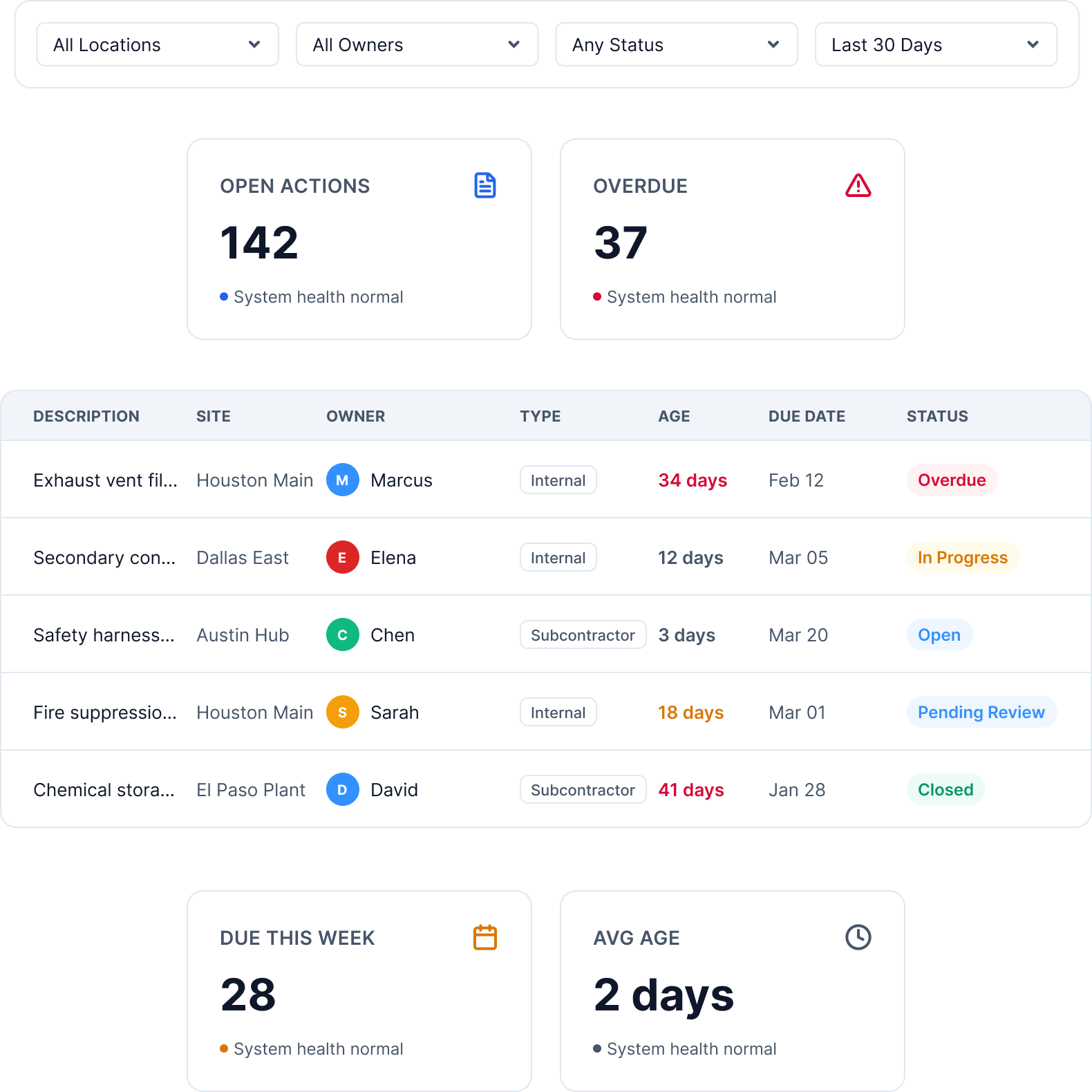
The patterns become visible before the first incident.
Rosie correlates any field data point against any other — form completion vs. incident rate, training vs. near-misses — across the portfolio.
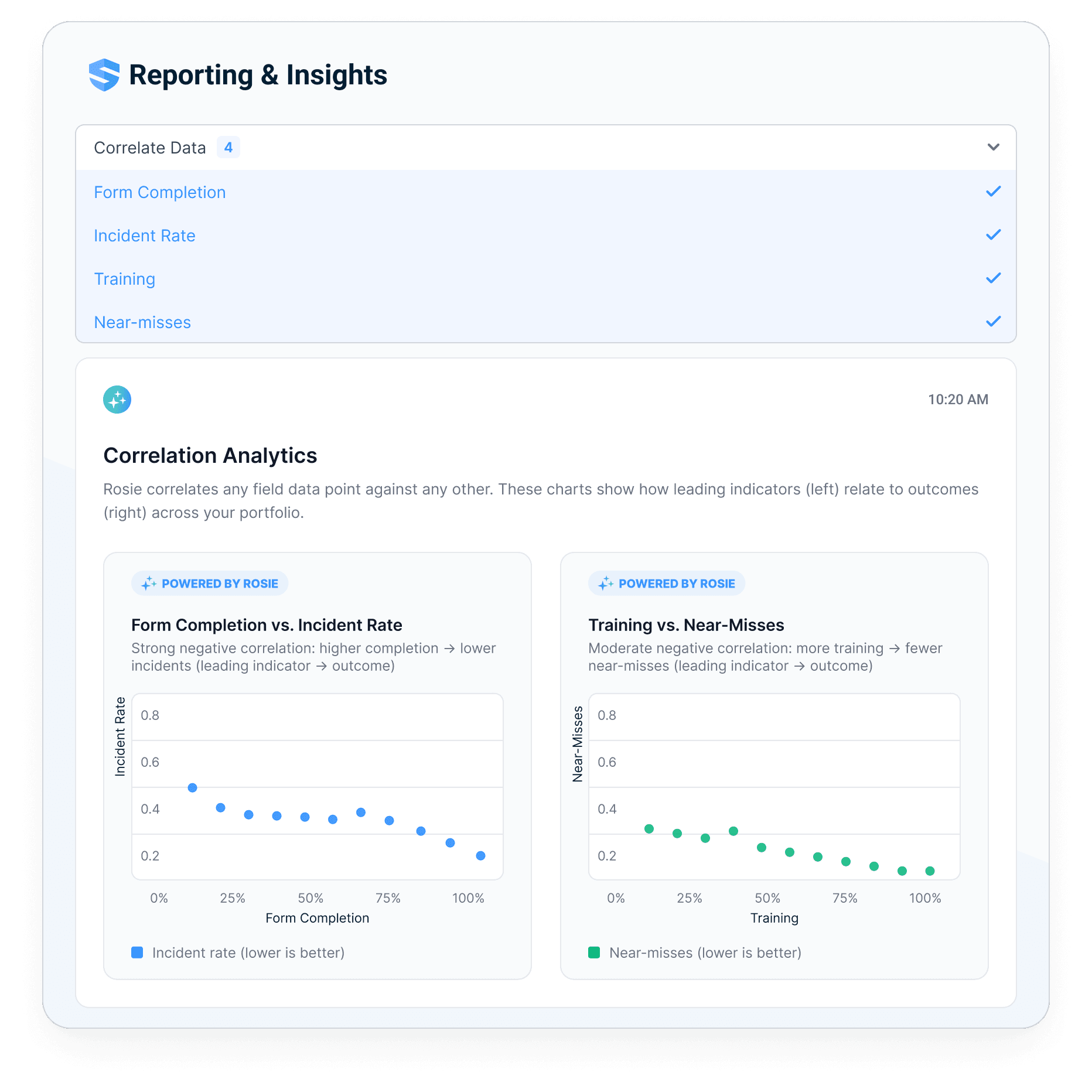
Correlations
Crew, trade, time, and site correlations Rosie computes across the whole portfolio.
Leading indicators
The signals that precede recordables — surfaced before they become incidents.
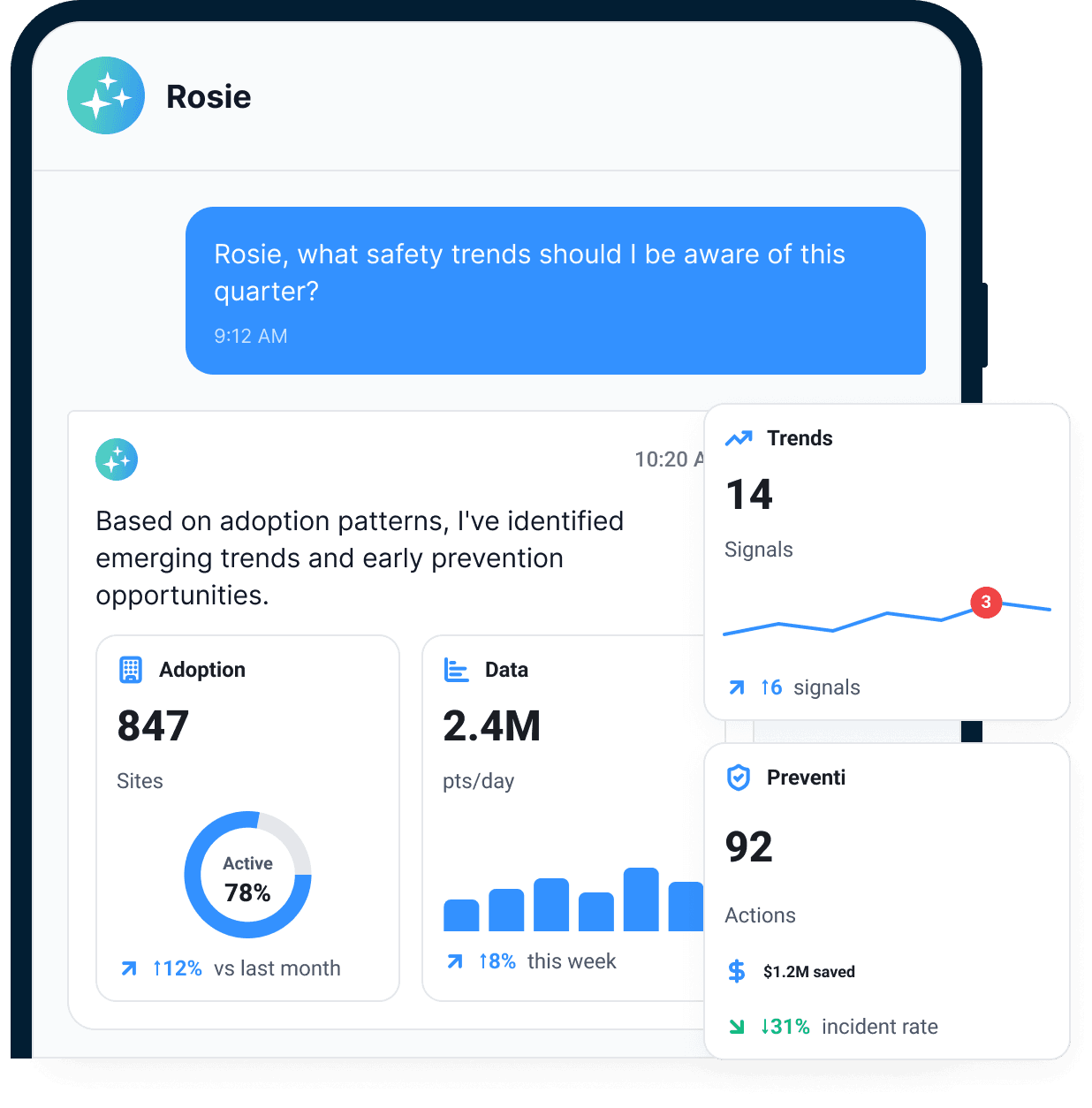
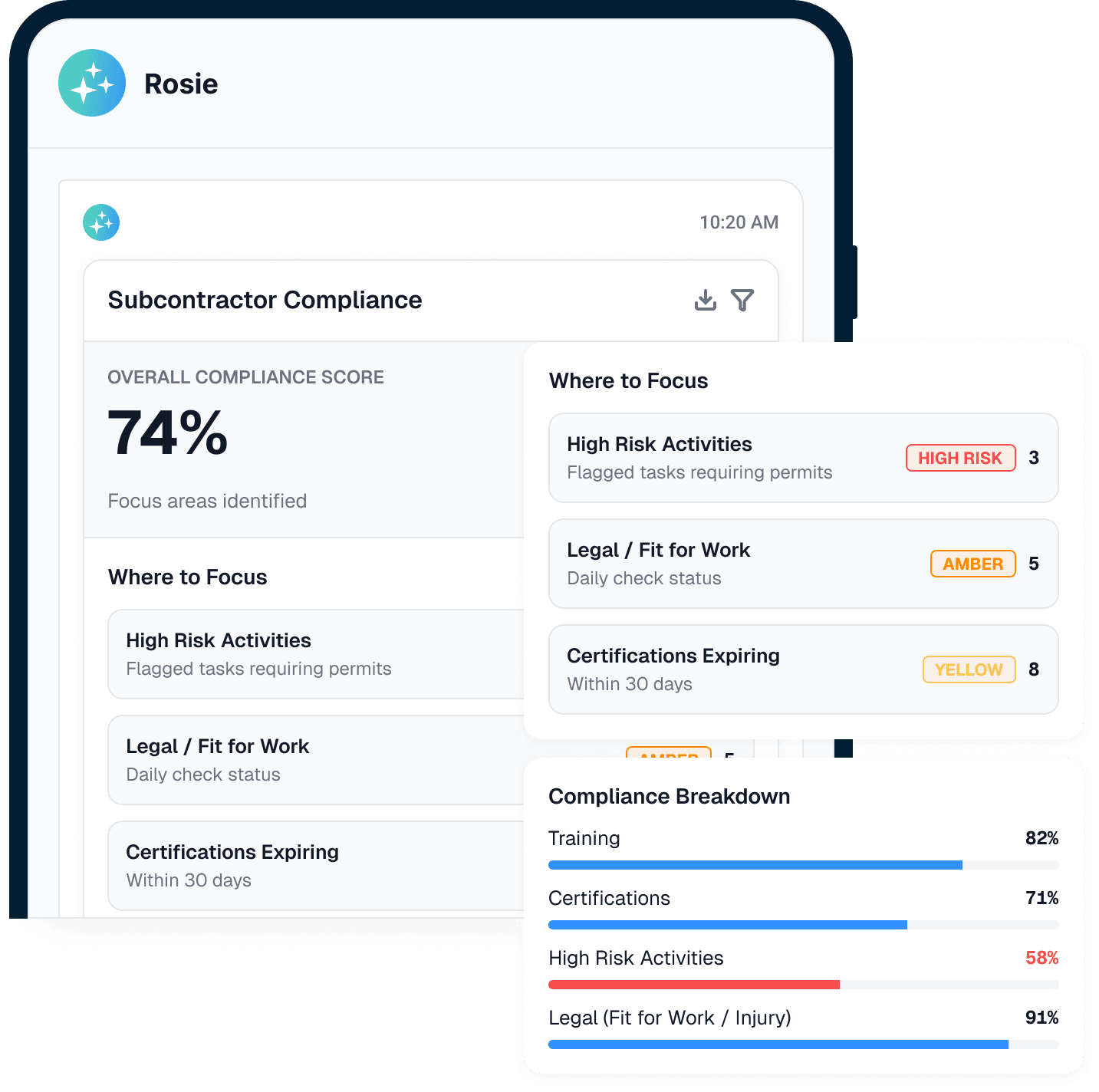
The declining sub
The subcontractor whose assessments are sliding, caught early instead of after an incident.
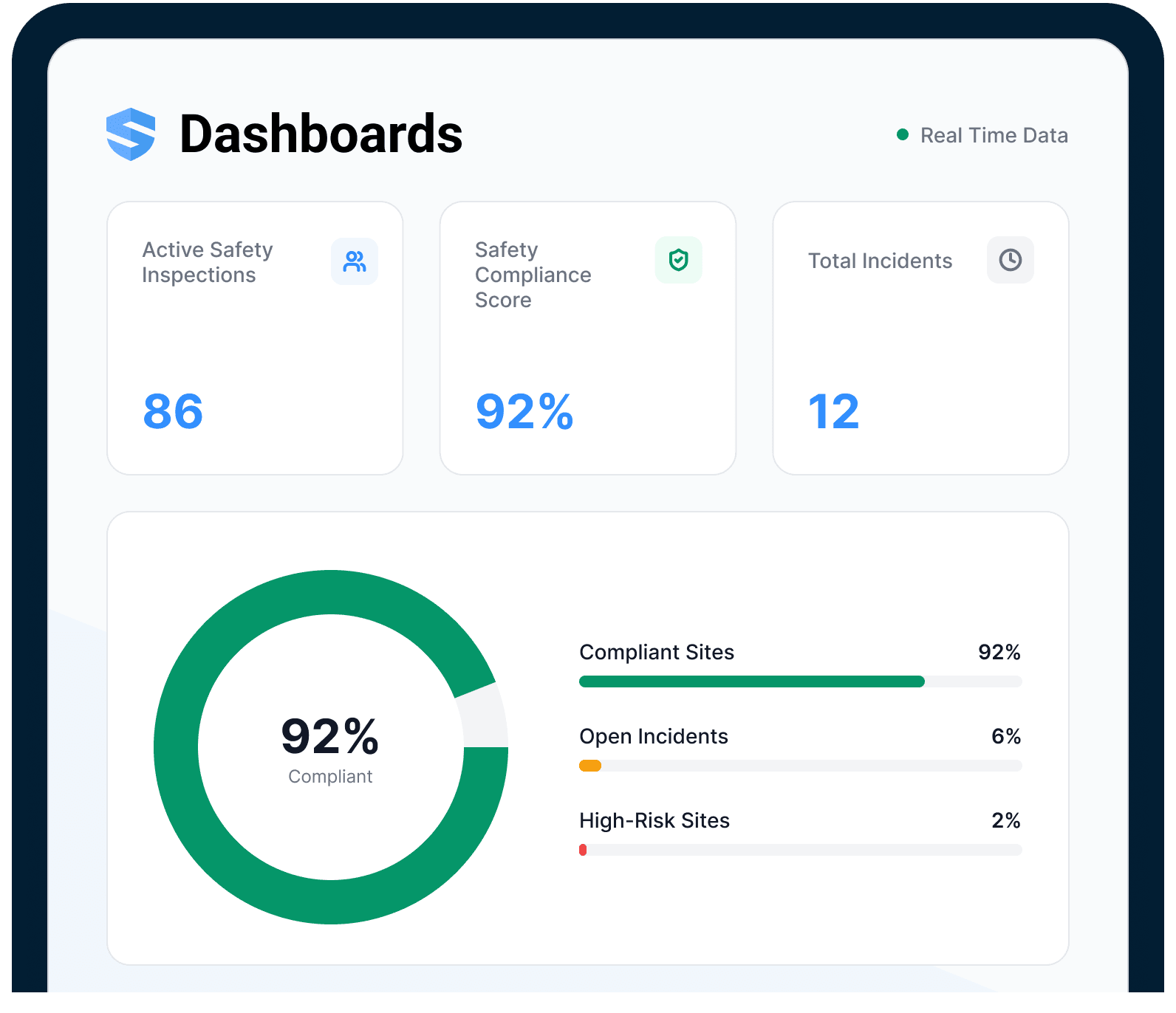
Portfolio health
Portfolio risk at a glance — every site's open loops and trend in one view.
Risk control for every role.
Safety leaders
Gets · Risk visible before it's an incident
Leading indicators and open loops across every site, without waiting on paperwork.
Executives
Gets · An evidence-backed program at scale
Standards deployed everywhere and Bill C-45 due-diligence evidence across the portfolio.
Field supervisors
Gets · Closure without chasing
Corrective actions assigned and tracked to a named owner from the field.
Workers
Gets · Hazards that actually get fixed
Report in ~90 seconds and see the loop close.
Control risk across every site without losing visibility.
More sites shouldn't mean less visibility. Every loop Rosie closes leaves a provable record — the risk controlled and the evidence captured at once. 🍁 Across the rest of Canada, that evidence is documented due diligence at scale — proof of 'every reasonable precaution' under Bill C-45 / Westray, the same record provincial OHS penalties now turn on. ⚜️ In Québec, it's the documented programme de prévention and the comité de santé et de sécurité record CNESST expects, kept in French across every site.
Risk outcomes
- Standards deployed company-wide
- field intelligence multiplied
- Corrective actions closed in hours
- Leading indicators before incidents
- Portfolio-wide visibility
Safety & compliance outcomes
- Named-owner accountability
- Provable closure
- Bill C-45 due-diligence evidence
- Consistent provincial OHS compliance
Rest of Canada🍁
- Stronger COR records
Québec⚜️
- Records supporting the CNESST prevention program and mutuelle
Built with contractors who control risk across the whole portfolio.

WorkSafeBC
$750K/year saved and 14 systems consolidated into one — a portfolio where inspectors stopped finding gaps.

One dashboard
Risk visible across a large multi-sub portfolio from a single view.
Closed-loop program
A documented, closed-loop program that moved insurance from a 25% surcharge to a 30% discount.
The connected workflows that control risk at scale.
Every workflow below turns a scattered hazard into a closed, provable loop.
Inspections
Corrective actions opened in-flow on the walk.
Corrective Actions
Named-owner closure with photo evidence.
Incident & Injury Management
Captured at the scene, structured by Rosie.
Reporting & Insights
Rosie correlates everything across the portfolio.
Digital Forms by Rosie
Standards deployed company-wide in one action.
Certificate Management
Qualification verified at the source.
Subcontractor Management
Sub compliance monitored across the portfolio.
Bulletins & Notifications
Documented stand-downs when conditions shift.
Keep exploring the work SALUS gives back.
These pages use the same field-to-proof system from different operating angles.
Close every open loop across every site.
Bring your portfolio's open corrective actions to a 15-minute demo and we'll show you the patterns.
Deploy everywhere · See more · Close the loop · Predict