What Is a Near Miss? Definition & Reporting
A near miss is the incident that almost happened — and the cheapest safety lesson a jobsite ever gets. What counts as a near miss, how to write the report, and how to build a reporting culture crews actually buy into.
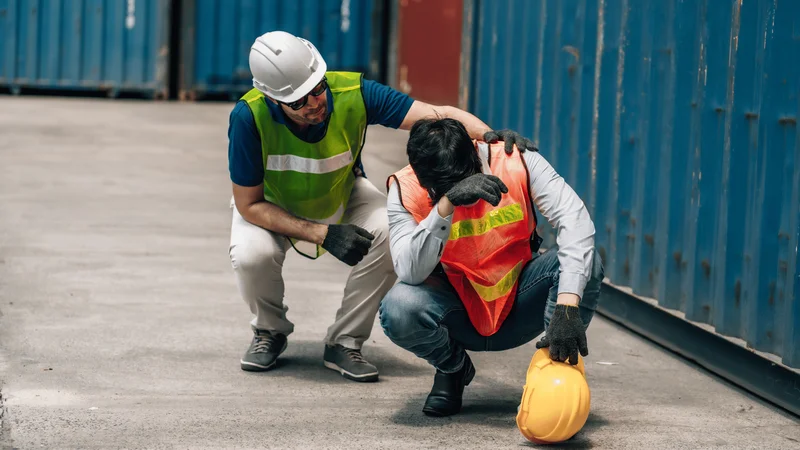
A near miss is an unplanned event that didn’t cause injury, illness, or damage — but easily could have. The sling that lets go a beat after the crew steps clear. The dropped wrench that lands where someone stood a second ago. Nobody got hurt, so it’s tempting to exhale and move on. But that near miss is the cheapest safety lesson your jobsite will ever get — a full-scale warning with none of the cost. This guide covers what counts as a near miss, how to write the report, and how to build a reporting culture your crews actually buy into.
What is a near miss?
A near miss is any incident that could have resulted in harm but did not—the same event as an injury, minus the injury. Crews call them close calls, near hits, or good catches when someone stepped in and stopped one. The Canadian Centre for Occupational Health and Safety describes near misses as incidents that caused no injury or damage and recommends reporting and investigating them as opportunities to prevent recurrence.
Near miss vs. hazard vs. incident
Three words get used loosely on site. The difference is in the timing:
- Hazard — a condition with the potential to cause harm. An unguarded floor opening sitting there is a hazard.
- Near miss — that potential nearly realized. A worker stumbles toward the opening and catches themselves at the edge.
- Incident — the harm actually happens. The worker falls through.
Near miss examples in construction
- A suspended load swings through the spot where a crew stood a minute earlier.
- A tool dropped from height lands beside a worker instead of on them.
- An operator backs toward a worker they can’t see, and a spotter yells stop in time.
- A scaffold plank shifts underfoot but holds.
- A circuit assumed to be locked out turns out live — caught before anyone made contact.
Why near misses matter: your cheapest leading indicator
Every near miss can share contributing factors with a real injury—the same gap in planning, worn rigging, blind spot, or missing control—but reveal them before anyone is hurt. That makes a near miss a practical opportunity to investigate what happened, correct the condition, and share the lesson while the potential consequences are still only potential.
You’ve probably seen the safety triangle — the idea that a large number of near misses sits beneath every serious injury. The exact ratios are debated, and honestly you shouldn’t stake a program on a specific number. But the principle holds: near misses are abundant, and each one maps your exposure while it’s still cheap to fix.
This is why near-miss reporting is a useful leading indicator. Reports show where exposure is appearing before injury, lost time, or damage becomes the lagging outcome. The value is not a universal ratio; it is the ability to connect observations, investigations, and corrective actions so recurring patterns can be addressed across projects.
A near miss is the incident that gave you a warning instead of a bill.
How to write a near miss report
The single most important rule: keep the bar low. If filing a near-miss report takes longer than a coffee break, crews stop doing it, and the whole program dies quietly. A good report is short and captures what matters:
- What happened, in plain words.
- Where and when it occurred.
- The conditions — weather, lighting, the sequence of events, any time pressure.
- What could have happened if it had gone the other way.
- What stopped it — the spotter, the step back, the plank that held.
- Contributing factors, and a photo of the spot.
- A suggested fix, if the reporter has one.
Notice what’s not on that list: who to blame. A near-miss report captures factors, not fault. The moment it becomes a disciplinary tool, the reports stop.
Near miss report example
Short and factual beats long and formal. Something like: “During backfill at the north foundation, the excavator swung its bucket over two workers tying rebar. The spotter called the stop and the operator held. No contact. Contributing factors: no exclusion zone established, spotter positioned behind the machine. Suggested fix: barricade the swing radius and reposition the spotter in the operator’s line of sight before the next lift.” That’s a complete report — and it ends in an action, not an accusation.
Do near misses have to be reported to a Canadian regulator?
Requirements vary by province or territory and by the event itself. CCOHS notes that Canadian jurisdictions require reporting for specific injuries and certain categories of incidents, while many organizations also investigate near misses. Ontario, for example, requires notice for certain prescribed construction incidents even when no worker is injured, and WorkSafeBC requires employers to investigate certain near misses. Follow your company procedure and check the rules that apply in the jurisdiction where the work occurred.
Building near miss reporting your crews buy into
If your near-miss numbers are low, that’s rarely because your site is safe. It’s usually because reporting feels pointless or risky. Crews stay quiet for predictable reasons:
- Fear of blame — or of a drug test triggered by any report.
- Paperwork friction that isn’t worth the trouble for “nothing happened.”
- The “no harm, no foul” mindset that treats a close call as a non-event.
- Reports that vanish into a void and never produce a visible change.
Every one of those has a fix, and they mirror the problems:
- Say the no-blame policy out loud — and honor it the first time it’s tested. One disciplinary response to an honest report undoes a year of trust.
- Make it a 60-second job from a phone. A QR code posted at the site entrance that opens a report form removes the friction. SALUS incident and near-miss reporting is built for capture in the field, not back at the trailer.
- Offer an anonymous option for the ones people won’t put their name on.
- Close the loop visibly. Fix the hazard, then show the crew the fix. Nothing drives reporting like seeing a report turn into a barricade.
- Bring reports back as wins, not warnings — a near miss on Monday becomes Thursday’s toolbox talk, framed as a good catch.
And reframe the metric while you’re at it. On a healthy site, the near-miss count goes up as trust builds — more reports usually means more people looking, not more danger. Don’t chase a low raw count. Watch the near-miss-to-incident ratio instead: more near misses caught per actual incident is the number trending the right way.
From report to prevention: closing the loop
A report that doesn’t lead to a fix is just paperwork. The value is in the loop:
- Report — captured at the scene, with a photo.
- Triage — rank it by how bad it could have been, not by what actually happened.
- Root cause — find the condition, not the culprit.
- Corrective action — assign a fix with an owner and a due date.
- Verify — confirm the fix held.
- Share the lesson — a near miss on one site is a toolbox talk for every site.
Doing that by hand across a portfolio is where it breaks down. Software carries the weight: capture with photos in the field, track corrective actions to closure, and surface trends by site, trade, and time in your safety reporting so the same near miss doesn’t keep happening in three places at once.