Skip to content
Compare SALUS

Crew adoption and organizational control. Choose both.

Most safety software forces a tradeoff. Lightweight tools can feel simple, yet struggle as sites, equipment, documents, and subcontractor relationships multiply. Enterprise suites can manage that complexity, but too often add massive friction at the point of work.

SALUS is built from the crew up and for scale: designed around the boots doing the work, while connecting the readiness, records, and intelligence complex trade contractor organizations need. A dedicated success partner provides hands-on guidance from kickoff through rollout, adoption, and scale.

  1. 400K

    users

  2. 150K

    sites

  3. 1B

    field data points

  4. 14K

    companies

Why SALUS

Built from the crew up. Connected across the business.

The operating model matters more than a checklist of features. SALUS starts with how crews actually work, then keeps every field event connected enough to support readiness, action, intelligence, and proof.

Crew-level adoption

Field adoption is a product discipline, not a rollout slogan.

SALUS begins at the point of work with QR access, offline capture, multilingual workflows, voice, photo, scan, and signature—so the record is easier for the crew to create and more useful everywhere else.
Trade-contractor model

The contractor and crew performing the work are the starting point.

Many construction platforms begin with GC-led oversight. SALUS begins with trade contractors, subcontractors, and crews, then carries their context across sites and the wider organization.

Rosie

An AI Admin & Risk Assistant in the field and the office.

Rosie helps create controls, capture ground truth, monitor readiness and risk, and defend the business with answers and reports linked back to their sources.

Connected operations

The operational modules around readiness work together.

Forms, orientations, certifications, training, equipment, permits, incidents, corrective actions, reporting, and integrations share the same worker, task, site, time, and source context.

Safety software

Compare the platforms contractors shortlist.

Each comparison focuses on practical operating differences: field adoption, readiness controls, mobile and offline coverage, connected context, reporting, integrations, and proof on demand.

SiteDocs pricing9 comparison points

Move from digital compliance to connected operational intelligence.

Compare a capable digital compliance platform with SALUS workflows that connect field events to readiness, risk intelligence, and proof.

Connected context beyond the form
HammerTech alternative9 comparison points

Enterprise safety power should not slow down the field.

Compare an enterprise and GC-led operating model with a platform that begins with trade crews and connects their work across the business.

Trade-crew capture to business-wide proof
SALUS vs HCSS9 comparison points

Safety deserves its own field-first operating system.

Compare an operations-suite safety module with a purpose-built safety platform that runs on every phone and turns records into answers.

Safety-first, not module-first
SALUS vs eCompliance9 comparison points

Compliance records are not enough when crews need answers.

Compare reporting workflows with SALUS field capture, SDS answers, subcontractor onboarding, equipment context, and Rosie intelligence.

Answers and proof, not just exports
SALUS vs BIS Safety Software9 comparison points

Training should control the work, not sit beside it.

Compare a training-first system with SALUS credential controls, workflow-gated training, integrated LMS, and Rosie-generated content.

Training wired to readiness
SafetyCulture alternative10 comparison points

Inspections are a start. Construction safety needs controls.

Evaluate a construction-focused SafetyCulture alternative for workers, assets, subcontractors, SDS, Procore sync, and proof. SafetyCulture was formerly iAuditor.

Inspection to action to proof
Built for the jobsite

The details are where the risk lives.

The difference between SALUS and generic safety software is rarely visible in a checkbox comparison. It appears in the moment that normally breaks the workflow.

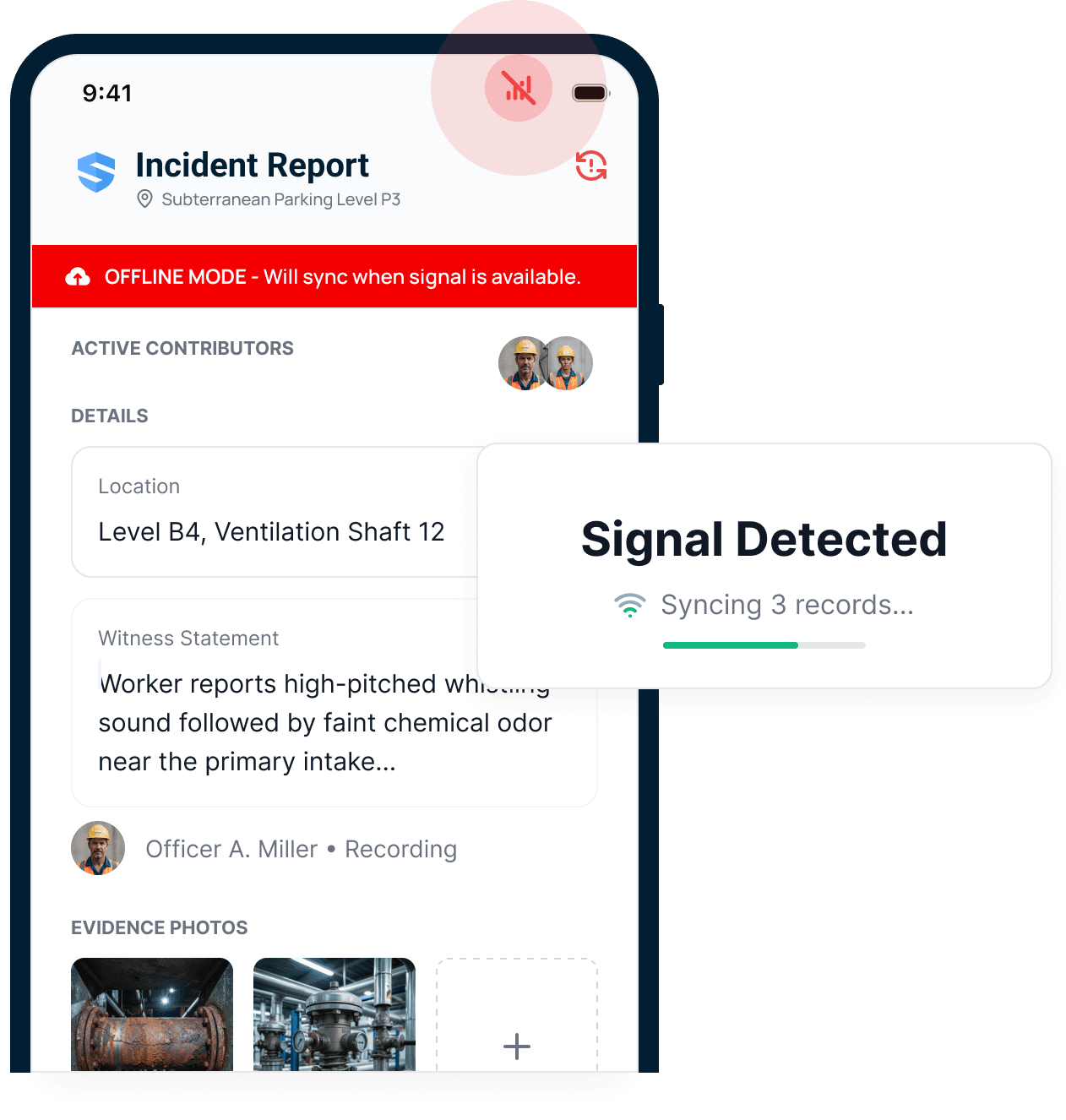
An offline incident report syncs after signal returns
Offline mode
SALUS workflow

When the signal dies

Work keeps moving. Forms, photos, voice notes, inspections, and incident records save locally and sync when signal returns.

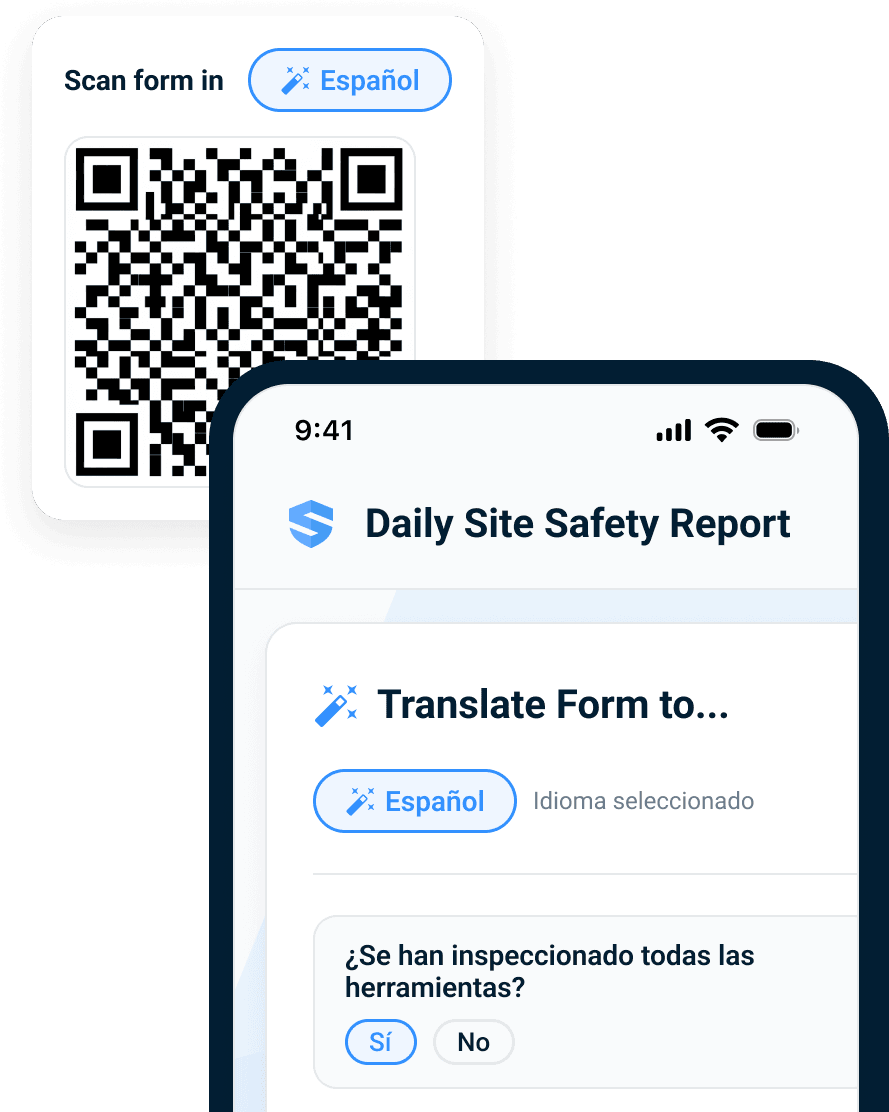
A QR form opens in Spanish and translates the submission
Worker language
SALUS workflow

When a worker speaks Spanish

They complete the workflow in Spanish. The office reviews a clean record in English—without a translator or a second form.

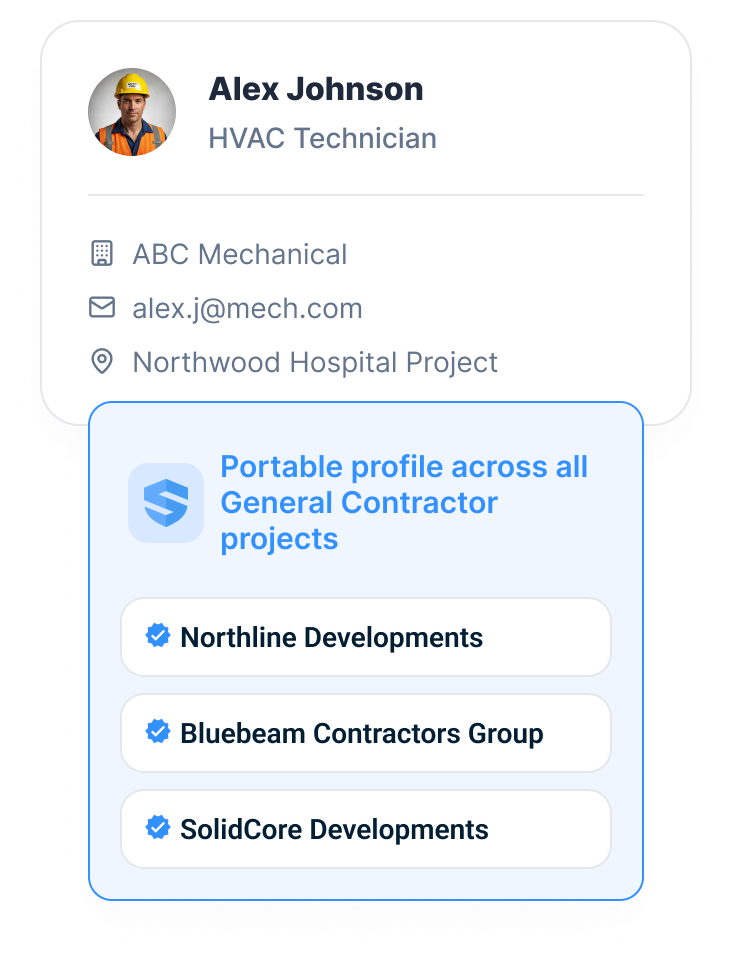
A portable worker profile carries qualifications and readiness between jobsites
Portable profile
SALUS workflow

When a sub or worker moves between sites

Their orientations, certifications, training, and work history travel with them. No duplicate profile. No re-entry. No fresh onboarding at every gate.

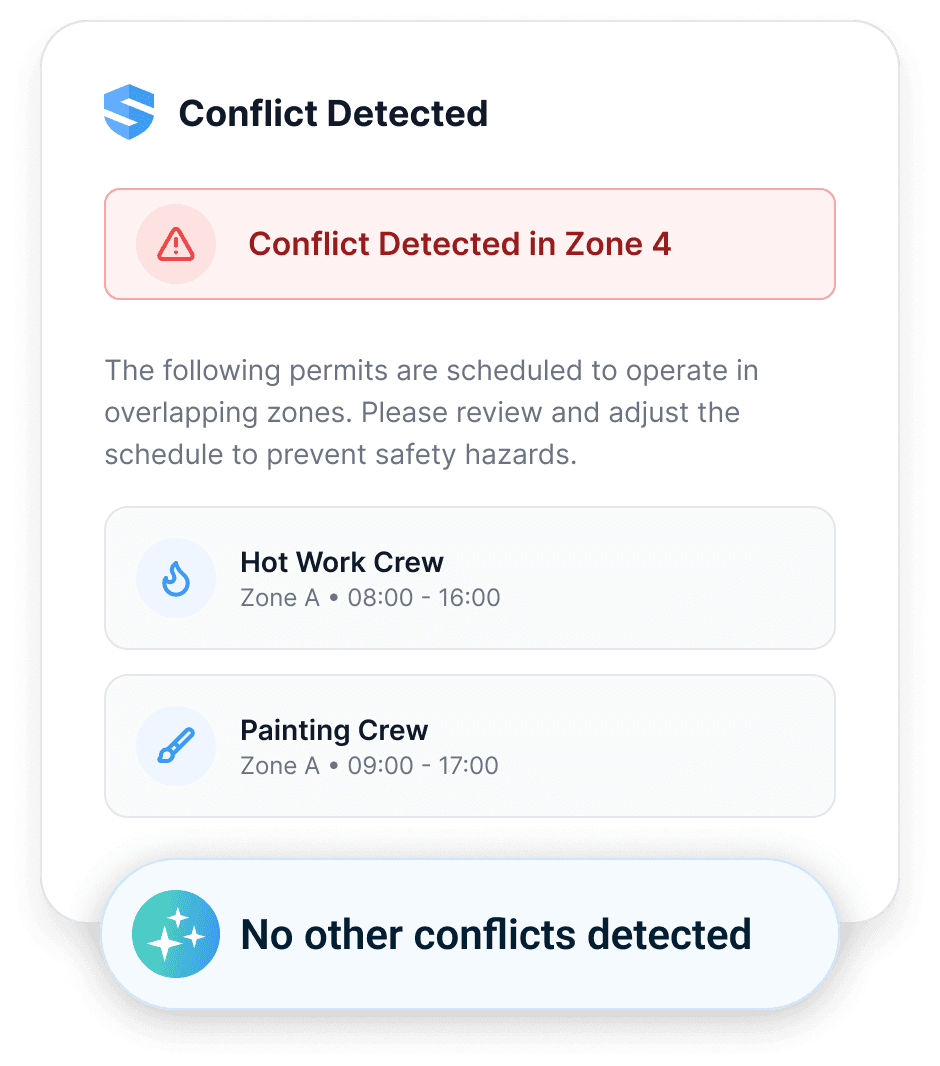
A permit conflict is detected between overlapping work zones
Permit control
SALUS workflow

When permits overlap

SALUS checks the work, area, time, equipment, and credentials, then flags conflicts before approval.

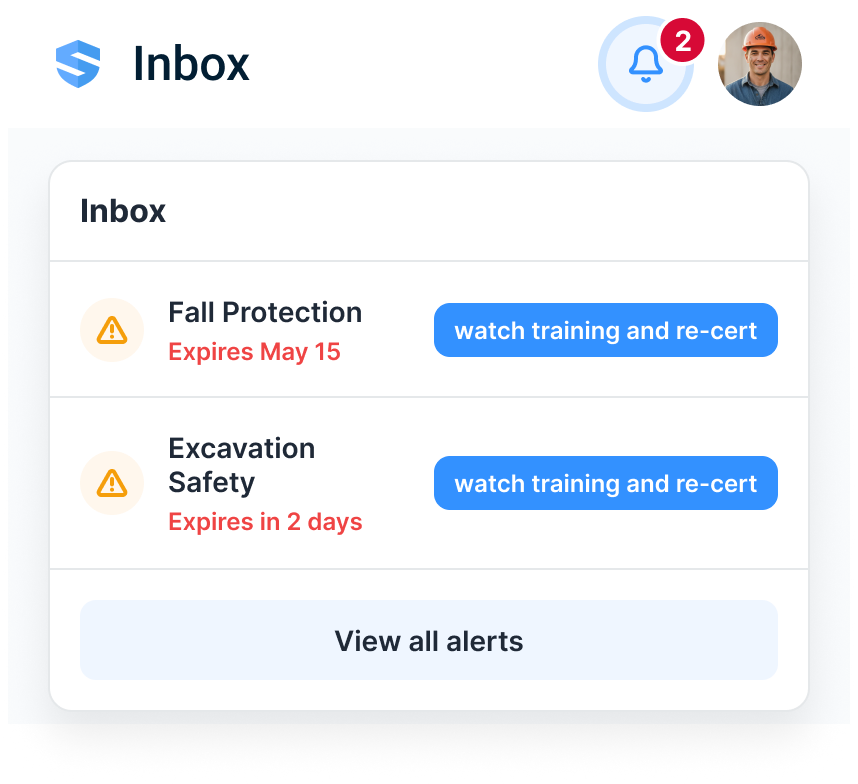
Certificate expiration alerts prompt a worker to complete refresher training
Certificate refresh
SALUS workflow

When a certification expires

Instead of a dead end, the worker gets the required micro-training on their phone. Completion updates the record immediately—without a separate LMS.

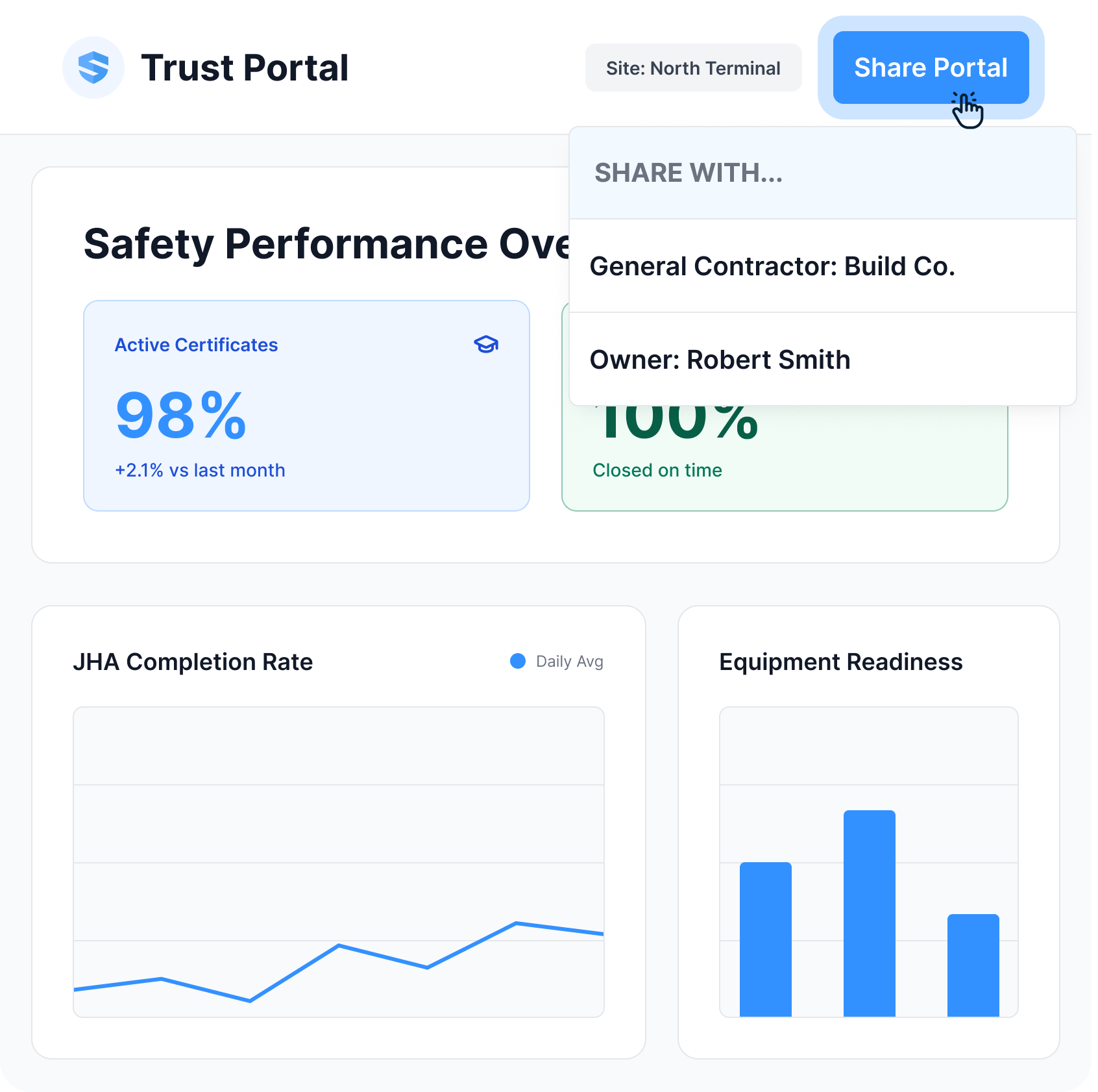
The Trust Portal shares current safety performance proof
Trust Portal
SALUS workflow

When an owner asks for proof

Share a live, permissioned view of current training, certifications, incidents, corrective actions, and performance. No stale PDF. No last-minute evidence hunt.

The jobsite exposes the gaps between systems. SALUS connects them.

Ready to put operational safety to work?

Join 400K users across 150K sites already on SALUS.

No commitment · 30-minute personalized walkthrough