

Get crews ready to work faster.
Reduce non-productive field time caused by orientations, missing certificates, permit delays, safety questions, SDS lookup, and paper forms — while keeping OSHA-ready documentation organized.
Move faster because the safety process is clearer — not because it's skipped.
Live board
Today's crew readiness · Crew 14 · Gate B
Readiness visible before the shift
Blockers cleared before they cost time
Answers at the point of work
Records created automatically
~2h 40m back per crew, per day
Field productivity gets lost in the handoffs.
Crews rarely lose time because of one big failure. They lose it because small blockers stack up across the day: an incomplete orientation, an expired certificate, a missing SDS, a permit waiting on approval, a paper JHA, a question that has to be escalated back to the office. SALUS clears those blockers before they become downtime.
Turn safety admin blockers into ready-to-work steps.
Tap a card to clear its blocker — every cleared step leaves a record behind.
Recognize the delays? They're removable — without loosening a single control.
See how SALUS removes field delaysWhere the time comes back.
Blocked by a missing document? Rosie writes it in minutes.
The number one reason crews stand still isn't a hazard — it's missing information. A GC requires a site-specific plan before Monday's mobilization. The new task has no SWP. A certification expired overnight. The permit sits unsigned. Workers aren't sure which task comes first. SALUS turns each of those into a clear, fast, documented path to work — so the blocker is resolved before it reaches the crew.


Yes. The draft contains nine sections and 24 site-specific hazard controls, aligned to Meridian’s requirements and ready for the safety lead’s review.
- Plan structure
- 9 sections · roles · emergencies · sign-off
- Hazard controls
- 24 project-specific controls
- Requirements
- Company standards + OSHA + Meridian
The safety lead reviews and approves the plan before it is issued to Meridian or the crew.
Missing SWP or site plan
Rosie drafts it from your standards, the site profile, and the GC's requirements — you review and send.
Yes. The draft contains nine sections and 24 site-specific hazard controls, aligned to Meridian’s requirements and ready for the safety lead’s review.
- Plan structure
- 9 sections · roles · emergencies · sign-off
- Hazard controls
- 24 project-specific controls
- Requirements
- Company standards + OSHA + Meridian
The safety lead reviews and approves the plan before it is issued to Meridian or the crew.
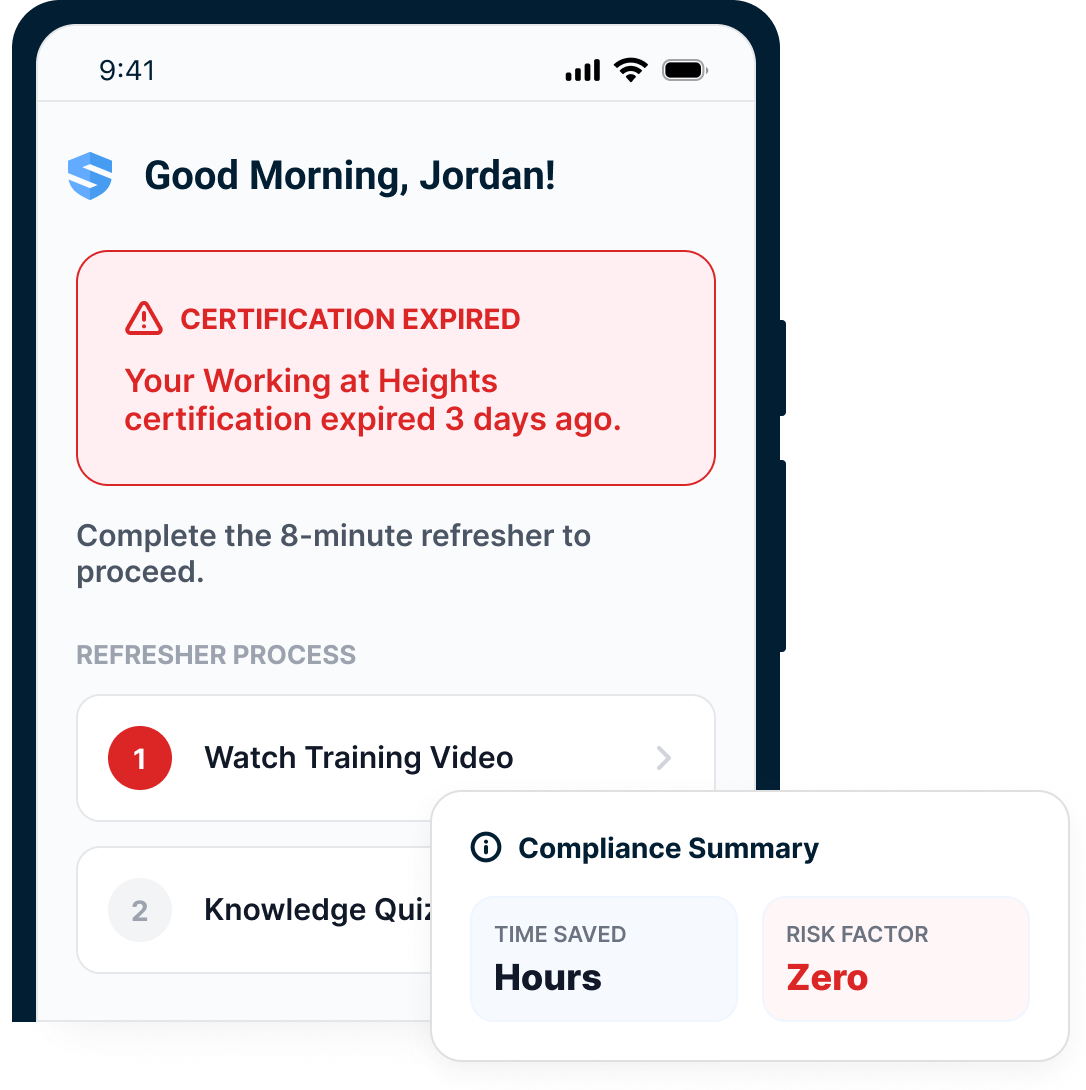
Expired certification
The refresher runs on the worker's phone at the block screen — verified and back to work.
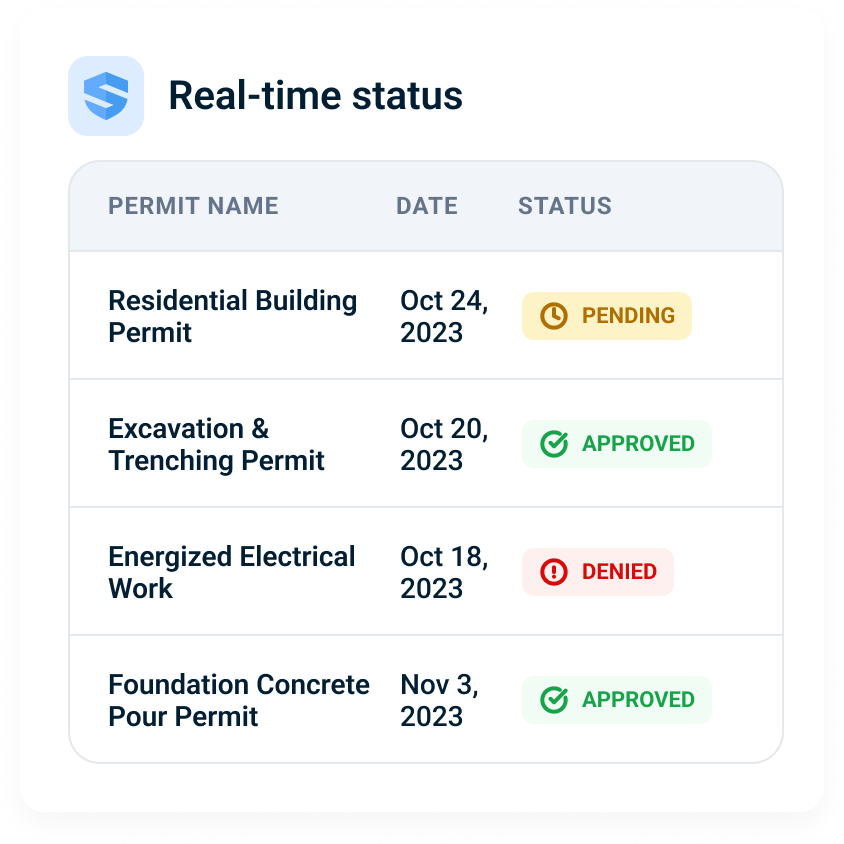
Permit stuck in routing
Digital permits move: submitted, reviewed, approved — with the chain recorded.
Unclear first task
The day's tasks, forms, and procedures load on the worker's device — no guessing, no waiting.
The site is ready to mobilize Monday with the plan, orientation, field forms, and hazard controls prepared for the crew.
- Site controls
- Site-specific plan + deployed hazard controls
- Crew package
- Orientation + required field forms
- Languages
- English + Spanish
The site lead confirms the final scope, crew, and local requirements before mobilization.
The crew speaks, snaps, records. Rosie does the structuring.
Most field documentation is done twice: once in the moment, badly, on whatever's handy — then again at a desk, from memory. With SALUS, capture happens at the source: a voice note, a photo, a video, a few taps. Rosie turns the unstructured input into the structured record — JHAs, near-miss reports, inspection findings, incident documentation — offline included. Work continues; the record already exists.
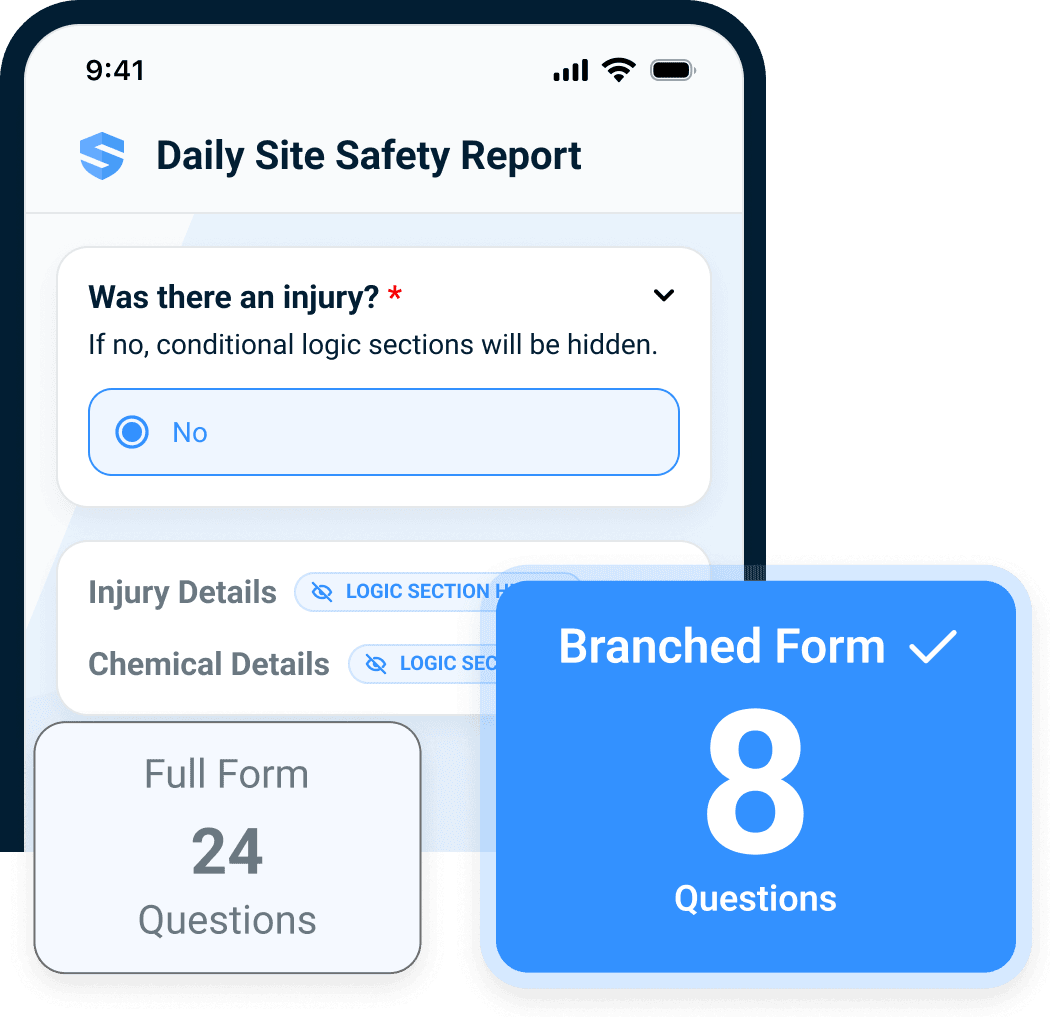
Daily forms
Context pre-filled — weather, crew, equipment. Review, sign, done.
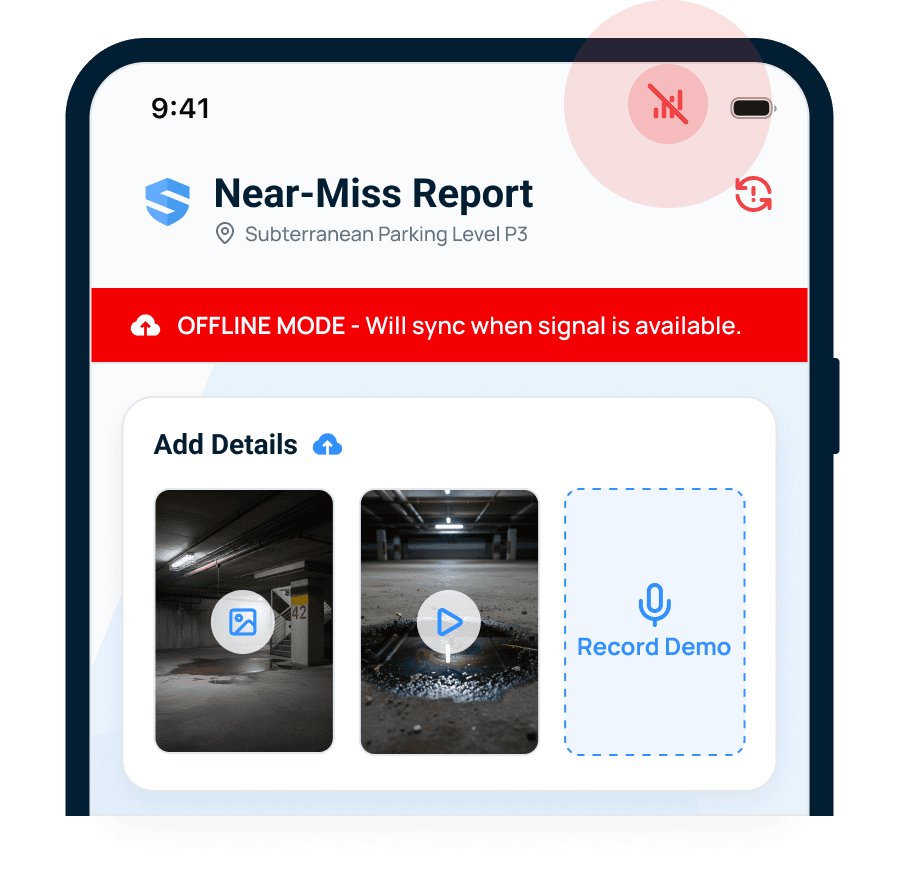
Near-misses
Photo + voice note at the scene — structured and submitted in about 90 seconds.
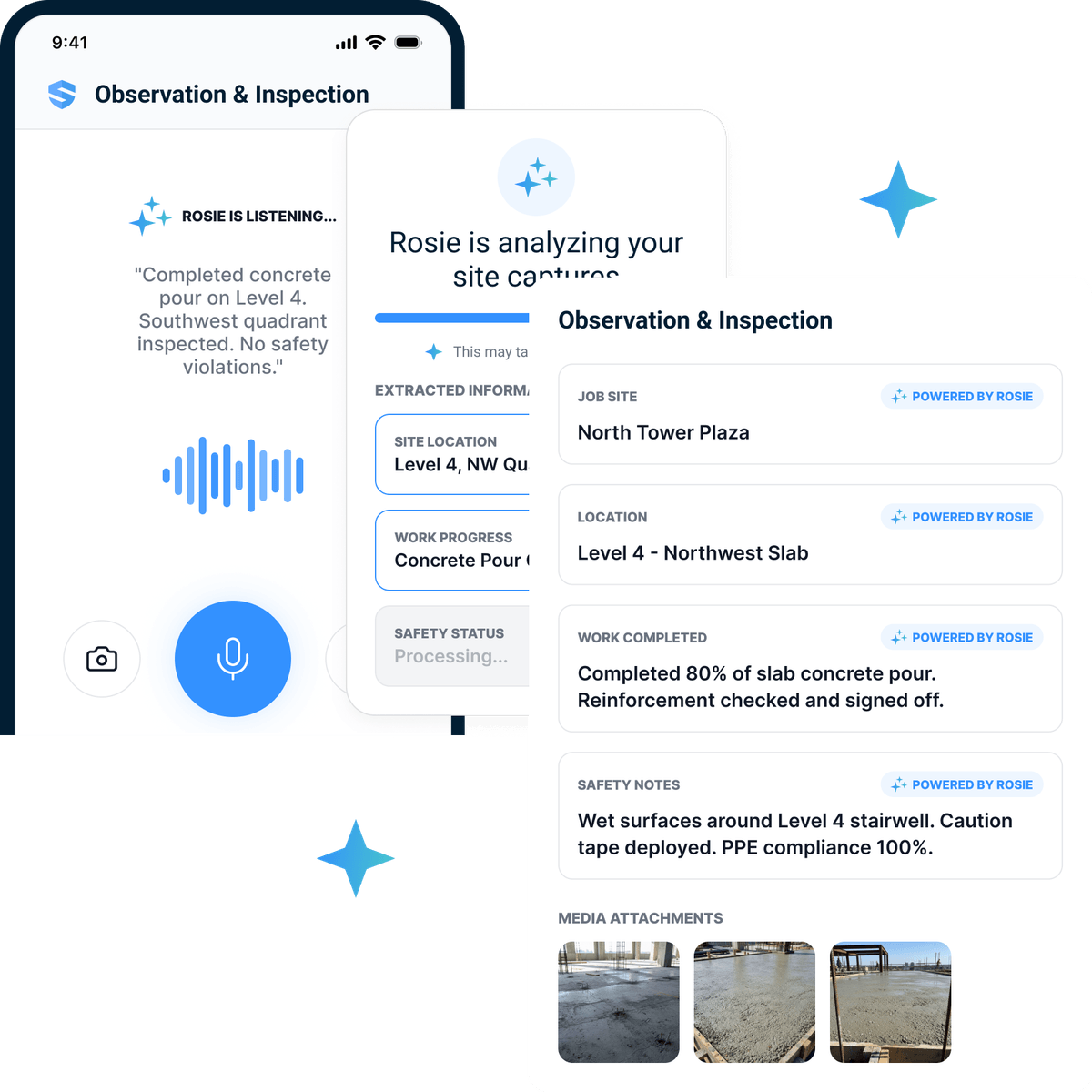
Inspections
Findings spoken during the walk; corrective actions created in the same flow.
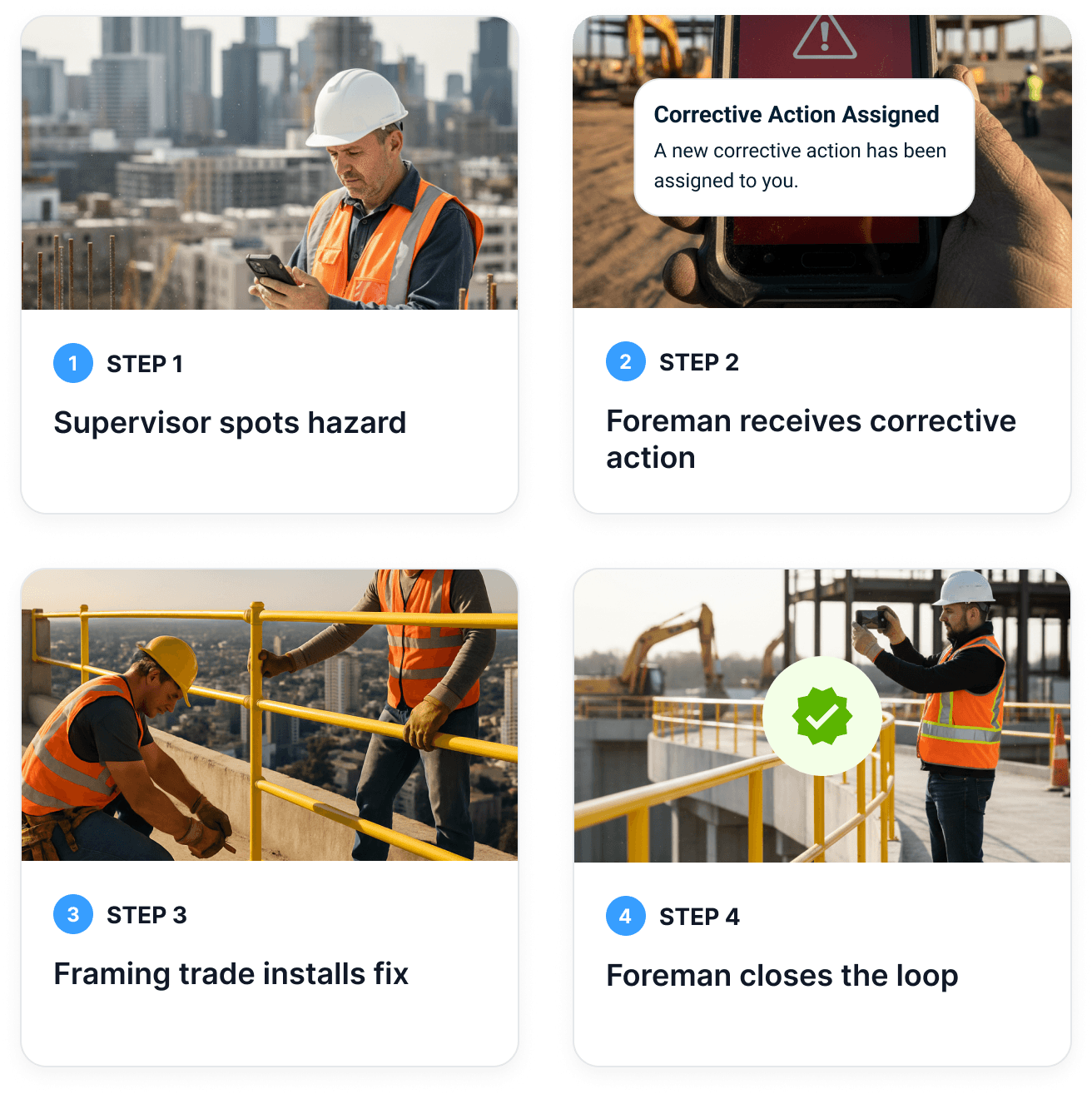
Incidents
Documented where they happen — offline, multi-person, nothing reconstructed later.
Concise answers at the point of work — with the source attached.
A load about to be set, and nobody's sure of the rated capacity. A splash of admixture, and the SDS is in a binder somewhere. A procedure question, and the answer is a radio call that becomes a callback that becomes twenty idle minutes. Rosie reads the manuals, the data sheets, and your approved procedures — and returns the number, the step, or the warning, with the citation. The crew checks the source and keeps moving.
At 40 ft of reach, the rated capacity is 2,500 lb with the load centered and the boom at or below 45°. Confirm the load weight before lifting.
- Rated capacity
- 2,500 lb
- Configuration
- 40 ft reach · centered load · boom ≤ 45°
- At 50 ft
- Capacity drops to 1,200 lb
The operator still verifies the actual load, attachment, and machine configuration before the lift.
Equipment limits
Equipment limits pulled from the operator's manual — page cited, caveats included.
At 40 ft of reach, the rated capacity is 2,500 lb with the load centered and the boom at or below 45°. Confirm the load weight before lifting.
- Rated capacity
- 2,500 lb
- Configuration
- 40 ft reach · centered load · boom ≤ 45°
- At 50 ft
- Capacity drops to 1,200 lb
The operator still verifies the actual load, attachment, and machine configuration before the lift.
SDS lookup
SDS answers in seconds — first aid, PPE, handling — not a 16-page PDF.
Clear the area, get trained spill-response support, and use the PPE specified in the SDS. Contain the spill with compatible absorbent material; do not add water unless the approved procedure explicitly directs it.
- Immediate action
- Isolate area · notify supervisor · assess exposure
- Controls
- Chemical-resistant PPE · compatible absorbent
- Disposal
- Collect as regulated waste under the site procedure
Follow the product SDS and site emergency plan. Untrained workers should not attempt spill cleanup.
Procedure questions
Procedure questions answered from your approved content, not the open internet.
Six feet is the maximum unprotected working height on Westfield. Fall protection is required at 6 ft or above.
- Company SWP
- Working at Heights · Rev. 3 (2025)
- Project rule
- 100% tie-off above 6 ft
- Crew signal
- 17 certificates expire within 30 days
The project-specific rule and approved procedure govern the task; Rosie surfaces the record for field verification.
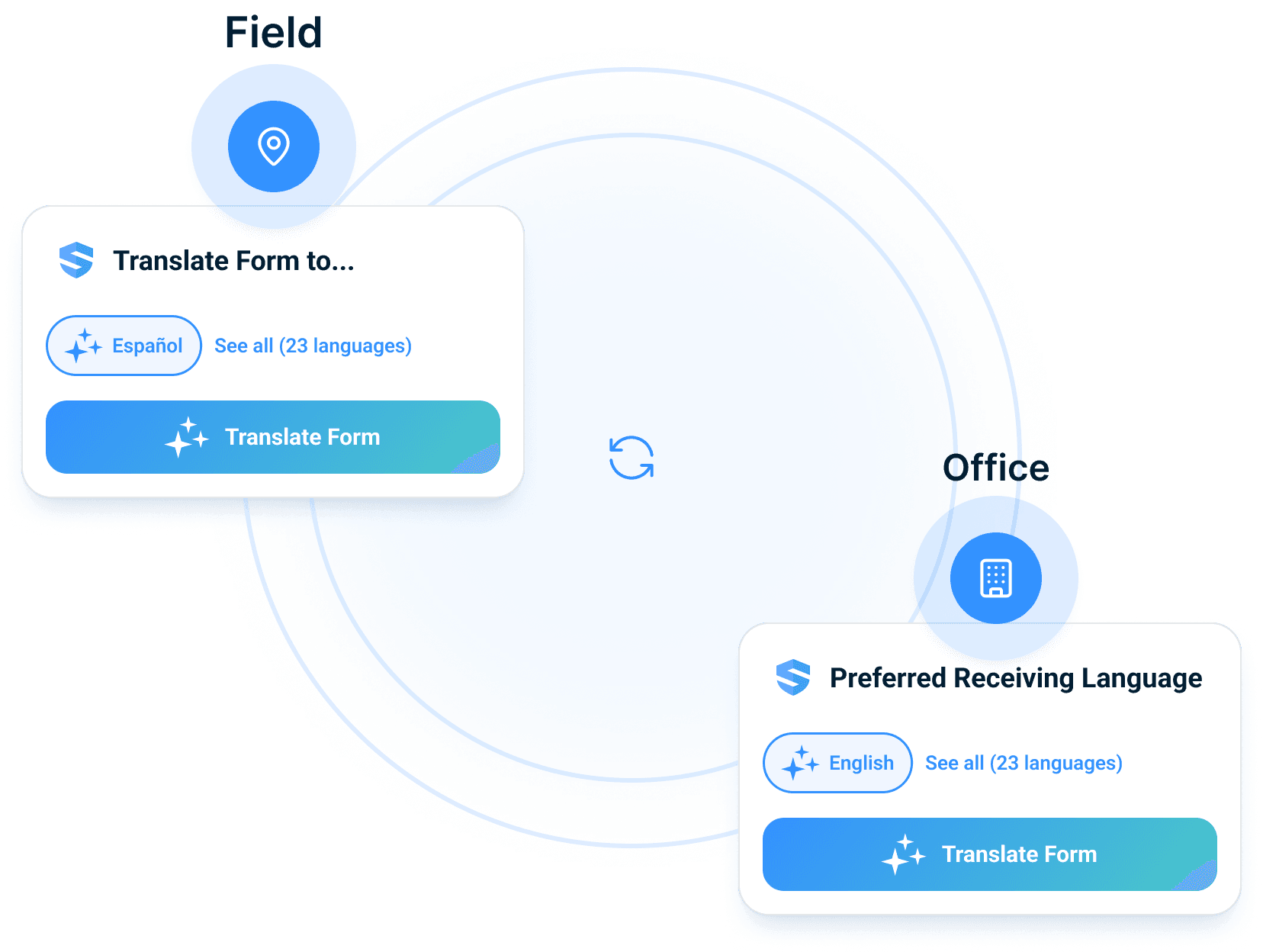
Any language
In the worker's language — ask in Spanish, get the answer in Spanish.
Done once should mean done.
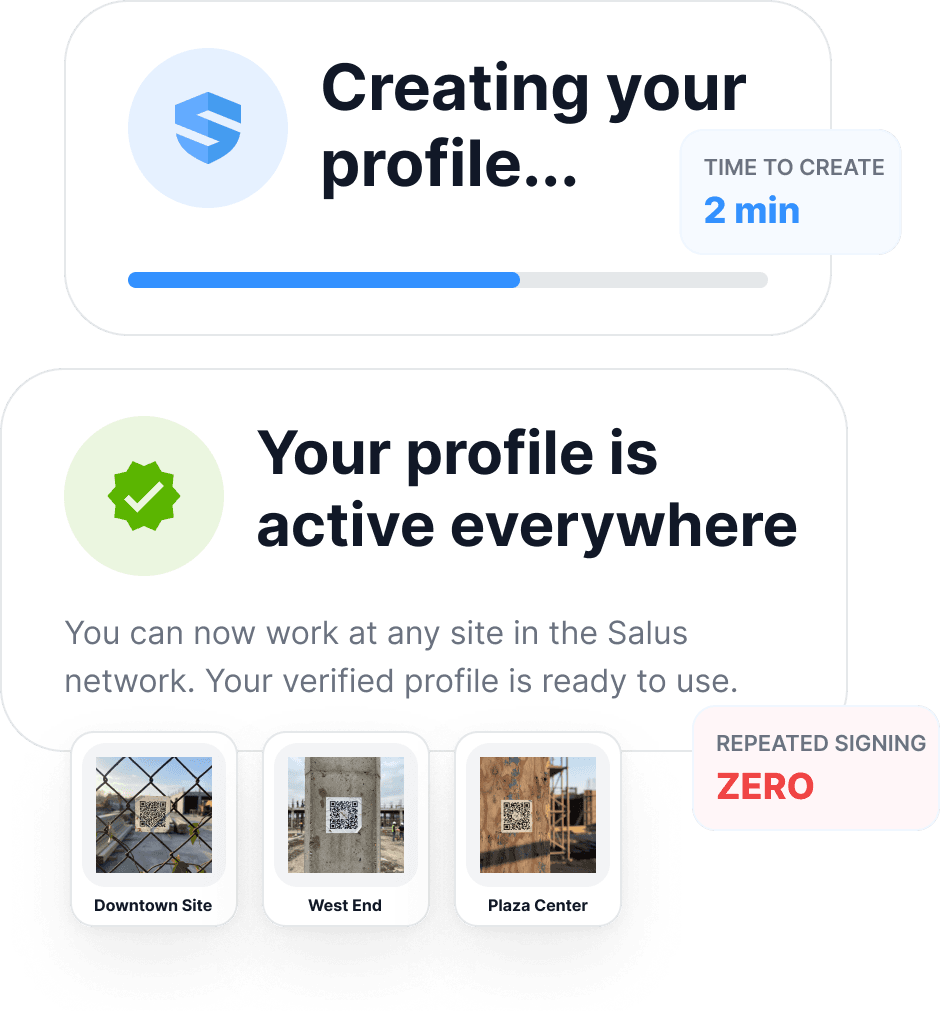
Orientation is really two orientations: the company-wide one and the site-specific one. On paper, every new site restarts both — workers re-sit content they've already passed while the crew waits.
Orientation, delta only
In SALUS, the profile travels: company orientation happens once, and each new site adds only its own delta. EllisDon cut orientations from 2 hours to 30 minutes.
Repeated signing: zero
A verified profile — orientation, certs, training — travels with the worker across every site in the SALUS network. The next gate is a scan, not a morning.
The daily report, assembled
The same logic closes the day: the daily report isn't written from memory at 4:30 PM — Rosie assembles it from everything the crew already captured in the moment.
The daily record is assembled. Two crews are missing hazard assessments, one near miss is documented, and one corrective action remains open from last week.
- Site activity
- 23 workers · 12 form submissions
- Safety record
- 0 incidents · 1 near miss
- Follow-through
- 3 new actions · 1 carried open
The foreman reviews the assembled report before it becomes the final daily record.
Give every team back the time they lose to safety admin.
Safety leaders
Gets back · Visibility and documentation control
See orientations, certificates, permits, JHAs, PTPs, FLRAs, SDS access, and training activity without waiting for paperwork to come back from the field.
Operations leaders
Gets back · Fewer avoidable delays
Reduce the time crews lose waiting on approvals, missing credentials, incomplete onboarding, unclear procedures, or disconnected safety workflows.
Field supervisors
Gets back · More time leading the crew
Complete required forms, confirm readiness, find procedures, and answer safety questions from the field.
Workers
Gets back · Clearer access to what they need
Scan, complete, search, and ask from mobile — without digging through binders or waiting for someone to send the right document.
Reduce delays without weakening safety controls.
This isn't speed traded against safety. Crews move faster because the safety process is clearer — every cleared blocker leaves a stronger record than the paper it replaced.
Productivity outcomes
- Fewer orientation delays
- Faster readiness checks
- Less time searching for forms, SDS, and procedures
- Faster permit routing
- Less paper handling and re-entry
- Faster field reporting
Safety & compliance outcomes
- OSHA-ready documentation
- Stronger JHA, PTP, and FLRA records
- Better training and certificate visibility
- More consistent SDS access
- Clearer audit trails
- Better documentation discipline for EMR management
Field-tested with teams that needed faster adoption and better visibility.

Field adoption
Daily JSA and field data collection became easier and more consistently used — the readiness data exists because crews actually complete the steps.

Cut in orientation time
Orientations dropped from 2 hours to 30 minutes when completed work traveled with the worker and only the site-specific delta repeated.

Field visibility · was a 2-hour lag
Real-time visibility, AI Spanish translation, and 5-minute reports — field activity became easier to see, communicate, and report on.
Less friction means more field activity creates better records.
The connected workflows that keep crews moving.
Every workflow below exists to remove a specific field delay — together they form the ready-to-work system.
Site Orientations
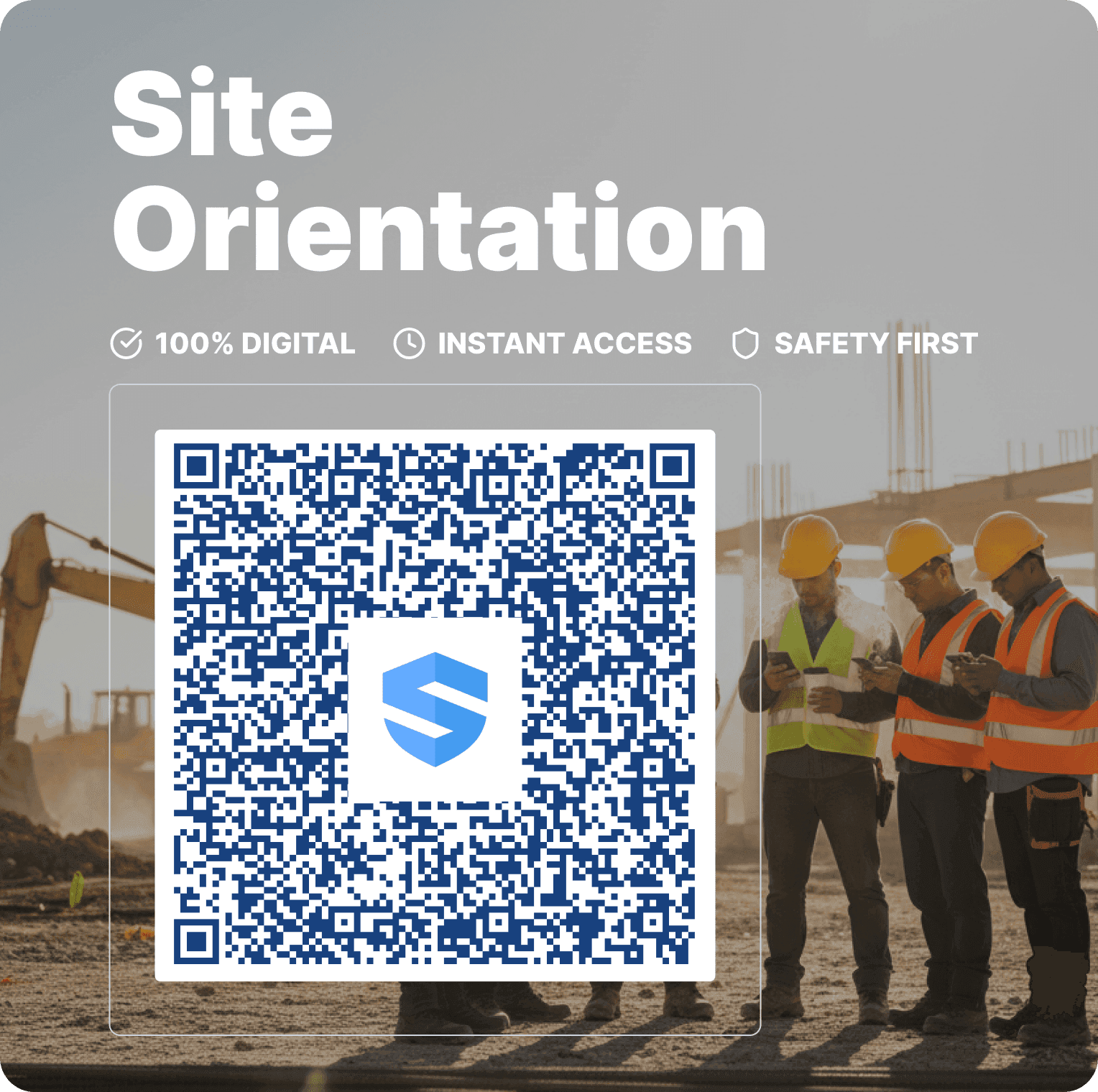
Reduce first-day delays by letting workers complete required orientations from mobile using QR access.
Certificate Management
Avoid last-minute readiness surprises by seeing who is trained, certified, and qualified before work begins.
Micro-learning
Close small qualification gaps with short modules completed in the field — not a classroom day later.
Digital Permits
Keep approval workflows moving with digital submission, routing, review, and records.
Searchable SDS with Rosie
End binder hunts — field teams search data sheets and approved content in plain language.
QR Codes
Cut navigation to zero: one scan opens the right form, procedure, or asset record.
Digital Forms by Rosie
Remove paper handling and re-entry — JHAs, PTPs, and FLRAs submitted from the field, structured by Rosie.
Mobile / Offline Workflows
Keep crews moving in basements and dead zones — everything works offline and syncs later.
Keep exploring the work SALUS gives back.
These pages use the same field-to-proof system from different operating angles.
Every worker on the same page — in their own language.
One channel for every crew, in 21+ languages — instructions confirmed by name, hazards answered with visible fixes, and the workers who feel heard stay.
Cut the clutter, the admin, the overhead. Not the protection.
SALUS and Rosie cut safety admin line by line — daily reports in minutes, site plans the same afternoon, audit packets on demand — with proof intact.
The whole world asks for proof. Rosie answers them all.
GCs, owners, auditors, insurers, and executives all ask for proof — but the evidence lives in binders, PDFs, photos, and inboxes, when it exists at all. SALUS captures crew-level facts with full context, and Rosie assembles them into packets, dashboards, and live portals in minutes.
Find the risk. Close the loop. Prove it.
Construction risk management software that connects hazard assessments, inspections, incidents, corrective actions, and verified closure across every jobsite.
Remove the safety admin delays that slow crews down.
Build a faster ready-to-work process with SALUS — bring your worst shift-start to a 15-minute demo and we'll walk the blockers one by one.
Unblock · Capture once · Answer instantly · Never repeat