

200 sites. One dashboard. Zero blind spots.
Heavy civil lives where the bars die and the weather makes the rules: remote cuts with zero signal, and a 2 PM rainstorm that rewrites today's Subpart P obligations at every open excavation. SALUS was built for both — the checklist at the trench with GPS and photo proof, fully offline, syncing when signal returns; re-inspection alerts that fire themselves when the rain hits; and every one of 200 sites on one live dashboard, with Rosie turning it all into the answers, alerts, and bid-ready proof the whole company runs on.
Trusted by Universal Group, WestUrban, Professional Excavators, and Wildstone.
- Competent person
- R. Mendez — at the trench, GPS-confirmed
- Soil class
- Type B — sloping verified, photo attached
- Protective system
- Trench box · depth 7'2" · ladder within 25'
- Utility locates
- Marks photo-verified · ticket #4471 active
- 2:10 PM
- Rainfall event — re-inspection triggered, completed 2:45
The circuit · one inspection
The right-of-way
The office
The bid room
One fact, traveling
The cost of paper across 200 sites.
Heavy civil's problem isn't the program — it's geography. The distance between the trailer and the trench is where execution quietly degrades, and paper can't cross it.
200 inspections a day. You see them next week.
On paper, excavation inspections, equipment checks, and JHAs live in truck cabs across 200 sites. By the time Monday's data reaches the office, it's the following Monday — a 5–7 day blind spot per site. The deficiency documented at dawn runs all week.
Millions a year in foreman paperwork.
At $53–$78/hr fully loaded, safety admin across a 200-site operation quietly consumes seven figures annually — on projects running 3–8% net margins, where that's the difference between profit and loss.
Strong program. Inconsistent across geography.
Your procedures are good. The challenge is executing them identically across every crew, every site, every county. Paper inspections pass audits 73% of the time; digital passes 96%. The gap isn't your program — it's the distance.
The fix isn't more program. It's the program, executed — at the trench, at the machine, at every mile marker.
We were facing a potential $5,000 to $15,000 fine. Now we're getting 4,000 form signatures across the country in a month.
Two things never change out here: no bars, and weather.
Every platform demos well in the office. Heavy civil happens on remote cuts with zero signal, under a sky that rewrites the day's compliance obligations at 2 PM. SALUS was architected for exactly these two facts — not adapted to them.
Offline isn't a feature. It's the architecture.
A large share of heavy-equipment inspections happen where phones show nothing — and adoption there is identical to always-connected sites, because the tool doesn't care. Every keystroke saves locally at the cut with a waypoint, and syncs within minutes of bars returning. The dead-zone log proves it: the record from mile marker 47 is as complete as the one from the yard.
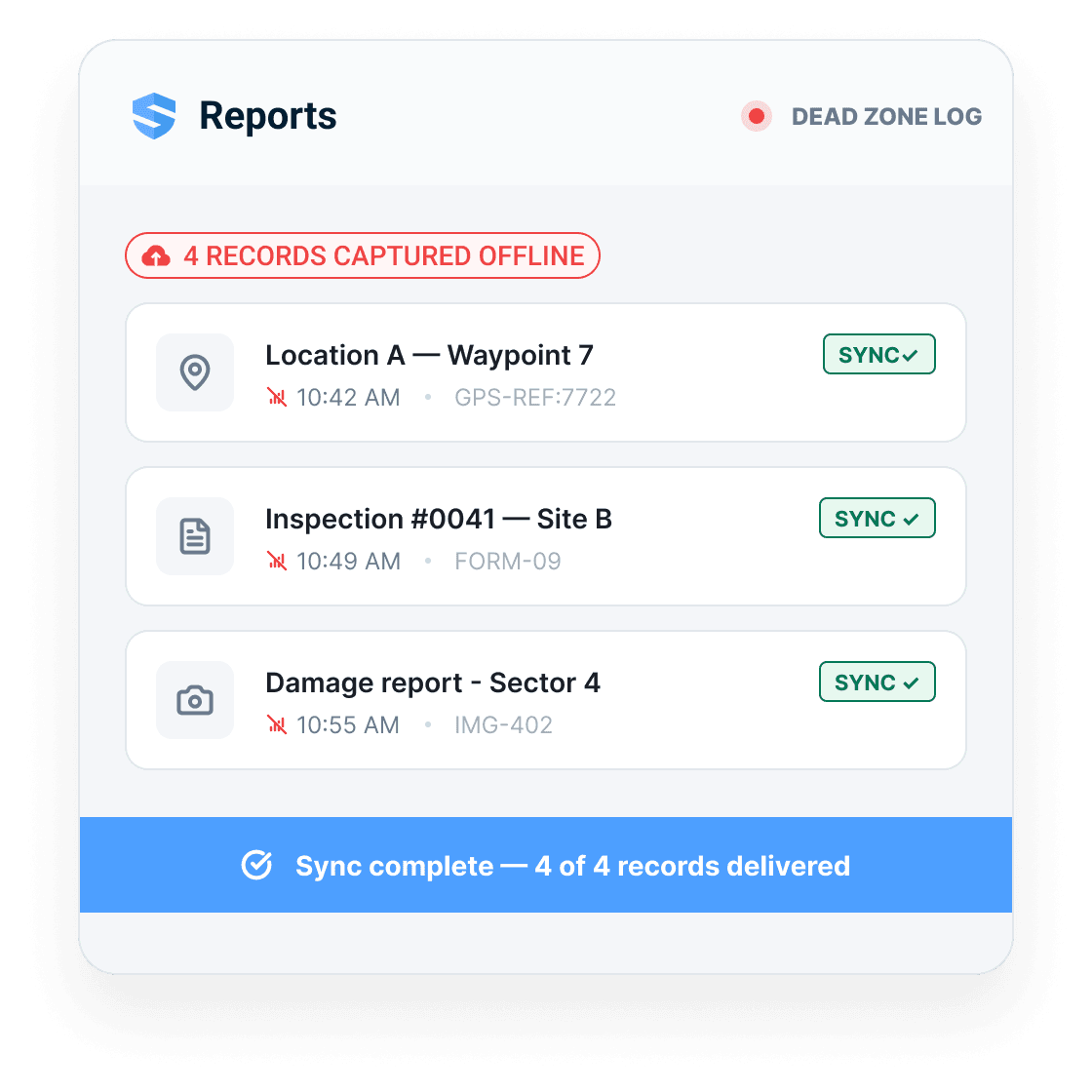
The sky changes the rules. The system keeps up.
Rain triggers Subpart P re-inspection obligations at every affected excavation — and SALUS fires the alert, tracks completion, and flags the misses, county by county, automatically. Wind crossing thresholds raises site-condition alerts; stand-downs push to every phone with acknowledgment tracked by name. Rosie watches conditions across the whole map so nobody has to watch the radar and the spreadsheet at once.
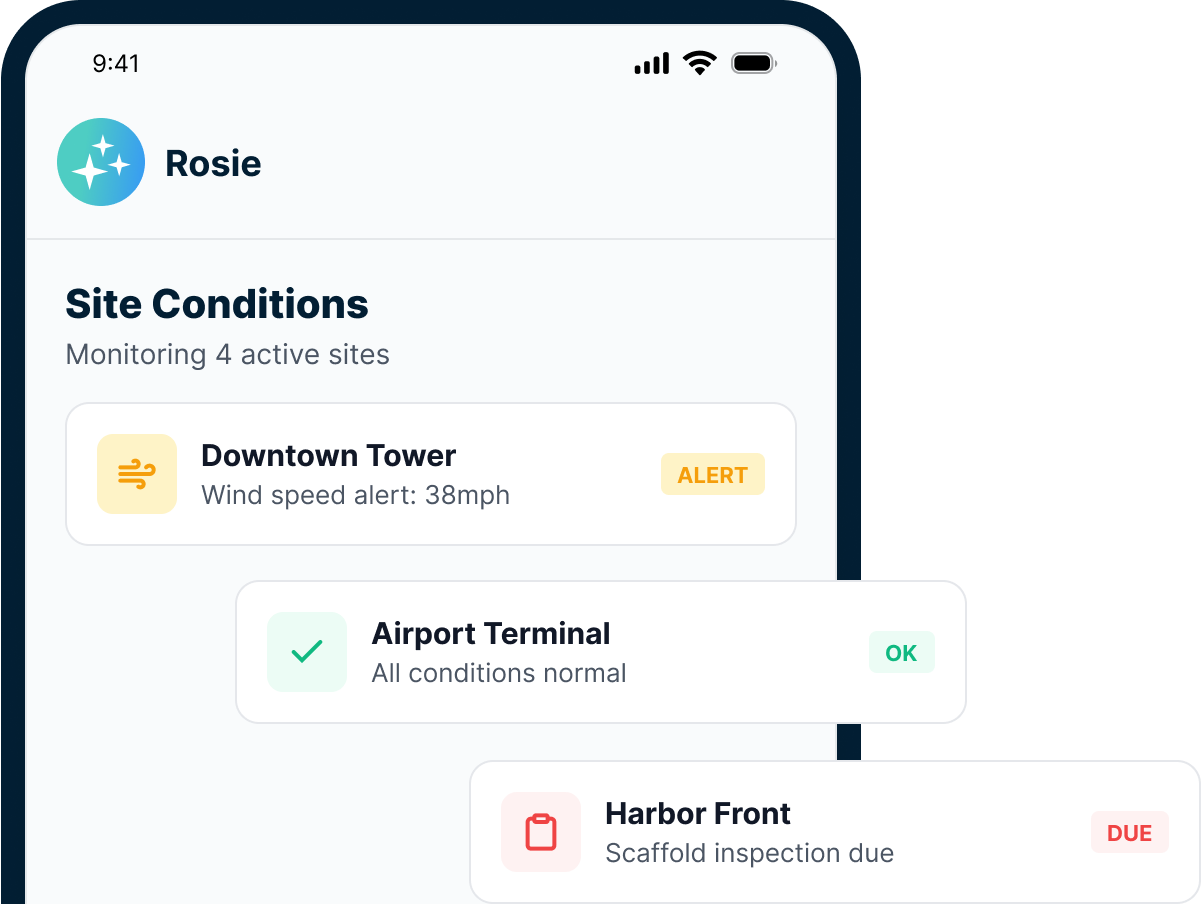
Captured at the cut. Synced at the bars. Re-inspected after the rain.
It starts with one inspection at mile marker 47.
6:40 AM. A competent person opens the trench checklist at the excavation — not in the truck cab.
The inspection in the truck cab protects nobody in the trench.
SALUS doesn't change what your crews do — it moves the doing to where the work is and stamps it with proof. GPS, photos, timestamps: the inspection either happened at the excavation or the data says it didn't. Faster than the clipboard, everywhere the corridor goes, with or without signal.
- 6:40 AM
- Checklist opened at the trench — GPS confirms location
- 6:43 AM
- Soil Type B — conditional logic loads sloping + box requirements
- 6:48 AM
- Photos: protective system, access ladder, spoil pile setback
- 2:10 PM
- Rainfall event — re-inspection alert fired automatically
- 2:45 PM
- Re-inspection complete — tracked, on the record


The trench check that proves itself
A guided Subpart P checklist at the excavation: soil classification drives the conditional logic — sloping, benching, protective system requirements — with photo evidence of conditions and GPS confirming the inspector stood at the trench. And when rain hits at 2 PM, the re-inspection alert fires automatically, tracks completion, and flags if missed. Paper has no mechanism for any of that.
- 6:40 AM
- Checklist opened at the trench — GPS confirms location
- 6:43 AM
- Soil Type B — conditional logic loads sloping + box requirements
- 6:48 AM
- Photos: protective system, access ladder, spoil pile setback
- 2:10 PM
- Rainfall event — re-inspection alert fired automatically
- 2:45 PM
- Re-inspection complete — tracked, on the record
The walk-around lives on the machine
QR on the excavator: the form loads with equipment ID, operator, and GPS, completed in about 6 minutes instead of 19 — with 94% fewer errors and a 96% audit pass rate versus 73% on paper. The deficiency routes to the shop instantly with photos and severity, and the out-of-service flag is visible to every operator who scans.
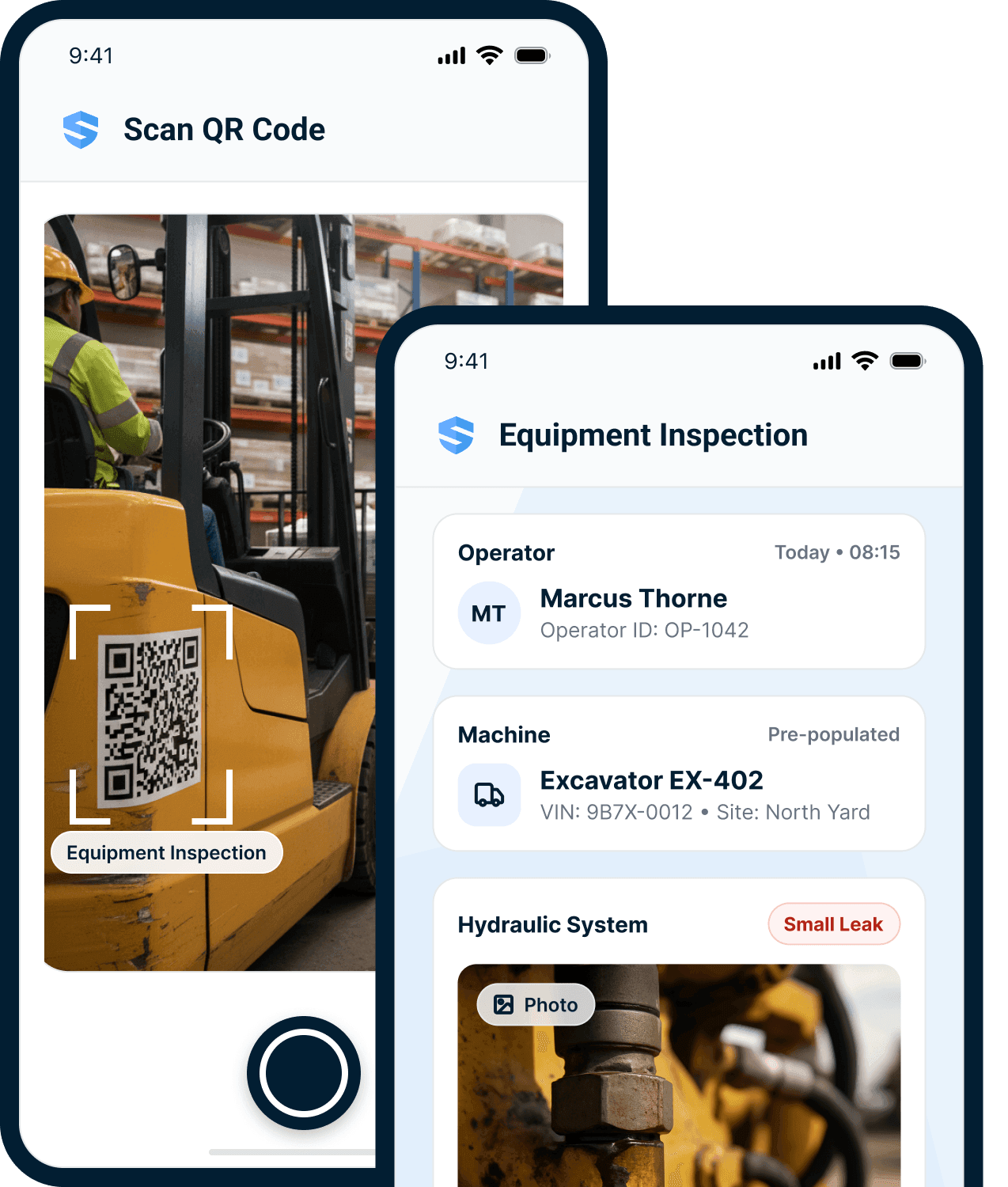
The operator verified at the machine
Tap the name or scan the badge: NCCCO and operator quals matched to this machine, in seconds, from the cab — no call to the office, no spreadsheet. And the lapse never sneaks up: expirations surface 30 days ahead with the renewal pushed to the operator's phone before mobilization.
At 40 ft of reach, the rated capacity is 2,500 lb with the load centered and the boom at or below 45°. Confirm the load weight before lifting.
- Rated capacity
- 2,500 lb
- Configuration
- 40 ft reach · centered load · boom ≤ 45°
- At 50 ft
- Capacity drops to 1,200 lb
The operator still verifies the actual load, attachment, and machine configuration before the lift.
Locates verified with photos, not words
America hits 400,000–800,000 utility strikes a year at an average of $56K each — and the marks are almost always the decisive evidence. SALUS photo-documents mark verification with ticket tracking and positive-response fields, building the due-diligence trail before the bucket touches dirt.
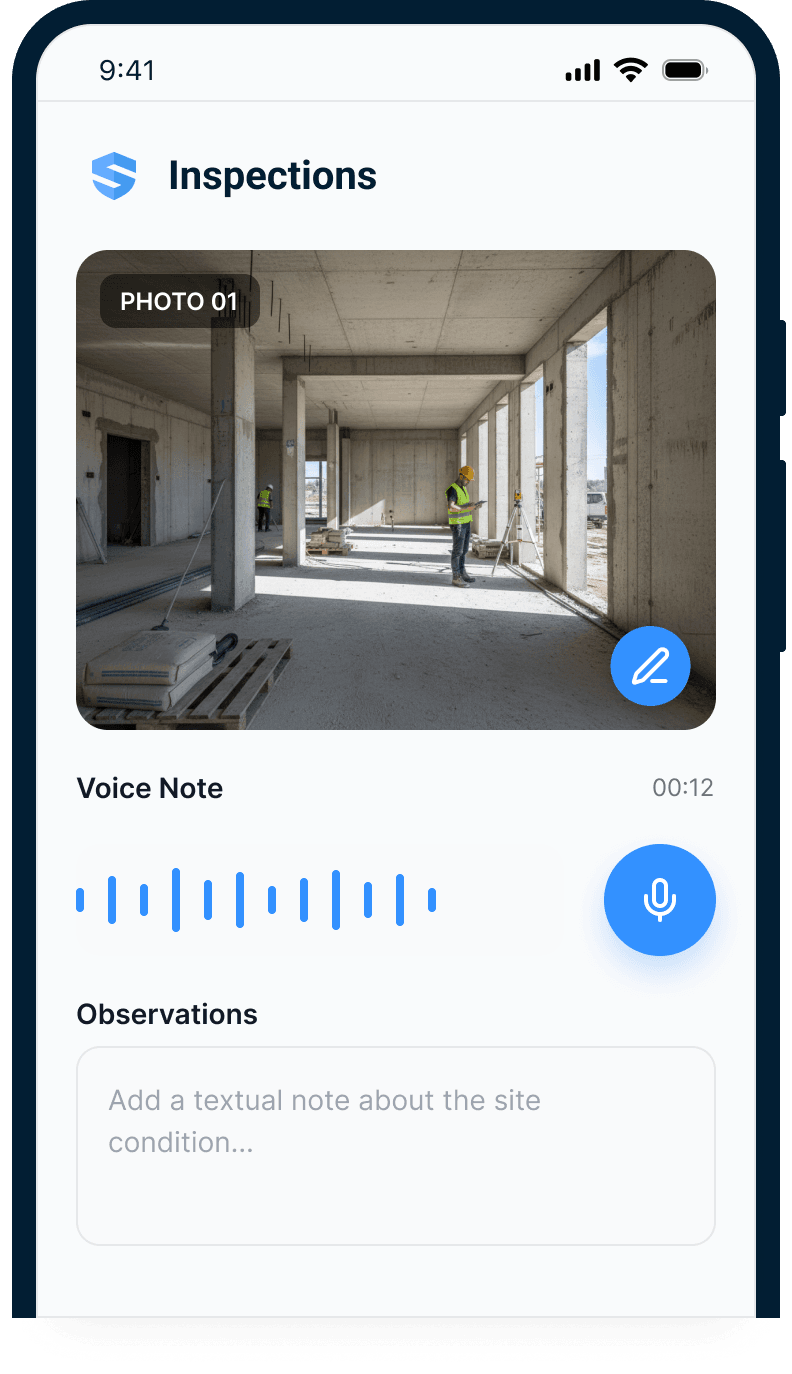
The hazard from mile marker 47 — in 90 seconds
Photo, tag, describe — or speak it in Spanish and let Rosie write the record. It routes to a named person, closes with a photo in 3.5 days instead of 14, and works fully offline on the remote cut, syncing when bars return. Professional Excavators watched accuracy improve overnight when illegible paper forms disappeared.
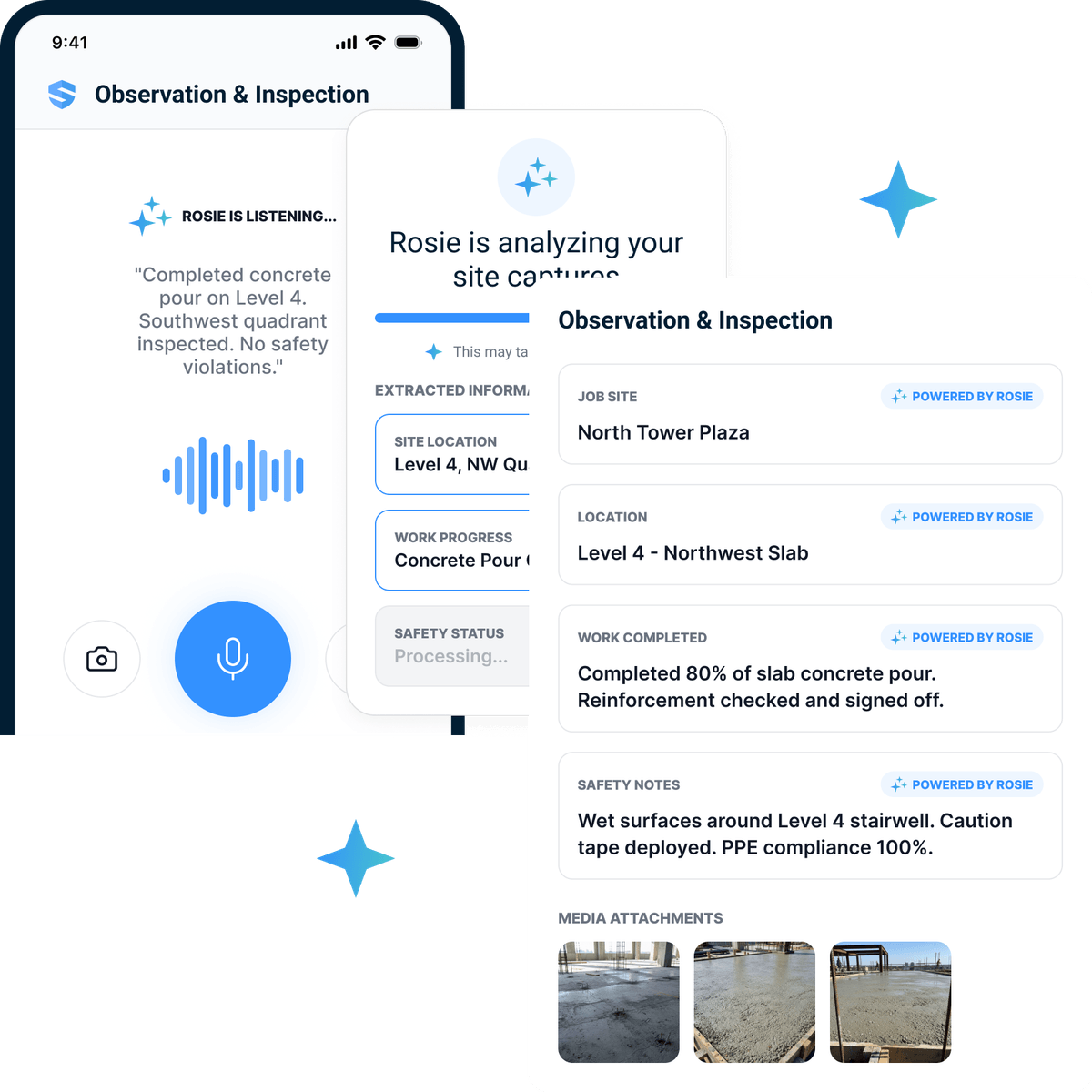
GPS-stamped. Photo-verified. Everywhere the corridor goes.
The same inspection is now your safety director's eyes.
Every trench check, equipment scan, and locate photo from 200 sites — one living record, in real time.
Stop reading last week. Start seeing today.
A heavy civil safety director's nightmare isn't the inspection the crew did — it's the one nobody can verify across 200 sites: the morning trench check that didn't happen, the re-inspection after the storm, the corrective action aging in a truck cab. Because every crew captures at the source, the portfolio watches itself — and Rosie watches it continuously, county by county.
The 8:30 AM answer
Which of 200 sites completed the morning excavation inspection — and which didn't. Paper answers next Monday; the dashboard answers before the coffee's cold.
Rain hit six counties last night
Six sets of Subpart P re-inspection alerts fired by themselves, tracked to completion, misses flagged by 9 AM. Nobody cross-referenced a radar map against a site list.
The machine that almost ran to failure
The telehandler flagged at the morning scan goes out of service fleet-wide before the second shift touches it — deficiency, photos, and parts already with the shop.
The site that went quiet
Mile marker 12 hasn't submitted anything since Tuesday — and quiet on a remote cut isn't calm, it's invisible. Rosie names it before the week ends, not the audit.
- "Which operators have NCCCO certs expiring in 30 days?"
- "Which sites had rainfall yesterday and haven't re-inspected?"
- "Flag equipment with corrective actions aging past 7 days."
Northgate Tower Block A is the priority. It has one serious open incident, 436 unassigned corrective actions, and 17 fall-protection certificates expiring within 30 days.
- Incident
- 1 serious open case · 13 total
- Actions
- 436 open · none assigned
- Credentials
- 17 fall-protection certificates expiring
The ranking supports the safety leader’s judgment; it does not replace site-specific review.
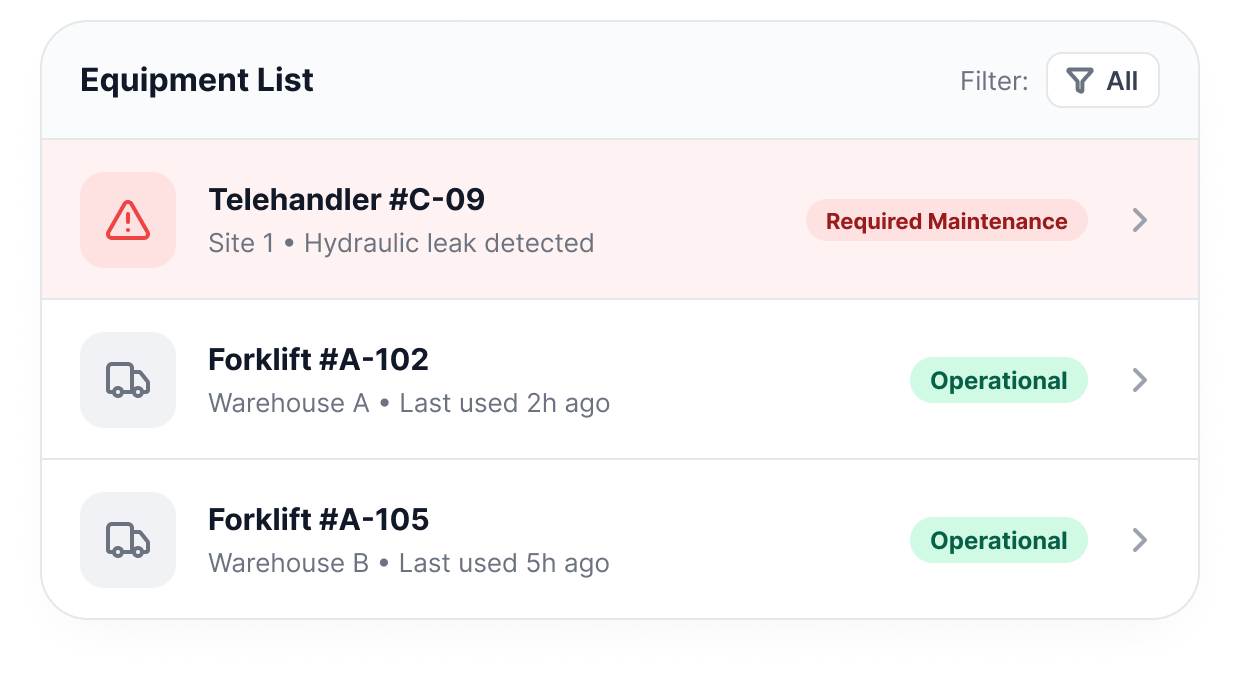
Dozens of machines across 200 sites. One source of truth.
In heavy civil, the fleet is the program: the excavator that ran three days on a documented deficiency, the crane whose operator nobody re-verified, the dozer that went to failure because the work order lived on a clipboard. SALUS makes the machine itself the record — scan it for everything, and everything about it flows to one fleet view the shop and the safety office share.
The 6-minute walk-around
QR on the machine loads the inspection with equipment ID, operator, and GPS — 6.2 minutes instead of 18.8, with 94% fewer errors and a 96% audit pass rate versus 73% on paper.
Deficiency to shop, at the scan
Photos, severity, and parts needed route to maintenance the moment they're captured — and the out-of-service flag is visible to every operator who scans, on every site, instantly.
Maintenance before failure
The preventative view across the whole fleet: what's due this week, what's overdue, what's trending toward trouble — so machines get serviced on schedule, not after the blowout.
Status the schedule can trust
In maintenance, back-in-production dates, utilization — live by machine. The PM plans around real availability instead of radio calls to the shop.
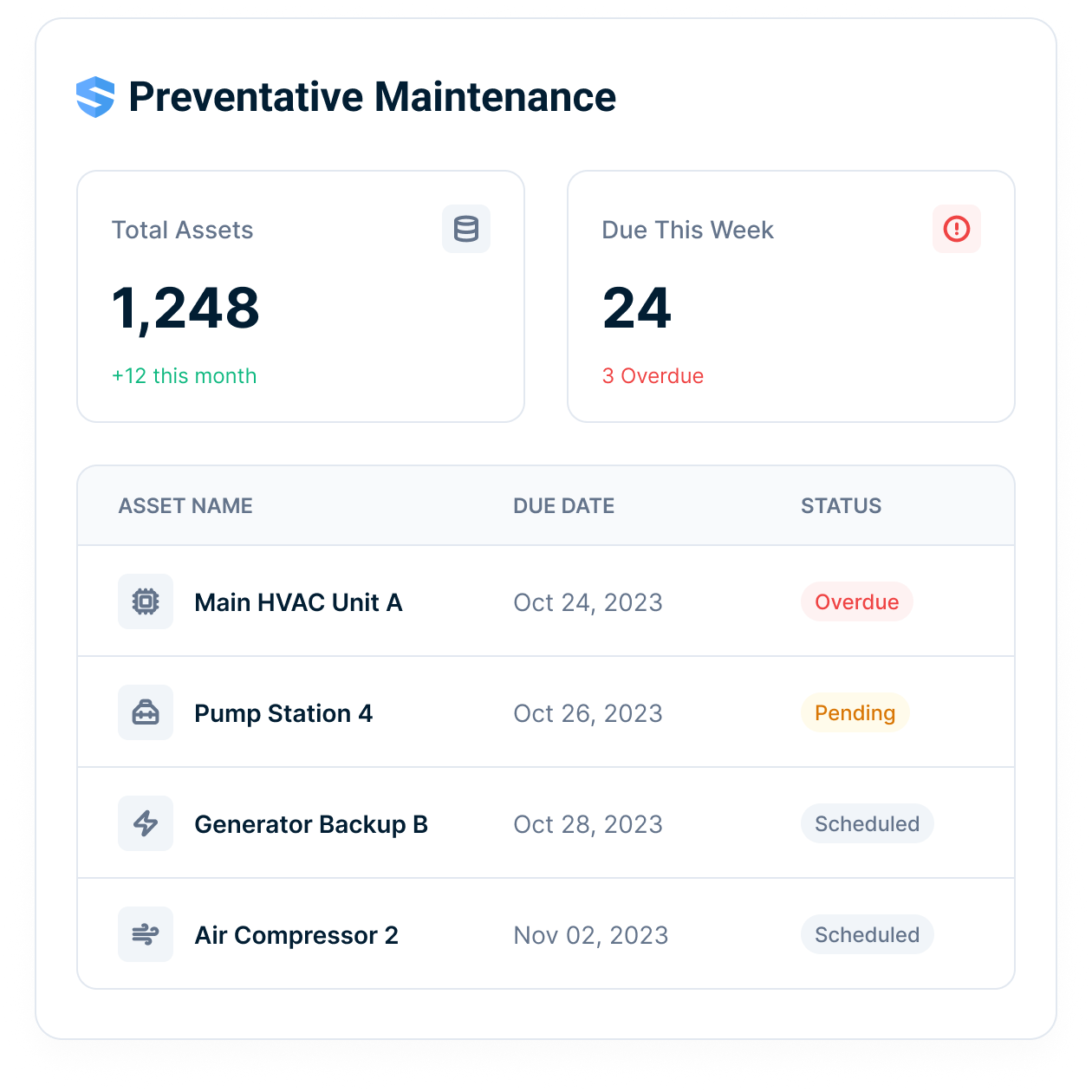
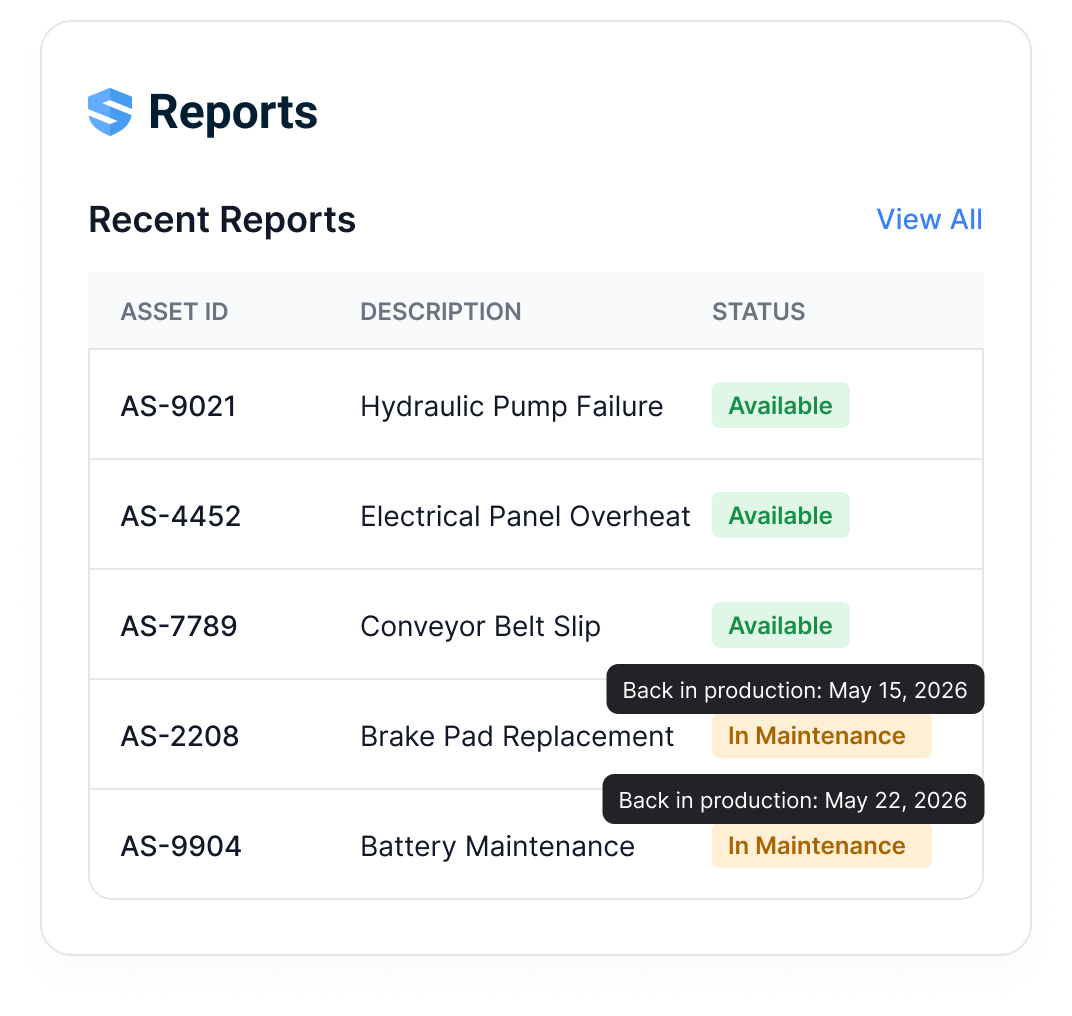
Scan it for everything. The repair loop starts at the scan. The schedule plans on real status.
By Friday, that inspection is winning the DOT package.
Crew-level facts become the live proof public-works prequalification now demands.
$550B in infrastructure work — and it checks your evidence first.
IIJA created a once-in-a-generation pipeline, and DOT and municipal prequalification gates it: an EMR below 1.0, a documented safety management system, audit-ready records. Every GPS-stamped inspection and photo-verified locate your crews captured is already that evidence. The Trust Portal shares it as a live link — inspection completion, fleet compliance, cert currency — verifiable by any agency or GC in minutes. And the same field record proves the safety performance every prequal weighs: Universal Group captures 4,000 form signatures a month across 200–400 daily active sites, and WestUrban has run 900 consecutive days with zero lost-time injuries.
- DOT and municipal prequal answered with live data instead of a binder assembled the night before.
- Your best foreman's excavation protocols — soil class logic, protective-system requirements — encoded into every form on every site.
- When the utility-strike claim or the records request comes, Rosie assembles the due-diligence packet from the same field record — in minutes.
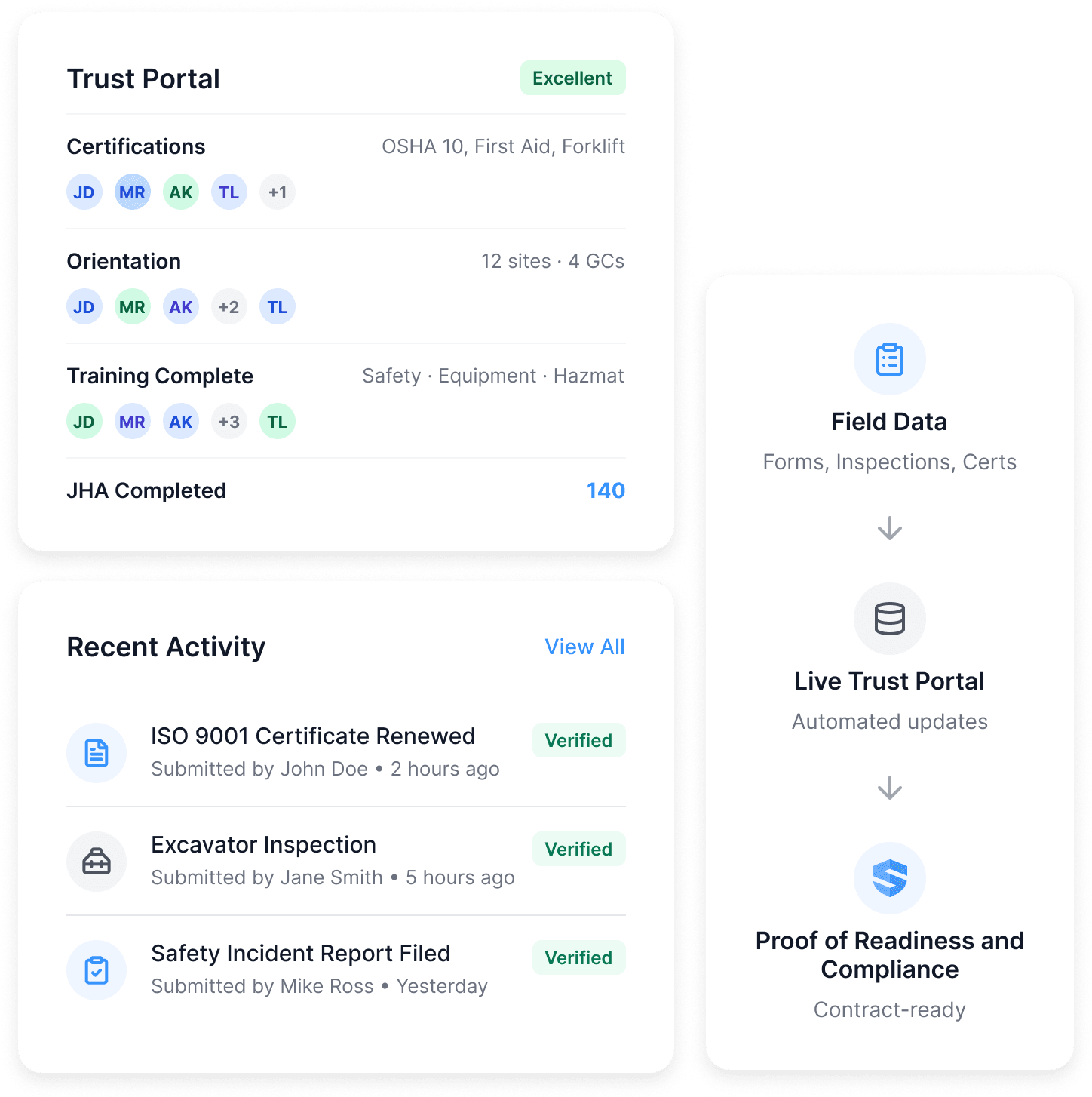
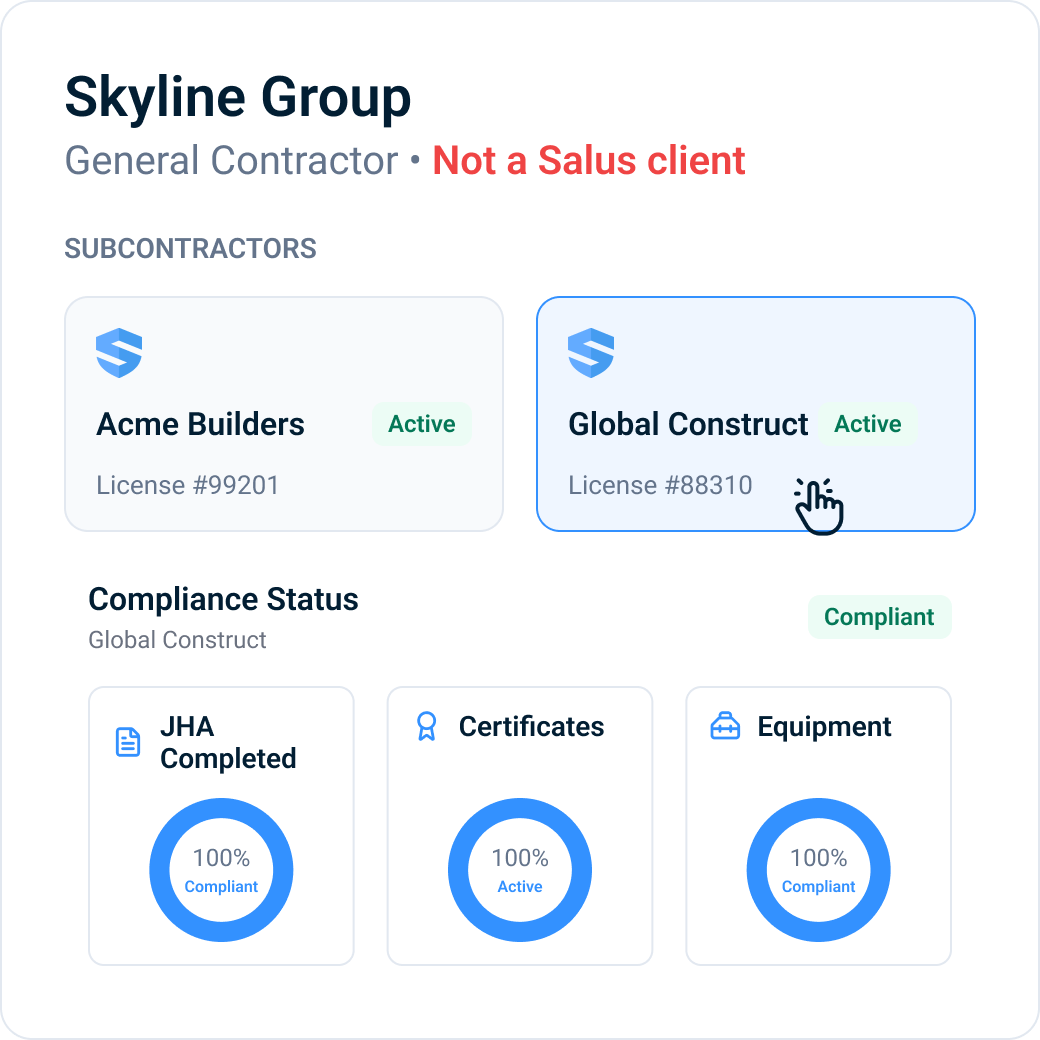
Bid-ready proof, captured while the work happens. Not rebuilt before the deadline.
One inspection at mile marker 47. Proof everywhere it matters.
Capture once, where the work is, with no friction — and let Rosie carry the fact to everyone who needs it, in whatever form they need it.
Built for the whole operation — not one desk in it.
The same captured facts serve everyone. Pick your seat and see exactly what SALUS takes off your plate.
Your safety director
Gets back · site visibility and proof
200 sites on one screen, rainstorm re-inspections tracked, certs renewed ahead — and Rosie drafting the programs, packets, and answers.
Your foremen
Gets back · more time on the work
The walk-around in 6 minutes by QR, operators verified from the cab, hazards reported in 90 seconds — and a record that proves the crew was ready.
Your executives
Gets back · margin, EMR, and DOT proof
Excavation protocols encoded at every site, the project about to go sideways flagged early, and the evidence that protects margin, supports the experience rating, and strengthens the DOT bid.
Go deeper on what you just watched.
Digital Forms
Conditional logic for excavation, soil classification, traffic control — with mandatory photo evidence.
QR Codes
Equipment inspection at the machine — loaded with equipment ID, operator, and GPS in one scan.
Equipment & Asset Management
Fleet inspections, instant deficiency routing with photos and severity, out-of-service flags every operator sees.
Certificate Management
NCCCO and operator quals across the fleet — verified at the form, renewed 30 days ahead.
Offline Mode
Full functionality on remote cuts with zero signal — every keystroke saved, synced when bars return.
Trust Portal
Live compliance proof for DOT agencies, municipalities, and GCs — the prequal binder, retired.
Heavy civil contractors who made the switch.

The Universal Group
4,000 form signatures across the country in a month, captured across 200–400 daily active sites — with compliance fine exposure cut from $5K–$15K to zero.

Zero lost-time injury
Crossed 900 consecutive days with zero lost-time injuries — and crews said they'd quit before going back to paper.

Voice-to-text
Crews document hazards in their own language. Accuracy improved overnight.

One dashboard
Compliance across multiple jurisdictions from a single platform.

Live dashboards
Won multiple jobs by showing live safety dashboards during bid presentations.
Trusted by contractors managing 400K users across 150K sites
Asked by heavy civil contractors, answered straight.
We already run a rigorous excavation program. Why SALUS?
How does SALUS handle 200+ geographically dispersed sites?
Does it work offline on remote sites?
How does it handle rainstorm re-inspections?
How does it handle multilingual crews?
I'm an exec — why should I care?
Your jobsite is a highway. See all of it, right now.
Bring your inspection clipboard, your locate tickets, and your last DOT prequal — and watch one QR scan replace the paper trail in a 15-minute demo.
Trusted by Universal Group · WestUrban · Professional Excavators · Wildstone