

6 permits. 5 regulators. One platform — at the point of work.
Confined space, hot work, LOTO, equipment, JHAs, daily reports — across OSHA, EPA 608, NFPA 51B, ASME, and state codes. Your program is strong; the gap is execution: permits signed in the trailer 200 yards from the space, atmospheric fields checked "OK" with no readings, a fire watch documented in 30 seconds. SALUS completes the permit at the space entrance, photographs the fire watch, and connects every permit to every other — while Rosie turns it all into the answers, programs, and live proof the whole company runs on.
Trusted by Viaduct Sheet Metal, Giusti Group, Aquicon, and ECOH Management.
- Requested by
- QR at the space entrance — not the trailer
- Atmosphere
- O₂ 20.9 · LEL 0 · CO 0 · H₂S 0 — readings required, recorded
- Entrants
- 3 — confined space certs verified at the request
- Rescue plan
- Attached and verified before the permit activates
- Zone check
- No hot work in Zone A during the entry window
The circuit · one permit
The space
The office
The bid room
One fact, traveling
The real cost of paper in a permit-heavy trade.
Mechanical carries 3–5x the documentation burden of any other trade on the site. The program isn't the problem. The distance between the program and the point of work is.
4 hours a day. 6–10 permit types. 5 regulators.
Confined space, hot work, LOTO, equipment inspections, JHAs, and daily reports — across OSHA, EPA 608, NFPA 51B, ASME, and state codes. On paper, at $65–$85/hr fully loaded, managed by the most expensive people on your crew.
Strong program. Inconsistent execution.
The challenge isn't your procedures — it's maintaining them identically across every crew, every shift, every project. FM Global: $123K average loss when hot work is well-executed, $5.1M when it isn't. Same permit. 41x different outcome.
Data that records but doesn't predict.
Your field generates leading-indicator data every day — atmospheric readings, fire-watch compliance, near-miss volume, corrective-action speed. On paper it's locked in binders. On a dashboard it predicts what's about to happen.
The fix isn't more program. It's the program, executed — at the space, at the flame, at the equipment.
It's not enough to say a job is completed safely — it needs to be proven.
It starts with one scan at the tank entrance.
6:02 AM. An entrant QRs Tank 4. Everything below happens because of it.
The permit signed in the trailer protects nobody in the tank.
SALUS doesn't change what your crews do — it moves the doing to the point of work and removes the shortcuts paper invites. Same program, executed every time, in a fraction of the time. That's operational safety in the trade where the consequences are catastrophic instead of minor.
- 6:02 AM
- Requested by QR at the space entrance — specific to this space
- 6:04 AM
- Atmosphere recorded: O₂ 20.9 · LEL 0 · CO 0 · H₂S 0 — mandatory fields
- 6:06 AM
- 3 entrants verified — confined space certs current
- 6:08 AM
- Rescue plan attached and verified
- 6:10 AM
- Permit active — visible to the safety director in real time
Confined space, completed at the space
QR at the entrance loads the permit for this specific space. O₂, LEL, CO, and H₂S are mandatory fields — the permit can't complete without recorded readings, so 'checked OK' from the trailer stops existing. Entrant certs are verified at the request, and the rescue plan attaches before the permit activates. 5–8 minutes, no blank fields possible.
- 6:02 AM
- Requested by QR at the space entrance — specific to this space
- 6:04 AM
- Atmosphere recorded: O₂ 20.9 · LEL 0 · CO 0 · H₂S 0 — mandatory fields
- 6:06 AM
- 3 entrants verified — confined space certs current
- 6:08 AM
- Rescue plan attached and verified
- 6:10 AM
- Permit active — visible to the safety director in real time
Hot work that proves itself
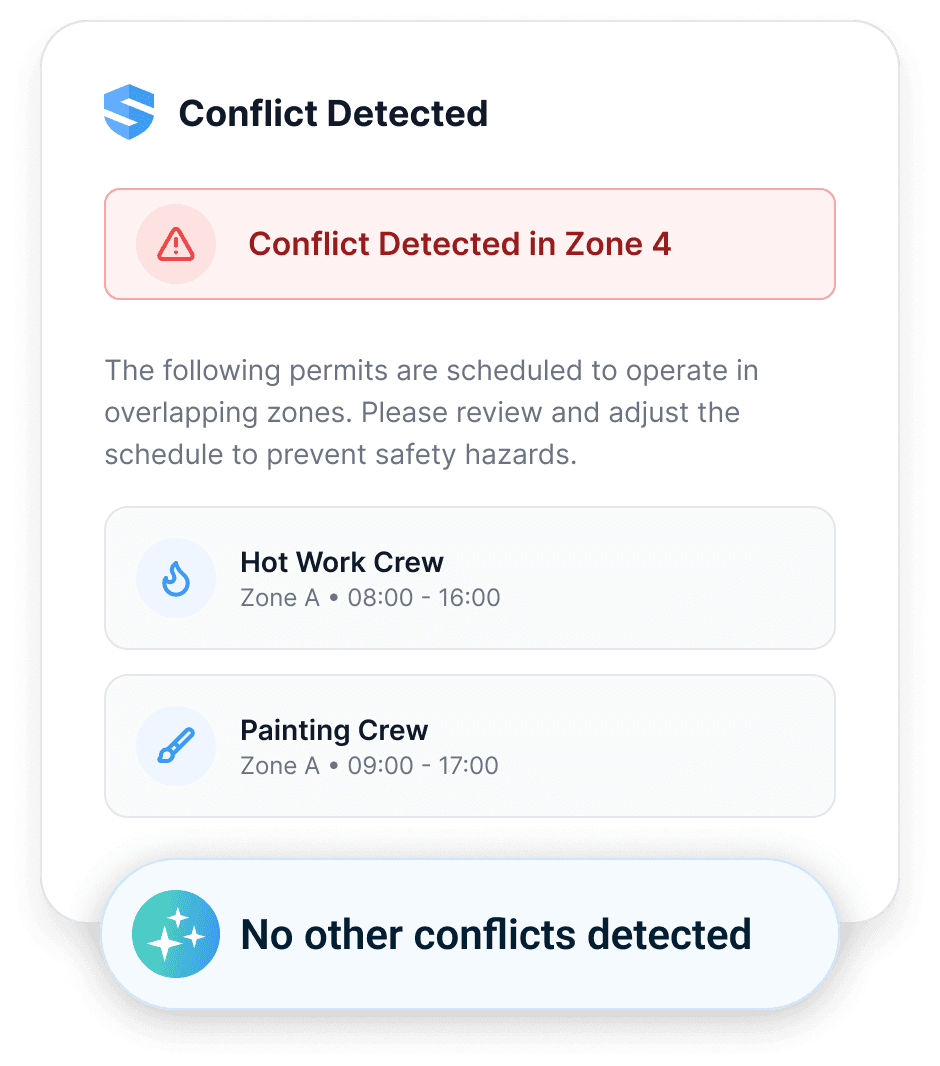
NFPA 51B logic built in: adjacent-space verification requires a geotagged photo, and the fire watch uploads a timestamped photo every 15 minutes through the full 60-minute post-work period. The fire watch happened, or the data says it didn't. And if the hot work overlaps another crew in the same zone — paint solvents, an active entry — it's flagged at the request, not after both crews are working.
LOTO and inspections live on the equipment
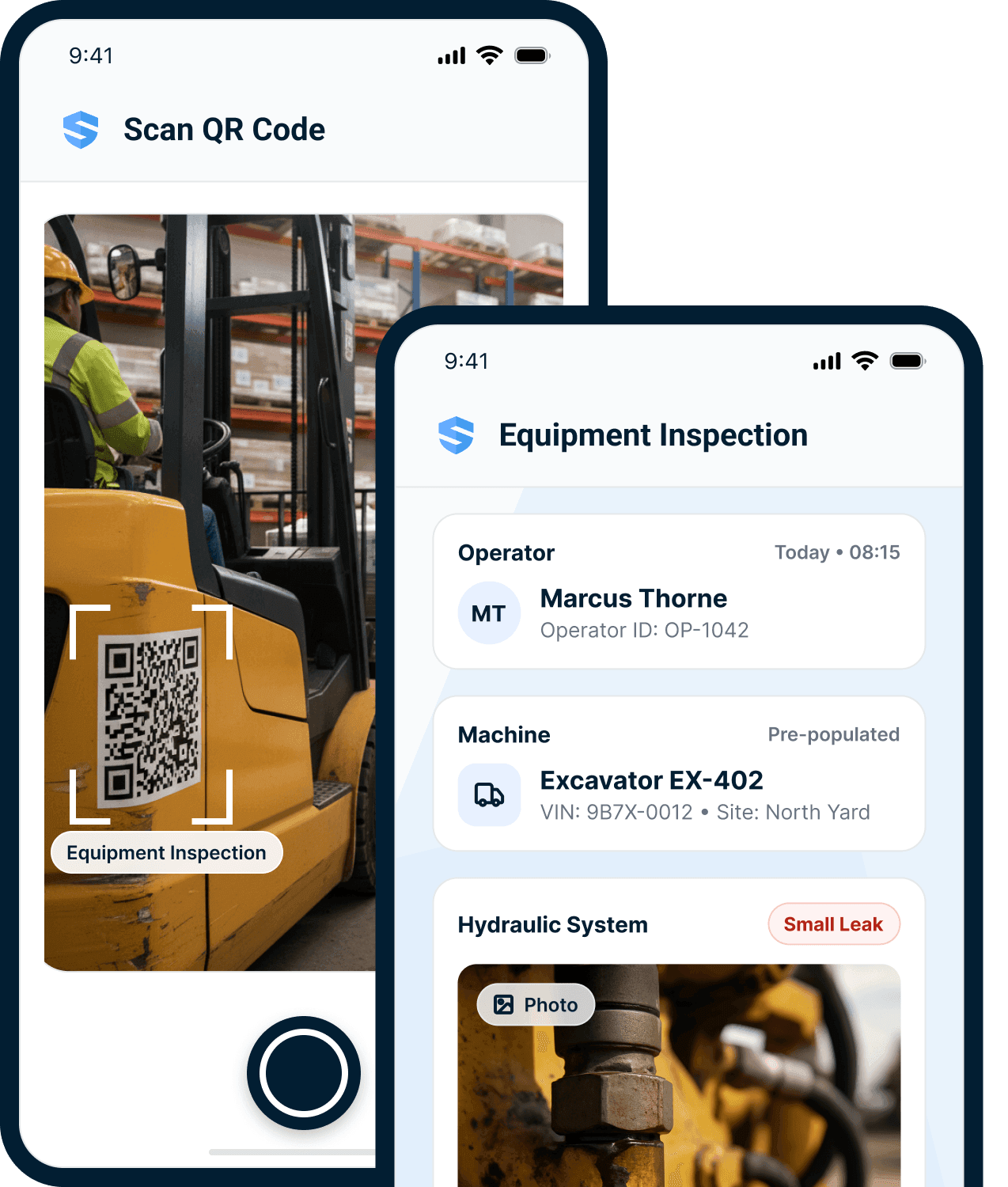
One QR on every brake, shear, welder, and air handler: scan for the current, version-controlled LOTO procedure in 10 seconds, scan to inspect with the operator and machine pre-populated. A deficiency routes to the shop instantly with photos and severity — and the out-of-service flag is visible to every worker who scans, not filed in a cab.
The hazard report takes 90 seconds
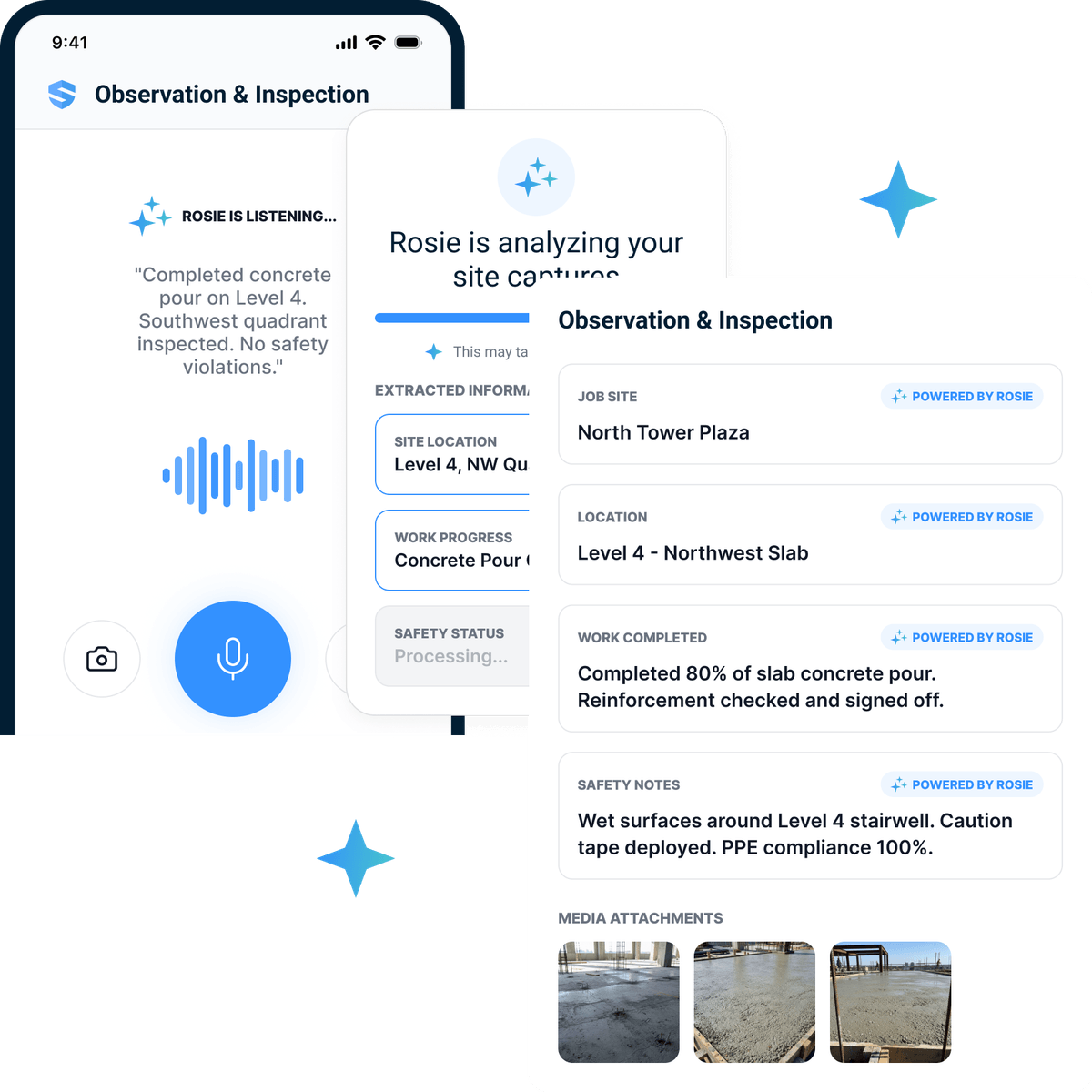
The hissing fitting, the kinked hose, the smell nobody can place — say it, photograph it, done. Rosie writes the record with worker, task, and location attached; it routes to a named person and closes with a photo in 3.5 days instead of 14. When reporting costs 90 seconds, near-miss reporting climbs — and your leading indicators start to exist.
In every language, in every dead zone
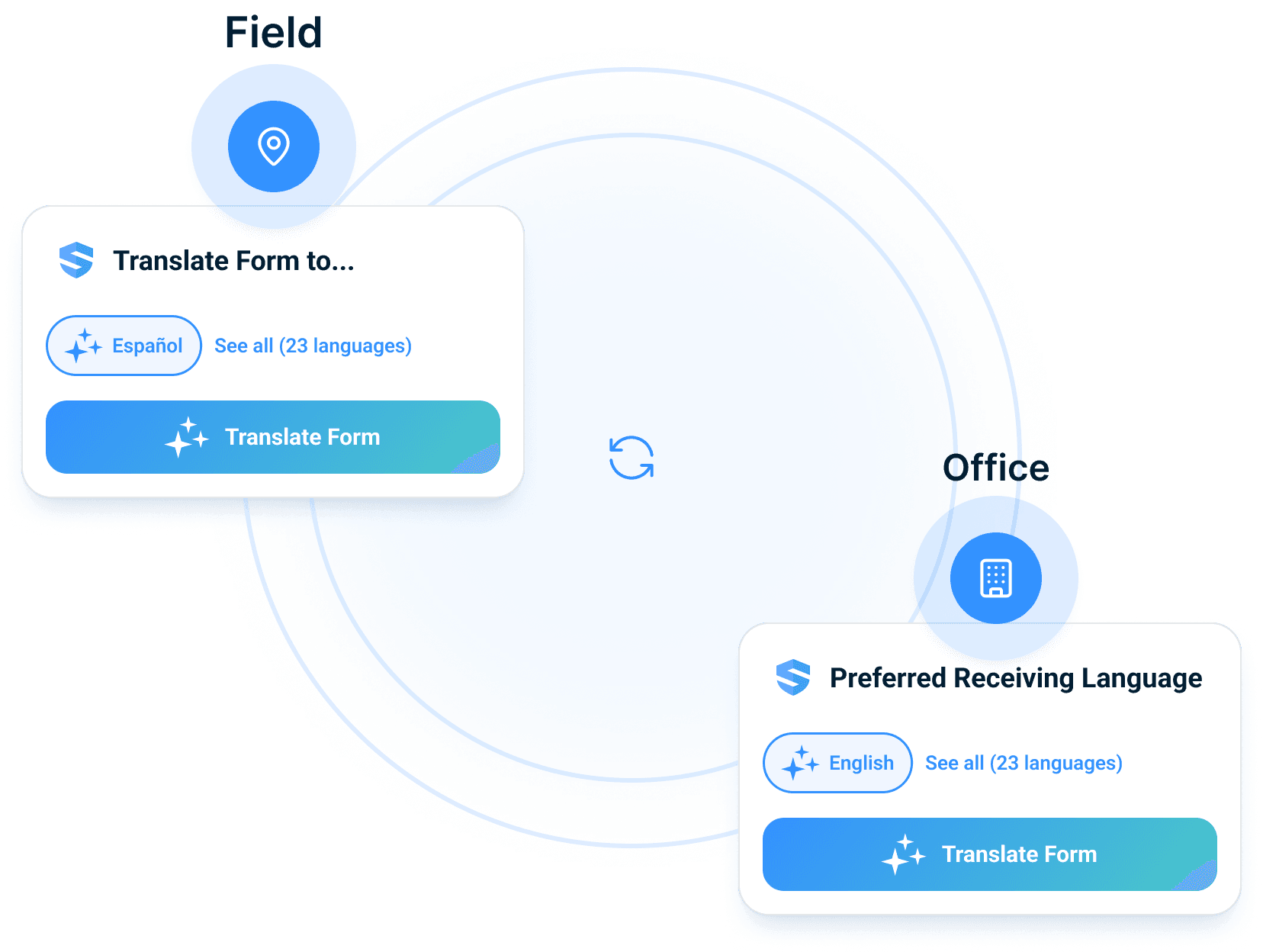
Boiler rooms, risers, rooftops, basements — full offline, every keystroke saved, synced when bars return. And every permit, procedure, and Rosie answer works in the worker's language, both directions. A permit in a language the worker actually reads is a different safety tool than one they can't.
No blank fields. No skipped watches. No trailer trips.
The same scan is now your safety director's eyes.
Every permit, reading, and fire-watch photo from every crew — one living record, watched continuously.
Stop compiling. Start preventing.
A mechanical safety director's nightmare isn't the permit the crew filled out — it's the interaction nobody saw: hot work over an active entry, the entrant whose cert quietly lapsed, the fire watch that existed only on paper. Because every crew captures at the point of work, the record is rich enough to watch itself — and Rosie watches it continuously, across every permit type at once.
Multi-permit integration
"Welding inside a boiler" triggers confined space + hot work + LOTO automatically, with the right protocols. Conflicts — hot work in an active entry zone — are flagged at the request. Paper manages these as separate silos.
Compliance you can see
Atmospheric monitoring, fire-watch completion, permit quality — by project, by crew, in real time. Giusti spotted a project drifting after a foreman change and intervened the same week.
Certs current before it matters
Confined space, welding, rigging, EPA 608 — expirations surface weeks ahead with the refresher pushed to the worker's phone, so the gap never forms.
Corrective actions that close
Named individuals, photo closure, automatic escalation. Average close: 14 days → 3.5 — and near-miss reporting climbs once reporting takes 90 seconds.
- "Which workers have confined space certs expiring in 30 days?"
- "Show atmospheric monitoring compliance across all projects."
- "Flag hot work permits with missing fire watch evidence."


Four active sites have no submissions. SeaTac and Surrey are the highest priority because each has 71 workers on site without a hazard assessment on record.
- SeaTac
- 71 workers · no assessment
- Surrey
- 71 workers · no assessment
- Broadway Towers
- 2 locations · 9 workers total
Site leaders confirm work status and complete the missing assessments before affected tasks continue.
By Friday, that scan is winning the data center.
Crew-level facts become the live proof mission-critical owners now demand.
Data centers, pharma, hospitals — mechanical risk is what they check first.
A confined-space rescue or a hot-work fire doesn't produce a minor injury — it shuts the project down. On a data center where the delay clock is the most expensive meter on the project, or a pharma cleanroom where one event triggers an FDA investigation, owners check the mechanical sub's evidence before anything else. FM Global already requires digital hot work permits on data center work. The Trust Portal answers with a live link — permit compliance, fire-watch records, cert currency — verifiable by any GC or owner in 5 minutes, no SALUS account required.
- Prequal answered with live permit-compliance data instead of a binder assembled the night before.
- Your best people's procedures encoded into every permit — 'welding inside a boiler' carries the protocols whether your veteran is on site or not.
- When the dispute, the records request, or the insurance renewal comes, Rosie assembles the packet from the same field record — in minutes.
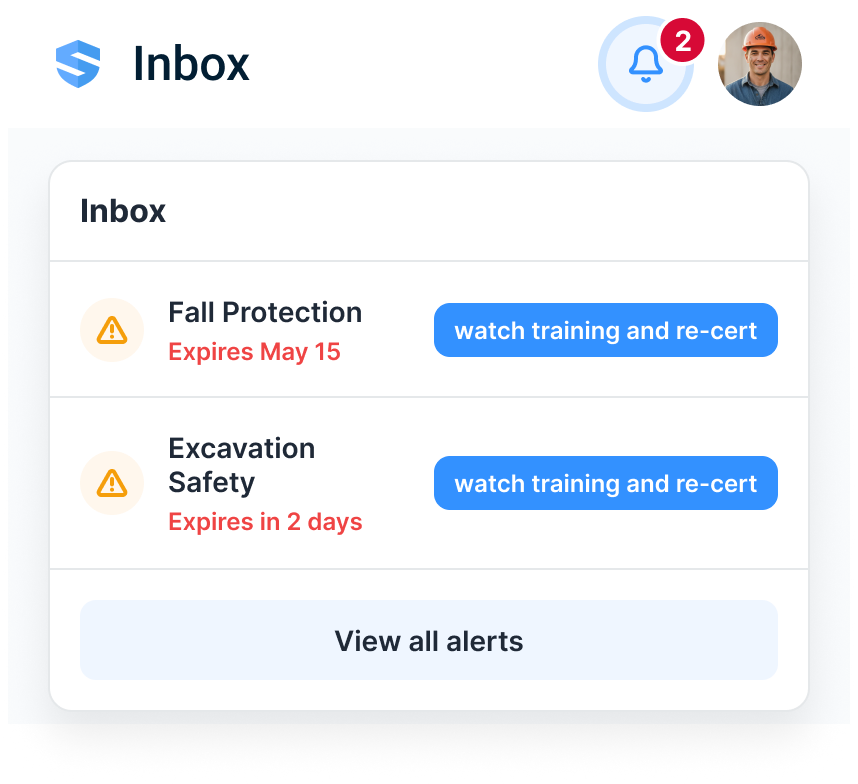
The due-diligence record is assembled. Daily hazard assessments cover 96% of active site-days, incident response averages 2.3 hours, and 23 fall-protection certificates need attention.
- Field evidence
- 12,847 forms · 96% active site-days covered
- Follow-through
- 94% of corrective actions closed
- Credential gap
- 23 fall-protection certificates expire within 30 days
The risk team reviews the source-linked packet before it is shared with the broker or insurer.
The due-diligence record is assembled. Daily hazard assessments cover 96% of active site-days, incident response averages 2.3 hours, and 23 fall-protection certificates need attention.
- Field evidence
- 12,847 forms · 96% active site-days covered
- Follow-through
- 94% of corrective actions closed
- Credential gap
- 23 fall-protection certificates expire within 30 days
The risk team reviews the source-linked packet before it is shared with the broker or insurer.
The proof an owner checks before the award writes itself at the tank entrance.
One scan at the tank entrance. Proof everywhere it matters.
Capture once, at the point of work, with no friction — and let Rosie carry the fact to everyone who needs it, in whatever form they need it.
Built for the whole shop — not one desk in it.
The same captured facts serve everyone. Pick your seat and see exactly what SALUS takes off your plate.
Your safety director
Gets back · permit visibility and proof
Multi-permit integration, atmospheric and fire-watch compliance on one screen, certs renewed ahead — and Rosie drafting the programs, packets, and answers.
Your foremen
Gets back · fewer trailer trips
Confined space at the space in 5–8 minutes, LOTO 10 seconds from the equipment, fire watch tracking itself — and a record that proves the crew was ready.
Your executives
Gets back · margin protection and experience-rating support
Your best people's permit protocols encoded at every site, the project about to go sideways flagged early, and the evidence that protects margin and supports the experience rating.
Go deeper on what you just watched.
Digital Forms
Conditional logic for confined space, hot work, rigging, and pressure testing — mandatory fields where it matters.
Digital Permits
Multi-permit integration with conflict detection — 'welding inside a boiler' triggers all three, correctly.
QR Codes
LOTO at the equipment. Inspections at the asset. 10 seconds, version-controlled, never skipped.
Certificate Management
Confined space, welding, rigging, EPA 608 — verified at the permit, renewed weeks before expiry.
Equipment & Asset Management
Scan to inspect; deficiencies route to the shop with photos and severity. Out-of-service flags every worker can see.
Corrective Actions
Named individuals, photo closure, automatic escalation. Average close: 14 days → 3.5.
Mechanical contractors who made the switch.
Viaduct Sheet Metal
QR codes on every piece of equipment. Scan to inspect. Deficiency routes to the shop the moment you scan — and every single worker has settled into it.
One dashboard
Saw a project drift after a foreman change — intervened the same week.
Field adoption
Switched platforms for usability alone. Adoption doubled.

"It needs to be proven"
SALUS proves it automatically from daily operations.

Live dashboards
Won multiple jobs by showing live safety dashboards during bid presentations.
Trusted by contractors managing 400K users across 150K sites
Asked by mechanical contractors, answered straight.
We already run rigorous confined space and hot work programs. Why SALUS?
How does SALUS handle multi-permit overlap?
How does fire watch verification actually work?
Does it work in mechanical rooms, risers, and boiler rooms?
How does it handle multilingual crews?
I'm an exec — why should I care?
Hot work, confined space, LOTO — proven, not promised.
Bring your permit binder, your fire-watch log, and your cert spreadsheet — and watch one QR scan replace all three in a 15-minute demo.
Trusted by Viaduct · Giusti · Aquicon · ECOH