

170 sites. 600 ironworkers. 250 forms a day. The proof keeps up.
Fall protection has been OSHA's #1 citation for 14 straight years, and your program is built around exactly that. The gap is paper: the harness checkmark with no photo, the crane inspection disconnected from the lift plan, the CDZ on a whiteboard that moves every day. SALUS puts the inspection at the iron with photo proof, runs crane, rigging, and lift plan in one QR workflow, and manages the decking zone digitally while Rosie turns it all into answers, programs, and live proof.
Proven at LMS Reinforcing Steel: 170+ sites, 600 employees, 250+ daily forms, and a safety director back in the field.
- Harness
- Serial #H-2241: label photographed, condition logged
- Lanyard
- Double-leg: snap hooks inspected, photo attached
- Location
- GPS: Level 14, NE quadrant, timestamped
- Connector status
- Training + CDZ authorization verified before the JHA
- Wind
- 12 mph at 6:47: monitoring, stand-down threshold 35
The circuit · one inspection
The iron
The office
The bid room
One fact, traveling
The cost of paper at ironworker rates.
Steel erection is on the critical path, the crane is expensive, and your most expensive people are still filling out forms in the trailer. The program is not the problem. The clipboard is.
Hours of documentation per crew, daily, at $110/hr.
Harness inspections, crane checks, rigging inspections, JHAs, connector verifications, daily reports. Steel erection holds the critical path while the crane bills $300-$500/hr whether it is lifting or waiting on paperwork.
170+ sites. You see last week's data.
Paper inspections travel from truck cabs to office desks on a weekly cycle: a 5-7 day blind spot per site. The harness deficiency documented Monday morning is not visible until the following Monday, if it surfaces at all.
Strong program. Inconsistent across crews.
Your Subpart R procedures are sound. The challenge is executing them identically on every crew, every site, every morning, with 7,000 annual ironworker openings to fill and 36% of workers' comp claims coming from first-year workers.
The fix isn't more program. It's the program, executed at the iron, at the crane, at the decking edge.
The savings are substantial. For a company our size, we would have needed 3 personal assistants to do what we are doing now digitally. That is a savings of $180K a year in salaries.
It starts with one harness inspection at 6:47 AM.
On the deck, not in the trailer. Everything below happens because of it.
A checkmark can be backdated. A photo from the iron cannot.
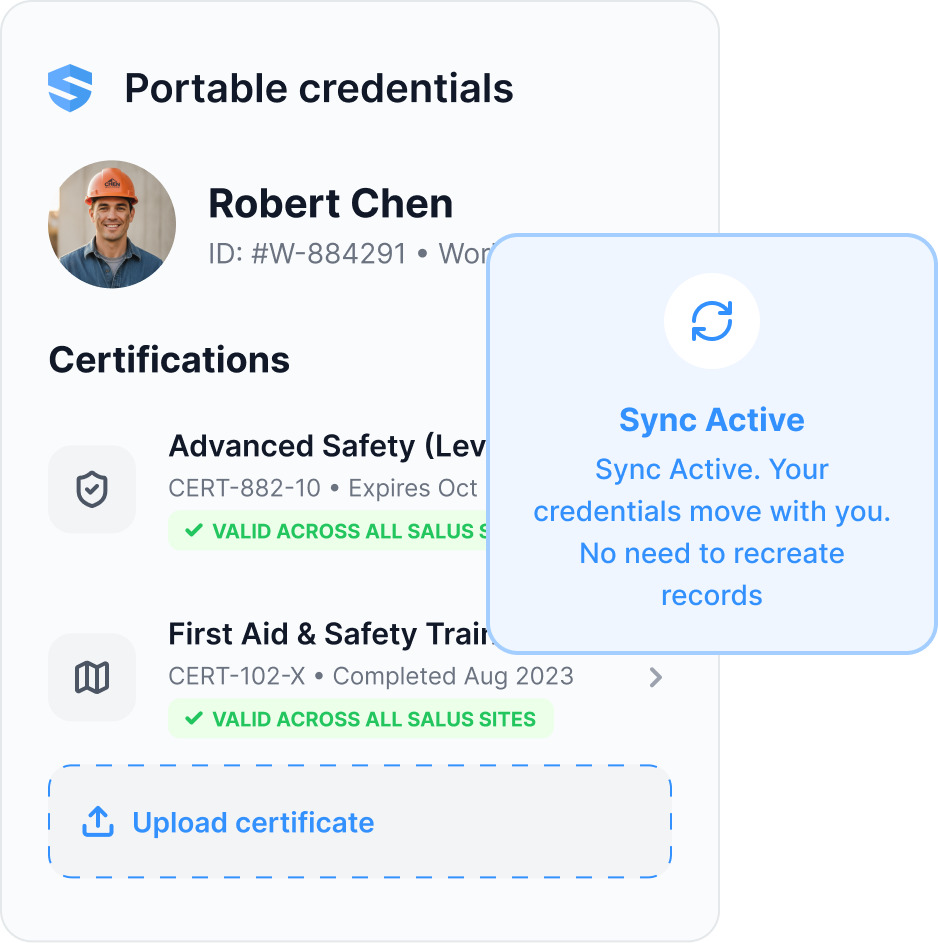
SALUS is built for where ironworkers actually work: phone-sized, glove-friendly, fully offline on the frame. Every inspection happens at the work, in minutes, with proof attached, which is why crews adopt it and why the downstream data is worth something.
- 6:41 AM
- Scanned at the work before the climb — not the trailer after
- 6:42 AM
- Label and condition photographed · serial #H-2241 logged
- 6:43 AM
- Double-leg lanyard: snap hooks inspected, photo attached
- 6:44 AM
- GPS Level 14 · timestamp attached — proof it happened here, now
- 6:45 AM
- Wear trend by serial — harness aging toward retirement flagged
The harness inspection, photo-verified
OSHA requires inspection before each use, and a clipboard checkmark cannot prove it happened. In SALUS: a photo of the label and condition, the serial number logged, GPS and timestamp attached, in 2-4 minutes per worker. Wear trends accumulate by serial number, so the harness aging toward retirement gets flagged before it fails.
- 6:41 AM
- Scanned at the work before the climb — not the trailer after
- 6:42 AM
- Label and condition photographed · serial #H-2241 logged
- 6:43 AM
- Double-leg lanyard: snap hooks inspected, photo attached
- 6:44 AM
- GPS Level 14 · timestamp attached — proof it happened here, now
- 6:45 AM
- Wear trend by serial — harness aging toward retirement flagged
Crane + rigging + lift plan, one workflow
QR on the crane loads the pre-shift checklist with the last inspection's data. The rigging check and lift plan connect in the same workflow instead of living on three disconnected forms, linking the operator, the gear, and the pick.
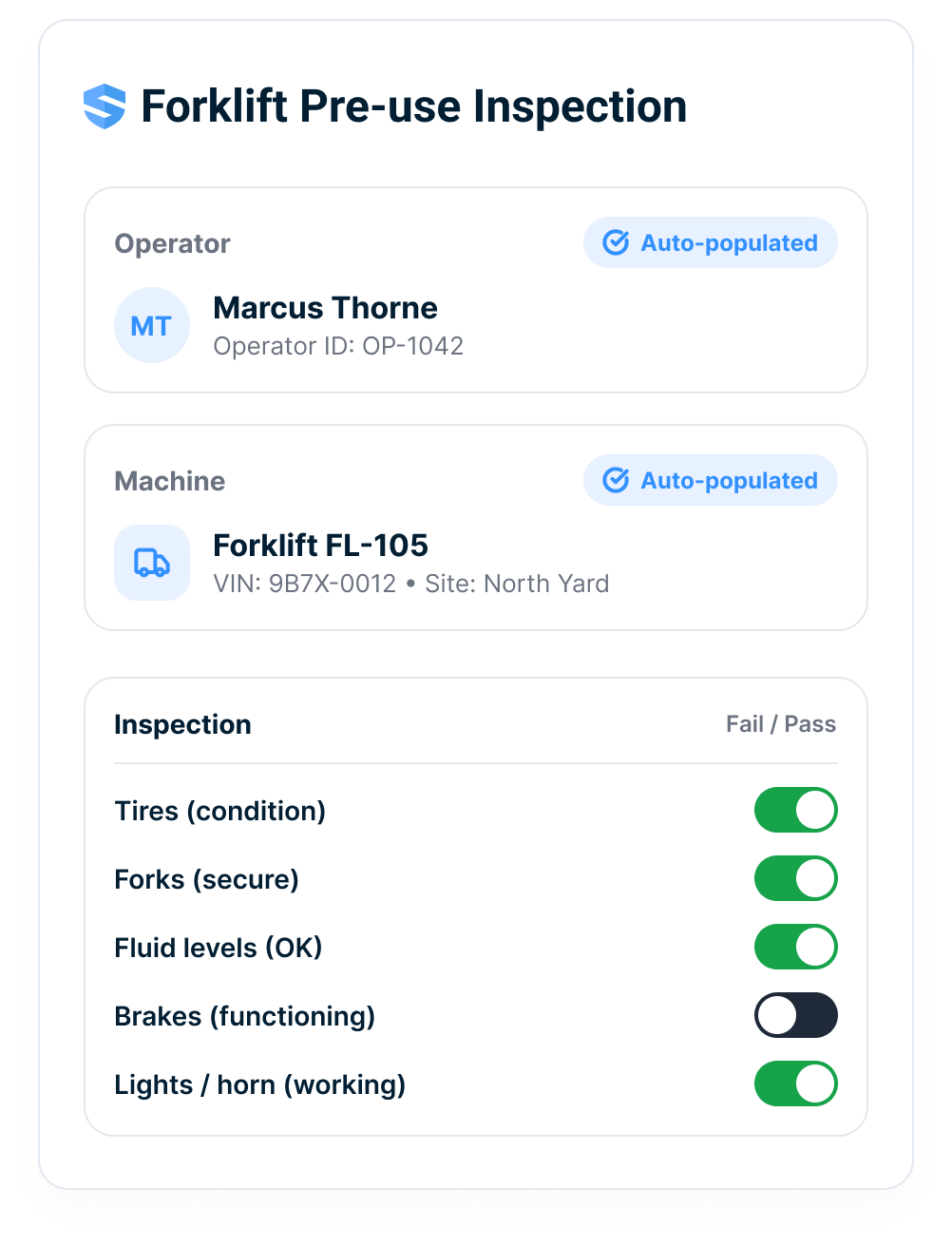
The connector verified before the JHA
Connector training, double-lanyard qualification, and CDZ authorization are verified before the steel-erection JHA activates. The controlled decking zone becomes a daily managed record instead of a whiteboard.
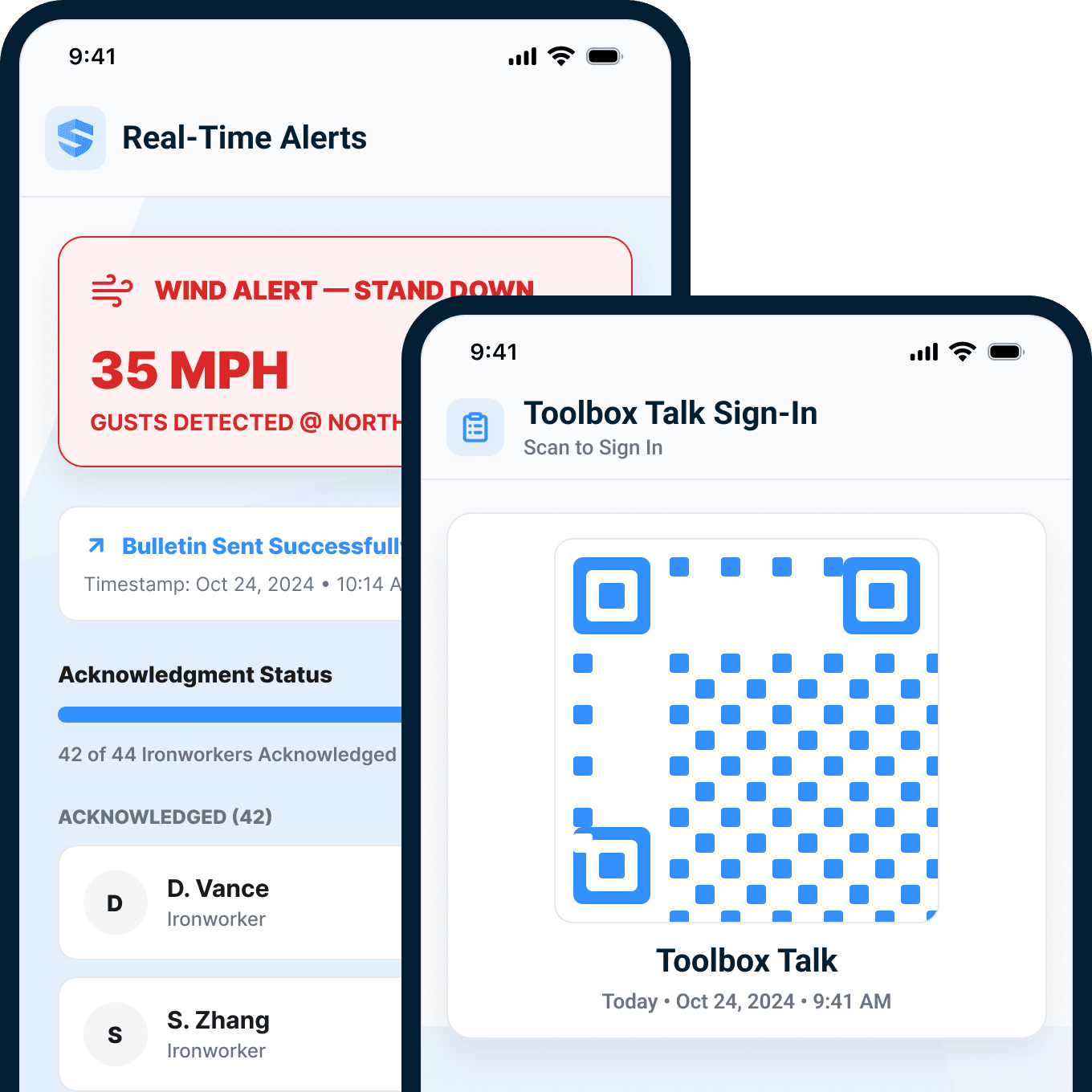
The wind call, documented to the name
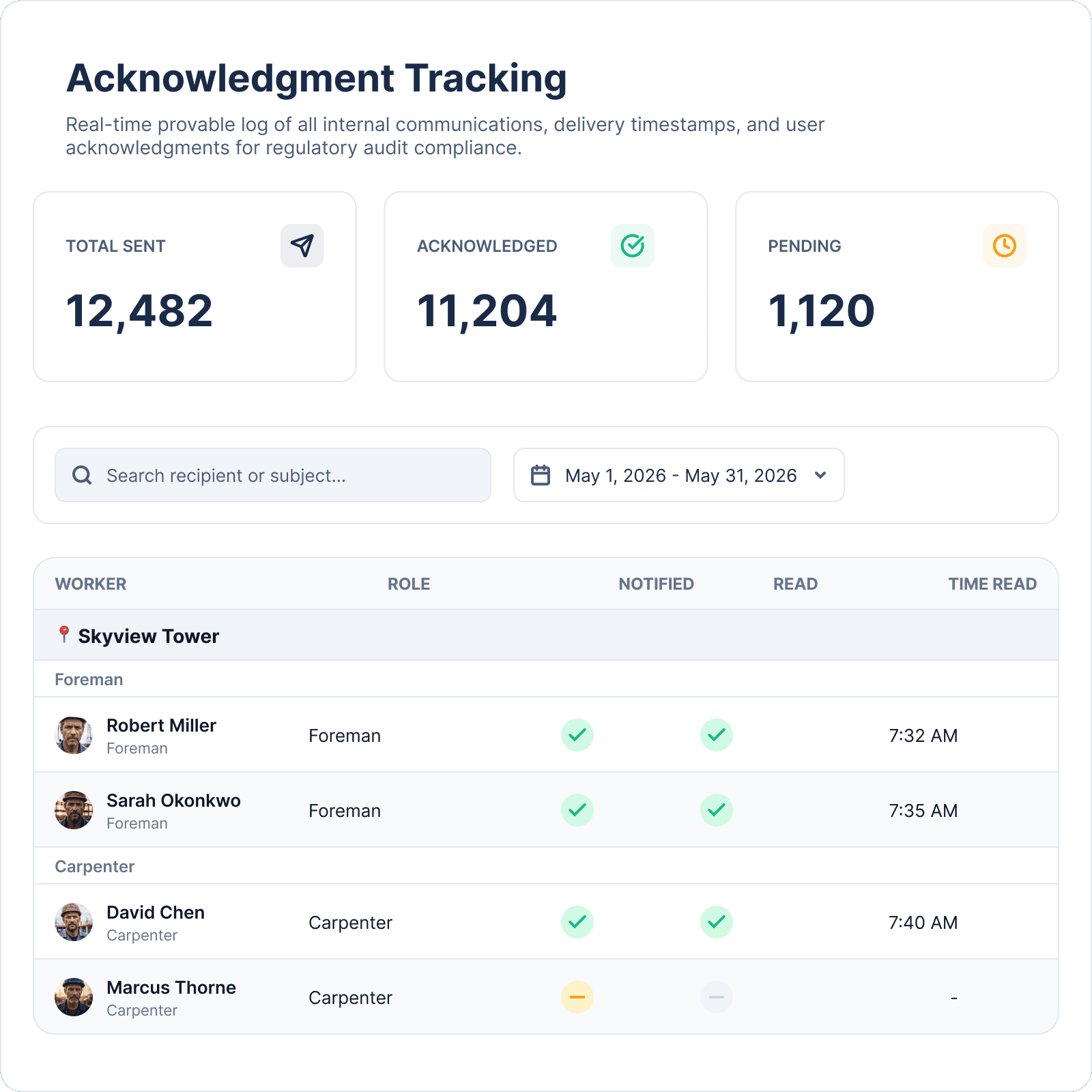
Gusts hit 35 mph. The stand-down pushes to every ironworker's phone across every site, and every acknowledgment is tracked individually with timestamps. The documented stand-down is fully supported; the undocumented one is your word against the schedule.
The hazard from the beam, in 90 seconds
The fraying anchor strap gets photographed and tagged from the iron, routes to a named person, and closes with a photo in 3.5 days instead of 14, fully offline on the frame, syncing when bars return.
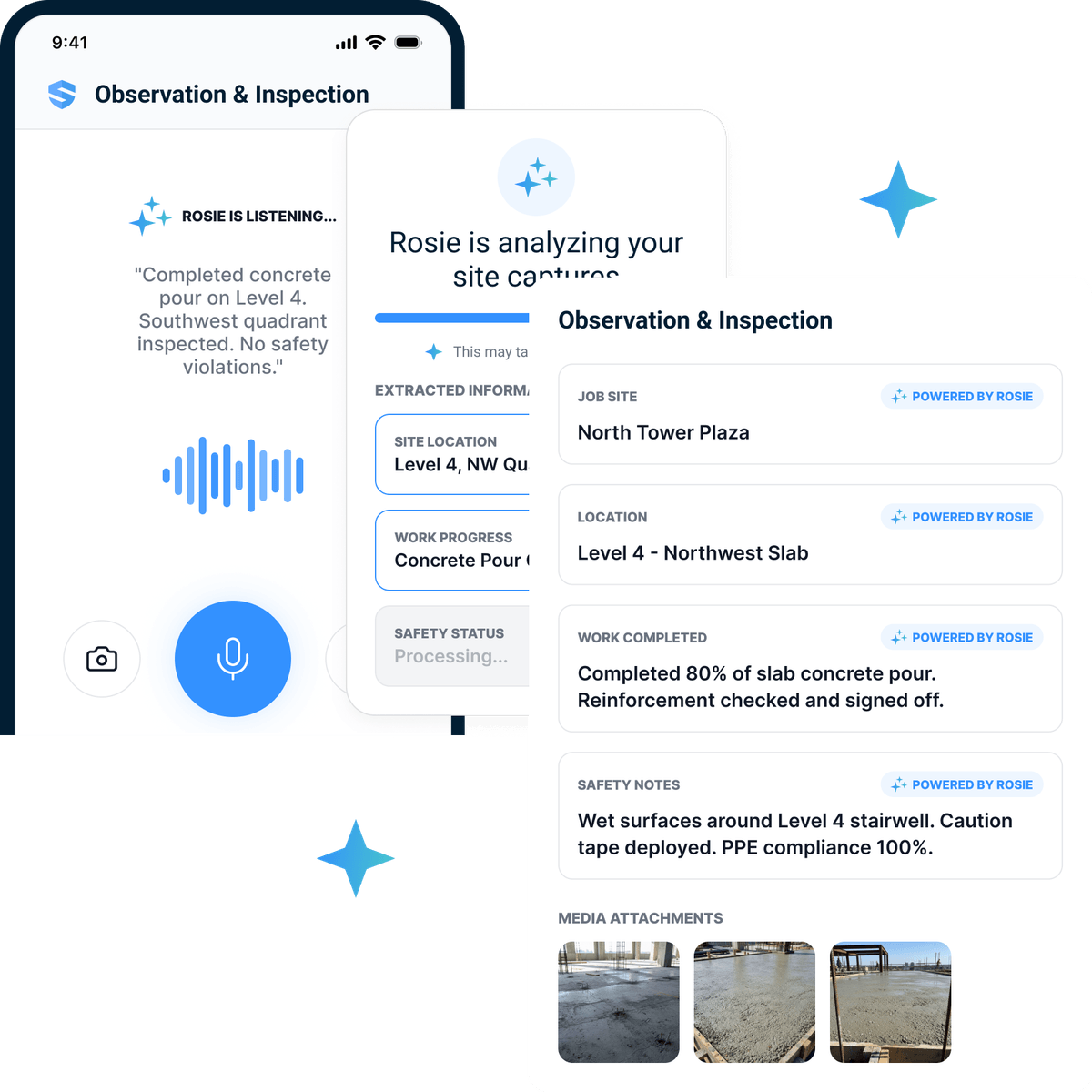
Photo-verified. Glove-friendly. Offline on the frame.
The same inspection is now your safety director's eyes.
Every harness photo, crane check, and wind acknowledgment from 170 sites: one living record, in real time.
See the trend forming, not the citation arriving.
Fall protection is the #1 citation 14 years running, and the difference between contractors is whether they see it coming. Because every crew captures at the iron, the record watches itself: harness completion by site, wear trends by serial number, near-miss volume by crew. Rosie watches it continuously across all 170 sites at once.
Harness compliance, live
Which sites completed morning inspections, which harnesses show accelerating wear, which crew's completion slid after a foreman change: this morning, not next Monday.
Certs current before it matters
NCCCO, rigger, signal person, connector training: 3,000-6,000 records tracked automatically, expirations surfaced 30 days out with renewals pushed to phones.
Stand-downs, accounted for
Every wind call tracked to individual acknowledgment across every site: 42 of 44 confirmed, two followed up, with the timestamped record that supports the decision.
Corrective actions that close
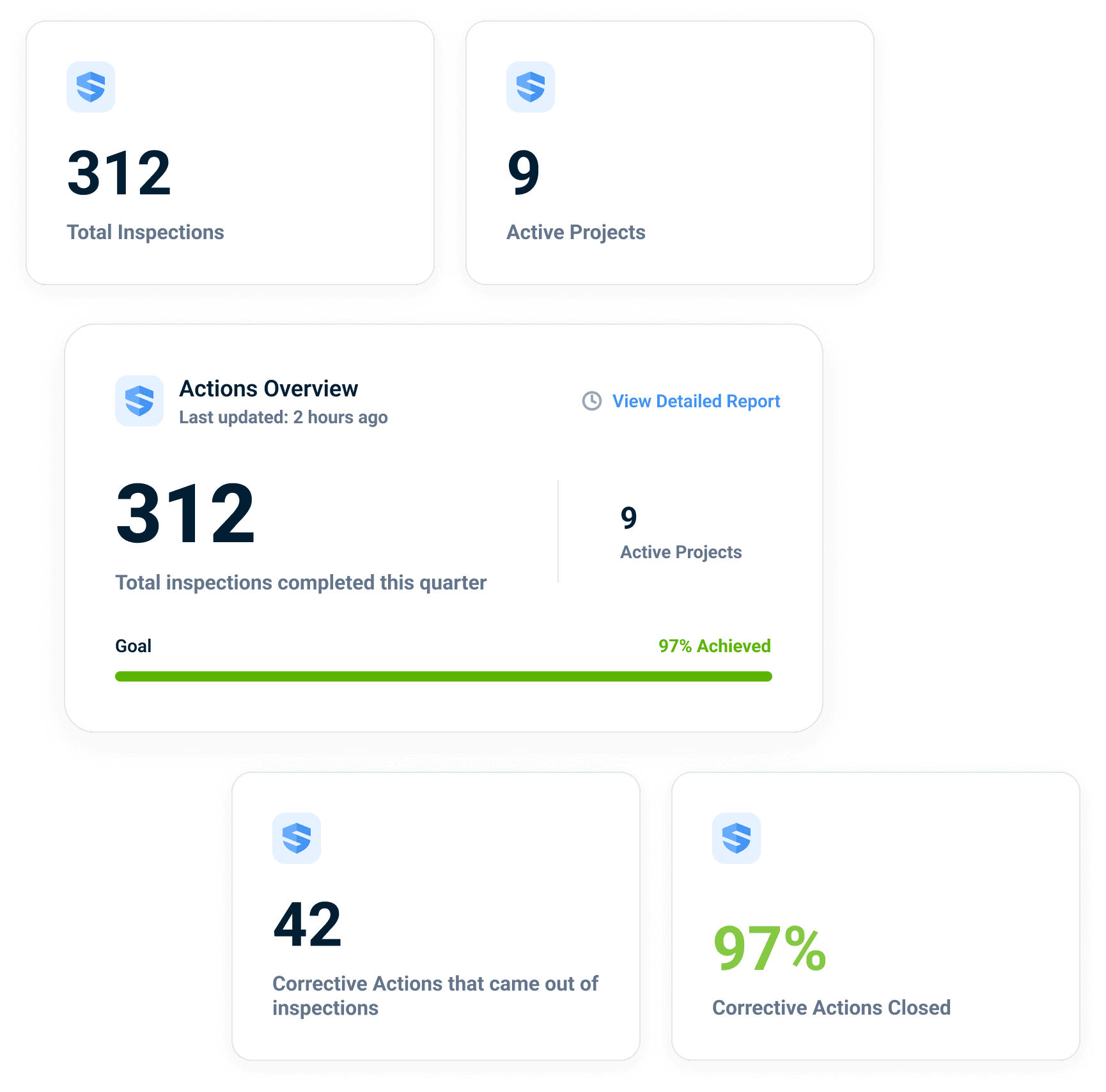
Named individuals, photo closure, automatic escalation. Average close: 14 days to 3.5, and near-miss reporting climbs once reporting costs 90 seconds from the beam.
- "Which ironworkers have connector training expiring in 30 days?"
- "Show harness inspection completion across all sites today."
- "Flag crews with declining near-miss reporting rates."
By Friday, that inspection is winning the stadium.
Fall-protection facts become the live proof GCs check before anything else on a steel sub.
GCs evaluate steel subs through falls first.
Stadiums, data centers, hospitals: the projects that define your growth carry the highest-consequence trade scrutiny on the job, because a steel sub's fall lands on the GC under the multi-employer policy. The Trust Portal answers with a live link: fall-protection compliance, crane records, corrective-action velocity, verifiable by any GC in minutes, no binder, no SALUS account.
- Prequal answered with live fall-protection data instead of a binder assembled the night before.
- Your veterans' Subpart R knowledge encoded into every form, so the first-year ironworker works from the veteran's playbook.
- When the incident question, insurance renewal, or records request comes, Rosie assembles the packet from the same field record in minutes.


The due-diligence record is assembled. Daily hazard assessments cover 96% of active site-days, incident response averages 2.3 hours, and 23 fall-protection certificates need attention.
- Field evidence
- 12,847 forms · 96% active site-days covered
- Follow-through
- 94% of corrective actions closed
- Credential gap
- 23 fall-protection certificates expire within 30 days
The risk team reviews the source-linked packet before it is shared with the broker or insurer.
The due-diligence record is assembled. Daily hazard assessments cover 96% of active site-days, incident response averages 2.3 hours, and 23 fall-protection certificates need attention.
- Field evidence
- 12,847 forms · 96% active site-days covered
- Follow-through
- 94% of corrective actions closed
- Credential gap
- 23 fall-protection certificates expire within 30 days
The risk team reviews the source-linked packet before it is shared with the broker or insurer.
The GC checks your falls record first — so let it prove itself from the iron.
One inspection at 6:47 AM. Proof everywhere it matters.
Capture once, at the iron, with no friction, and let Rosie carry the fact to everyone who needs it, in whatever form they need it.
Built for the whole shop, not one desk in it.
The same captured facts serve everyone. Pick your seat and see exactly what SALUS takes off your plate.
Your safety director
Gets back · sitewide fall-risk visibility
Harness compliance and wear trends across 170 sites, certs renewed ahead, stand-downs accounted for, and Rosie drafting the programs, packets, and answers.
Your foremen
Gets back · faster lift-ready work
Photo-verified inspections in minutes, crane + rigging + lift plan in one scan, the wind call documented, and a record that proves the crew was ready.
Your executives
Gets back · margin, EMR, and bid proof
Subpart R knowledge encoded at every site, the project about to go sideways flagged early, and evidence that protects margin, supports the experience rating, and strengthens the next bid.
Go deeper on what you just watched.
Digital Forms
Conditional logic for connecting, bolting, decking, and welding at height, with required photo fields.
QR Codes
Crane inspection at the crane. Harness history at the harness. One scan, no trailer.
Certificate Management
NCCCO, rigger, signal person, connector training: verified at the JHA, renewed 30 days ahead.
Equipment & Asset Management
Harness tracking by serial, SRL condition trends, crane fleet status, deficiencies routed instantly.
Bulletins & Notifications
Wind stand-downs pushed to every phone, every acknowledgment tracked to the name and timestamp.
Trust Portal
Live fall-protection proof for the GCs who check steel subs through falls first.
Steel contractors who put the clipboard down.

LMS Reinforcing Steel
250+ daily forms, zero paper, three assistants' worth of admin absorbed, and the safety director back in the field instead of compiling.

One dashboard
250+ workers across 25 concrete-forming sites on one platform — a project caught drifting after a foreman change, corrected the same week.

Live dashboards
Won multiple jobs by showing live safety dashboards during bid presentations.
Field adoption
Switched platforms for usability alone. Adoption doubled.

90 audit forms
New hires become competent auditors in a month because the forms teach what to look for.
Trusted by contractors managing 400K users across 150K sites
Asked by steel contractors, answered straight.
We already run a strong Subpart R program. Why SALUS?
How does SALUS handle the controlled decking zone?
How does it prevent pencil-whipping on harness inspections?
Does it work on the steel frame with no signal and with gloves?
How are wind stand-downs documented?
I'm an exec. Why should I care?
Steel goes up fast. The proof keeps up.
Bring your harness logs, crane forms, and CDZ whiteboard. Watch one QR scan replace all three in a 15-minute demo.
Proven at LMS · 170+ sites · 600 ironworkers · 250+ forms a day