
Skip to content
SALUS · For Trade Foremen

Your job is keeping the job moving. SALUS clears what's in the way.

Fifteen years of heavy investment in safety, and the outcomes haven't moved — because too much of it became clutter: forms for the forms, waiting on the GC, paperwork that competes with production instead of protecting it. Done right, safety enables production. We call it operational safety: not more safety — the same safety, faster, easier, and with far less frustration. For you, that means a 5-minute JHA, permits and certs that don't idle the crew, answers in your hand, and Rosie behind you in every fight.

One SALUS customer put a number on it: $750 per day in recovered foreman time. Here's where it comes from.

Between your crew and the workEvery week
  • 01The blocked Monday
  • 02The blank JHA, every morning
  • 03Proving compliance to the GC — and waiting
  • 04The spec and SDS hunt
  • 05The language gap
  • 06The dispute fight, undermanned
  • 07The dead zones
1 crew · 2 masters · 0 extra hours in the dayAll seven, cleared
Safety shouldn't fight production
Done right, it enables it
07Blockers · One foreman

The best foreman runs the work. Watch the path clear.

01
In the way
The blocked Monday
What it does to the job
Crew ready to mobilize — paperwork isn't
The old cost
A day of idle crew, again
Rosie · Unblock your crew

A missing procedure shouldn't turn Monday into a delay.

New site, new scope, new GC — and the crew is ready before the paperwork is. The site-specific plan nobody started, the SWP for a task you've never done on this job, the orientation the GC requires before anyone walks on. Tell Rosie on Friday afternoon: she drafts the plan from the site profile, your company standards, and the GC's requirements — reviewed, approved, and on every phone before the gate opens. The crew starts Monday because nothing was left to block them.

  • Site-specific plans and SWPs drafted by Rosie before mobilization — from your program, not from scratch.
  • Orientations completed by QR before day one; certs verified and refreshed ahead of the gate.
  • Readiness checked in one view: workers, certs, forms, permits, procedures — green before Monday.
Cleared · unblocked before Monday
  1. 01/07

    Between the crew and the work · cleared

  2. The job keeps moving.

02
In the way
The blank JHA
What it does to the job
30–40 minutes of handwriting before the first tool moves
The old cost
An hour of production, daily
Rosie · Capture

The 30-minute blank page becomes a 5-minute review.

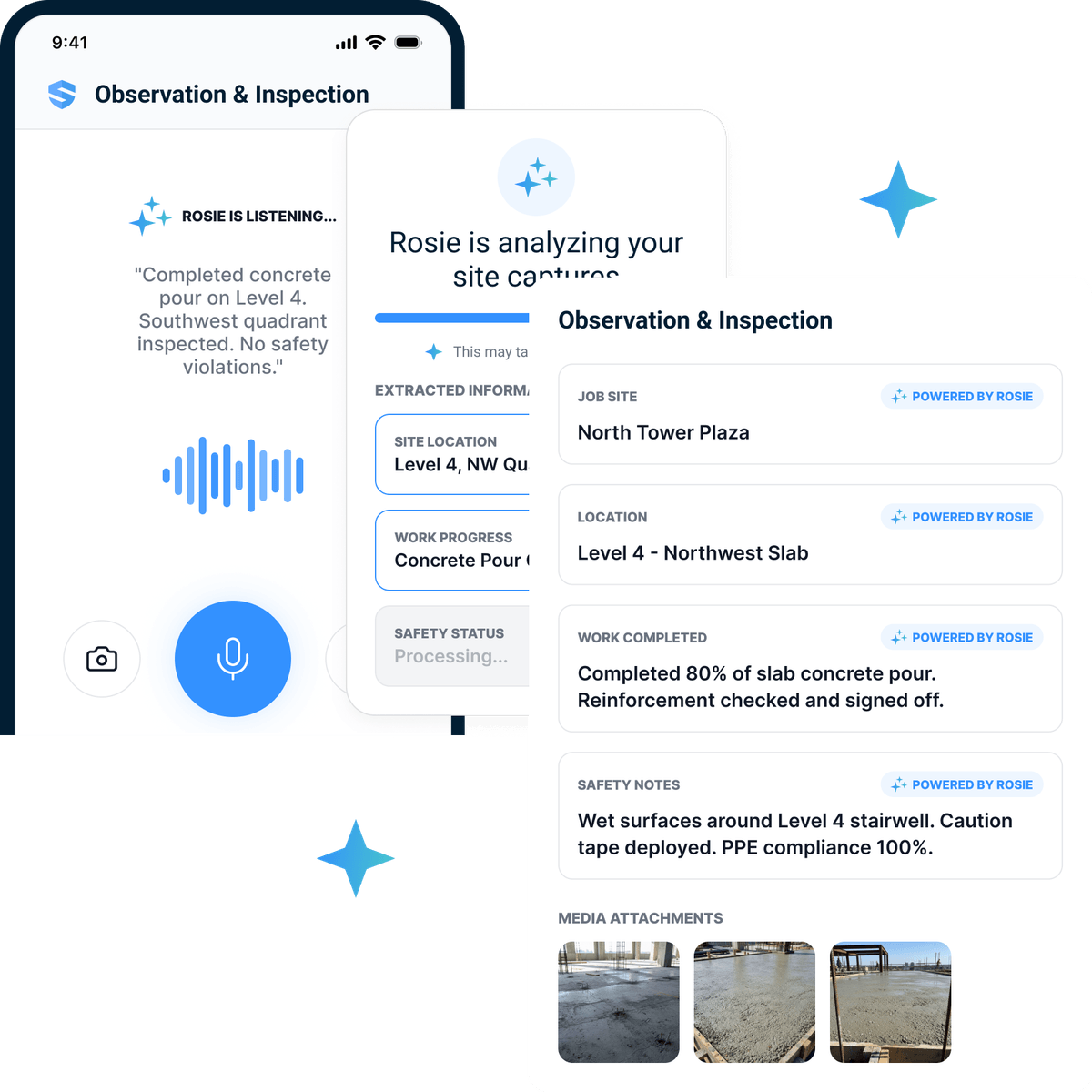
You know the morning talk works — it's the blank paper that's broken. Select today's scope and the relevant hazards and controls are already loaded; the crew reviews and signs from their own phones, most signatures done before the stretch. And the capture doesn't stop at 7 AM: walk the slab and speak what you see — Rosie turns the voice note into a structured record, photos attached, worker and task context already on it. Safety tasks done faster, easier, and with none of the clipboard frustration.

01 ·

Loaded, not blank

Hazards and controls pre-populate from the task, the location, and the equipment — you adjust, not author.

02 ·

Speak it, Rosie writes it

Voice notes and photos become observations, inspections, and incident records — no typing, no trailer.

03 ·

Relevant beats recycled

Conditional logic cuts a 24-question form to the 8 that apply today. The crew stops speed-signing.

04 ·

$750 a day

One customer's business case across their foreman team — an hour a morning returned to running the work.

Cleared · reviewed, not written
A foreman speaks to Rosie while walking the slab — the voice note becomes a structured Observation & Inspection record with photos attached
  1. 02/07

    Between the crew and the work · cleared

  2. The job keeps moving.

03
In the way
The GC waiting game
What it does to the job
Proving compliance — then waiting on approvals to start work
The old cost
Idle crews at $75/hr
Information flows

The proof flows. The crew stops waiting.

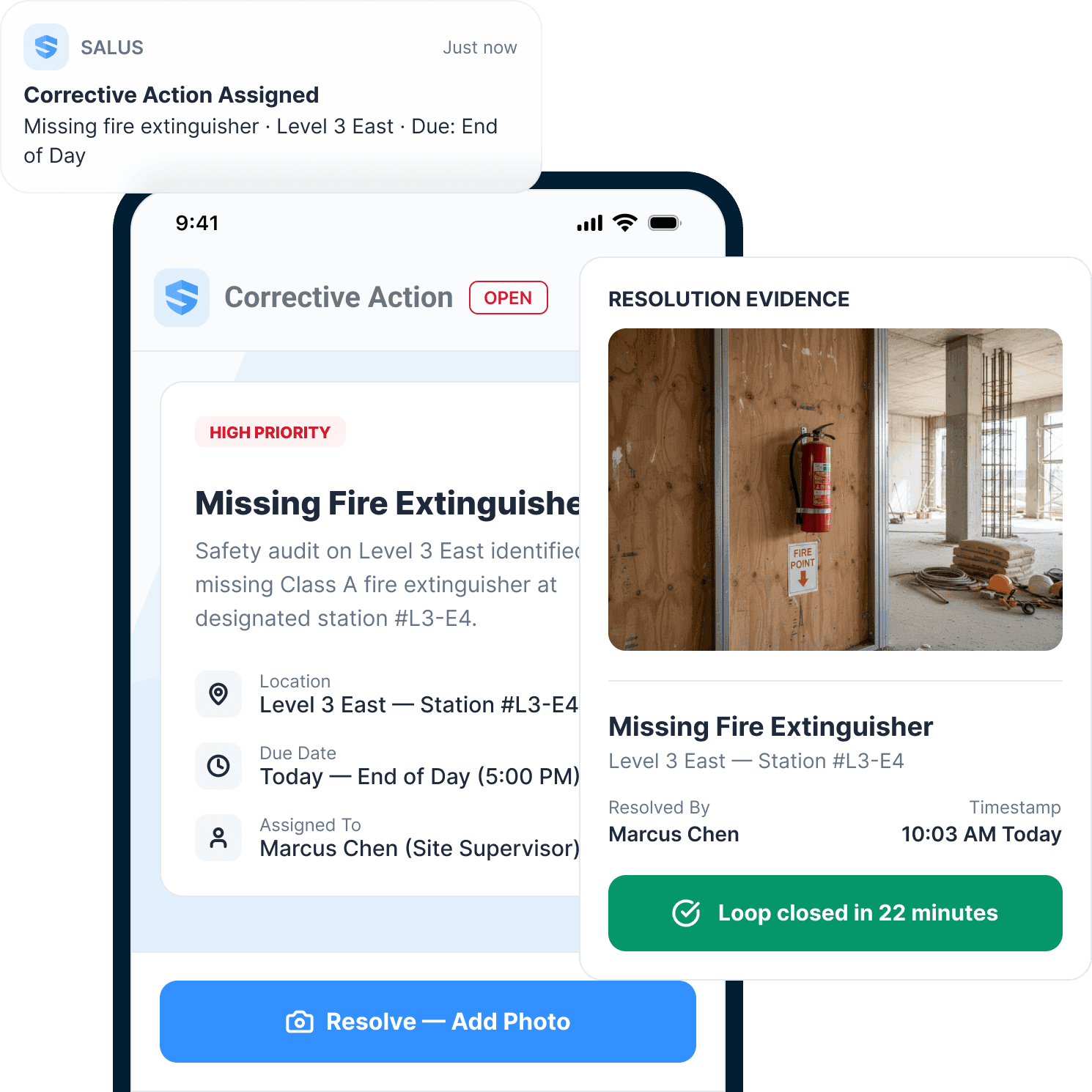
A trade foreman spends a shocking share of the week proving things to the GC — that the crew is oriented, certified, briefed, and permitted — and then waiting for someone in a trailer to say yes. In SALUS, the proof moves by itself: what your crew captures flows to the GC and your office the moment it exists, and the yes comes back the same way. The compliance conversation stops being a bottleneck and becomes a feed.

No more waiting for
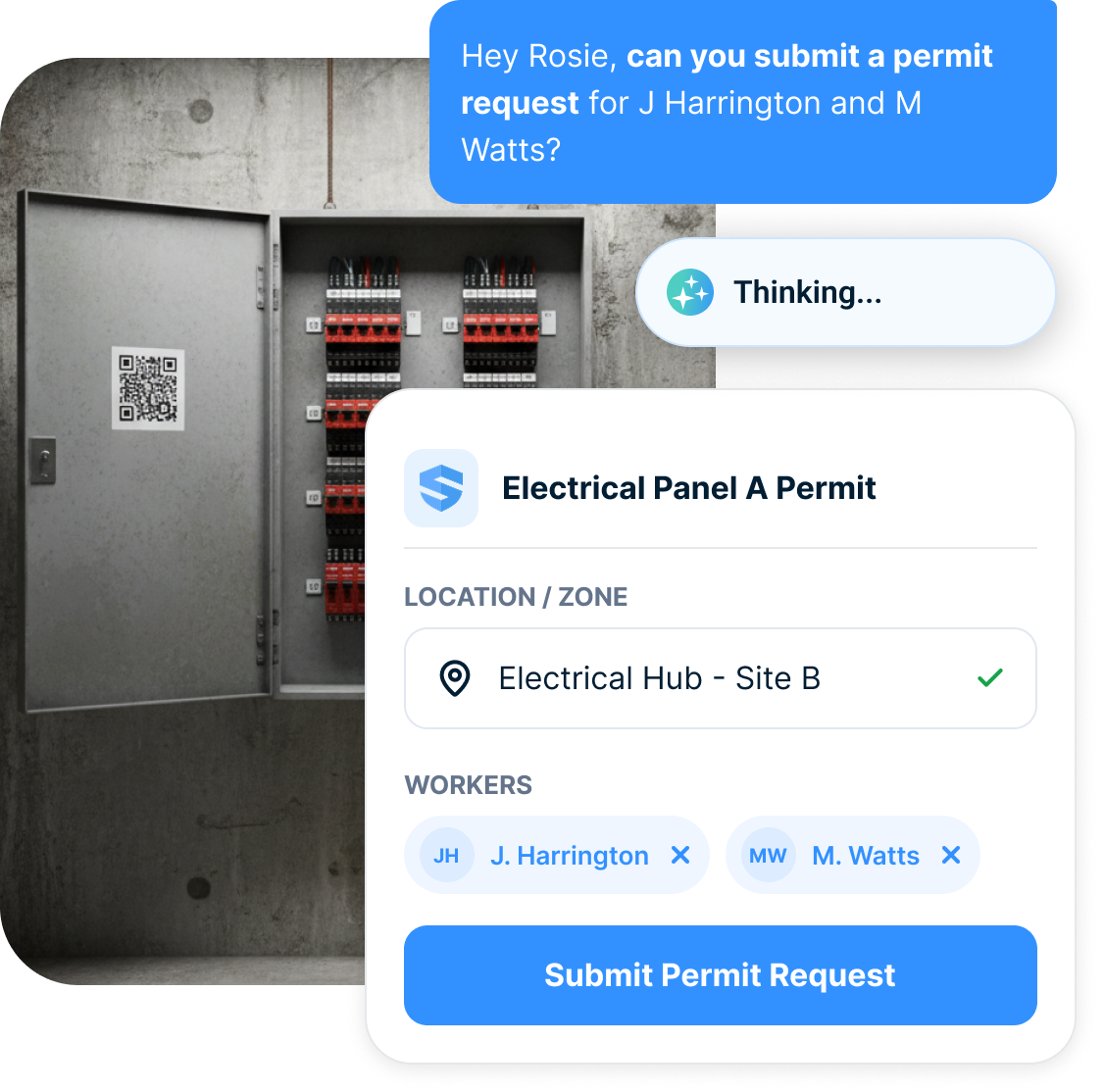
  • Permit approvals — requested from the panel, cert-checked automatically, approved from the GC's phone in minutes.
  • Cert refreshes — the 10-minute micro-training lands on the worker's phone before the cert lapses, not after the GC bounces him.
  • Site-specific SWPs — Rosie drafts them from your program and the GC's requirements before mobilization, not 'by next Friday.'
Cleared · the yes arrives in minutes
The waiting list — retiredLive flow
Hot work permit
Requested 6:12 AM → cert-verified → approved 6:31 AM
Cert refresh
Flagged 2 weeks out → 10-min module → current before Monday
Site-specific SWP
Requested Friday 4:48 PM → Rosie draft 4:53 → approved
GC daily forms
Captured once by the crew → in the GC's feed instantly
The GC gets the proof. The crew gets to work.Nobody idles
  1. 03/07

    Between the crew and the work · cleared

  2. The job keeps moving.

04
In the way
The spec hunt
What it does to the job
"What's the procedure?" "What's in this primer?" "Can he run that lift?"
The old cost
A trailer walk or a guess
Rosie · Answers at the point of work

The answer is in your hand, not in the trailer.

Workers lose 5.5 hours a week hunting for project information — and on live systems, the gap between "I should look this up" and "I'll just wing it" is where people get hurt. Ask Rosie out loud, in your language: the SDS answer arrives in 8 seconds with the section cited. The telehandler's rated capacity comes back with the operator's cert status attached. The SWP for this task, at this location, opens with one QR scan. Concise answers, sourced — fast enough that your crew actually asks.

Utilities Unlimited: the old two-hour lag became real-time — five-minute reports, filed straight from the field.
Cleared · 8 seconds, source cited
SDS Search conversation — a worker's typed query 'concrete admixture first aid' answered in 8 seconds with the relevant section
  1. 04/07

    Between the crew and the work · cleared

  2. The job keeps moving.

05
In the way
The language gap
What it does to the job
A crew that runs from flip phones to iPhones, in three languages
The old cost
Comprehension you can't verify
Every worker, met where they are

Signed isn't understood. SALUS closes that gap.

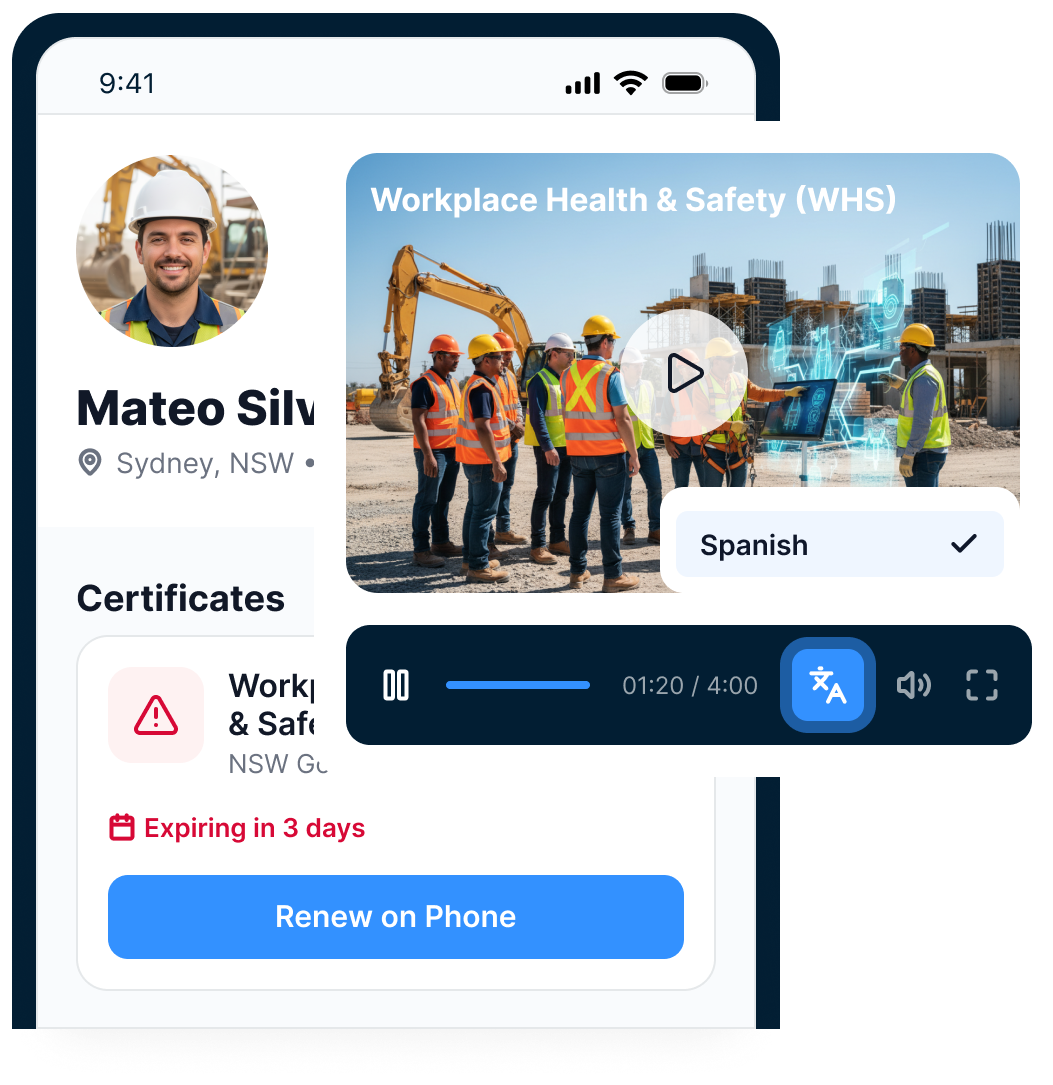
Your crew shouldn't need a translator to be safe — and you shouldn't need to be one. Workers ask Rosie and get answers in their own language; they complete JHAs, orientations, and training the same way, and the office reads everything in English — including the hazard text a worker actually types. The least technical guy on the crew interacts through one QR scan. If he can add a contact to his phone, he can use SALUS.

01 ·

21+ languages, both ways

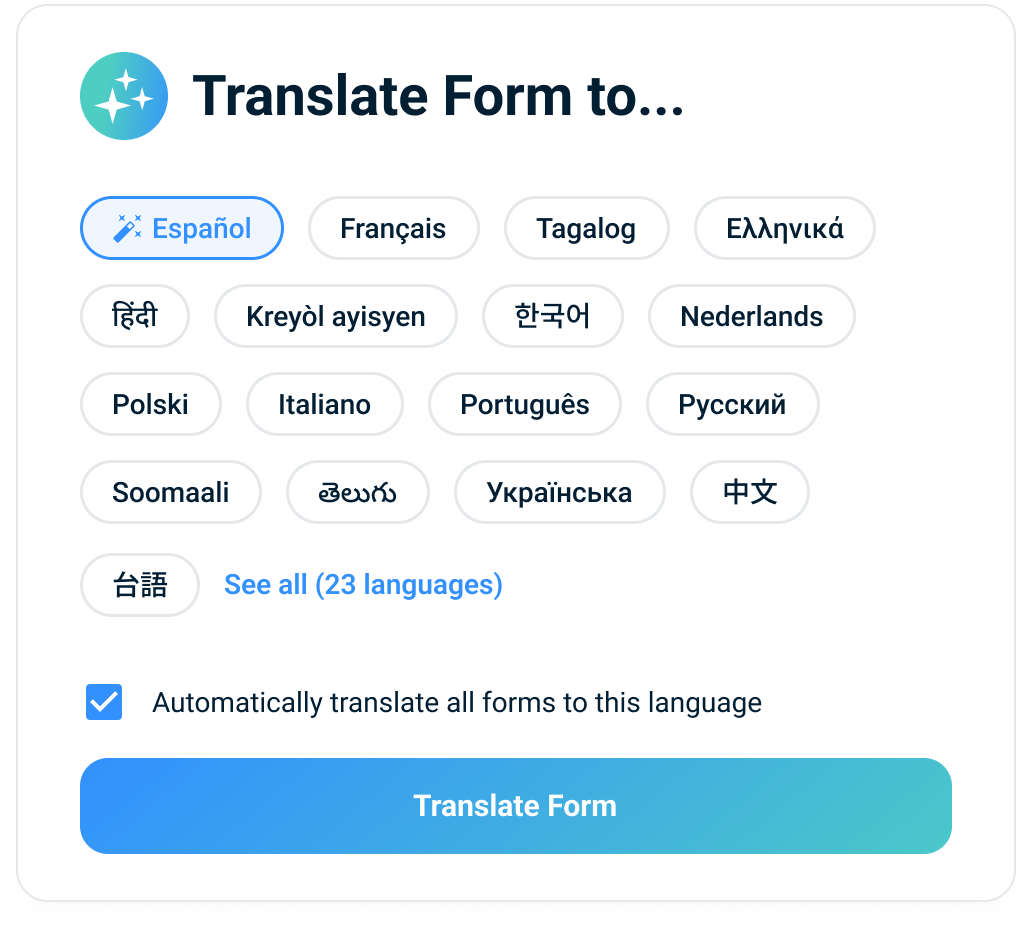
Forms, talks, training, and Rosie's answers in the worker's language; submissions readable in yours.

02 ·

Flip-phone simple

Professional Excavators rolled it out to workers who 'struggle just to check their voicemail.' They got on board.

03 ·

Voice over typing

Speak the observation; Rosie writes the record. Accuracy stops depending on handwriting or English.

04 ·

Documented comprehension

Native-language signatures are the strongest evidence your crew actually understood — not just signed.
Cleared · their language, their phone
Rosie translating a field form so workers can complete safety records in their own language
  1. 05/07

    Between the crew and the work · cleared

  2. The job keeps moving.

06
In the way
The dispute fight
What it does to the job
Delay claims, backcharges, damage disputes — and you're the witness
The old cost
Undermanned, every time
Rosie · Your defense

You used to fight disputes alone. Now you have an army of Rosie.

The delay claim, the backcharge, the "your crew damaged the corridor" — they all come down to the foreman's word, and the foreman is undermanned and under-resourced against a GC's paper machine. Not anymore. The facts get captured the moment they happen — a voice note, a photo, context attached automatically — and Rosie assembles the defense: the readiness record, the blocked access flagged at 9:17, the signed JHA, the corridor photographed at sign-out. The packet your office sends is built from what you captured between picks, not from your memory at deposition speed.

  • Flag the blocked access, the damaged material, the standing water in 30 seconds — voice and photo, context attached.
  • Every entry carries worker, task, time, and location automatically. Nobody reconstructs anything.
  • Rosie turns the record into the delay-claim answer or the backcharge response in minutes — while the meeting that decides it is still on the calendar.
Cleared · the army shows up in minutes
Rosie
Delay defense
The GC says our crews caused the delay. Show what the field record proves.
Collected the signed daily reports5 of 5 reports
Ordered photos and notices by timestampChronology built
Matched blocked work to redirected tasksCause tested

The documented sequence shows the pour area was not released and the crew was redirected after written notice. The evidence does not support crew-caused delay.

Northgate Tower — delay chronology
Oct. 14 · 7:02
Photo: pour area occupied by predecessor trade
Oct. 14 · 7:15
Notice sent · GC acknowledgement at 7:41
Oct. 15–17
Redirected work + labor hours documented
Sources: 5 daily reports · 12 photos · notices · signed field recordsReview delay packet

The project team and counsel review the chronology and contract position before it is issued.

  1. 06/07

    Between the crew and the work · cleared

  2. The job keeps moving.

07
In the way
The dead zones
What it does to the job
Your highest-risk work happens where phones die
The old cost
The basement eats the evidence
Offline-first

Zero bars in the pit. Full record anyway.

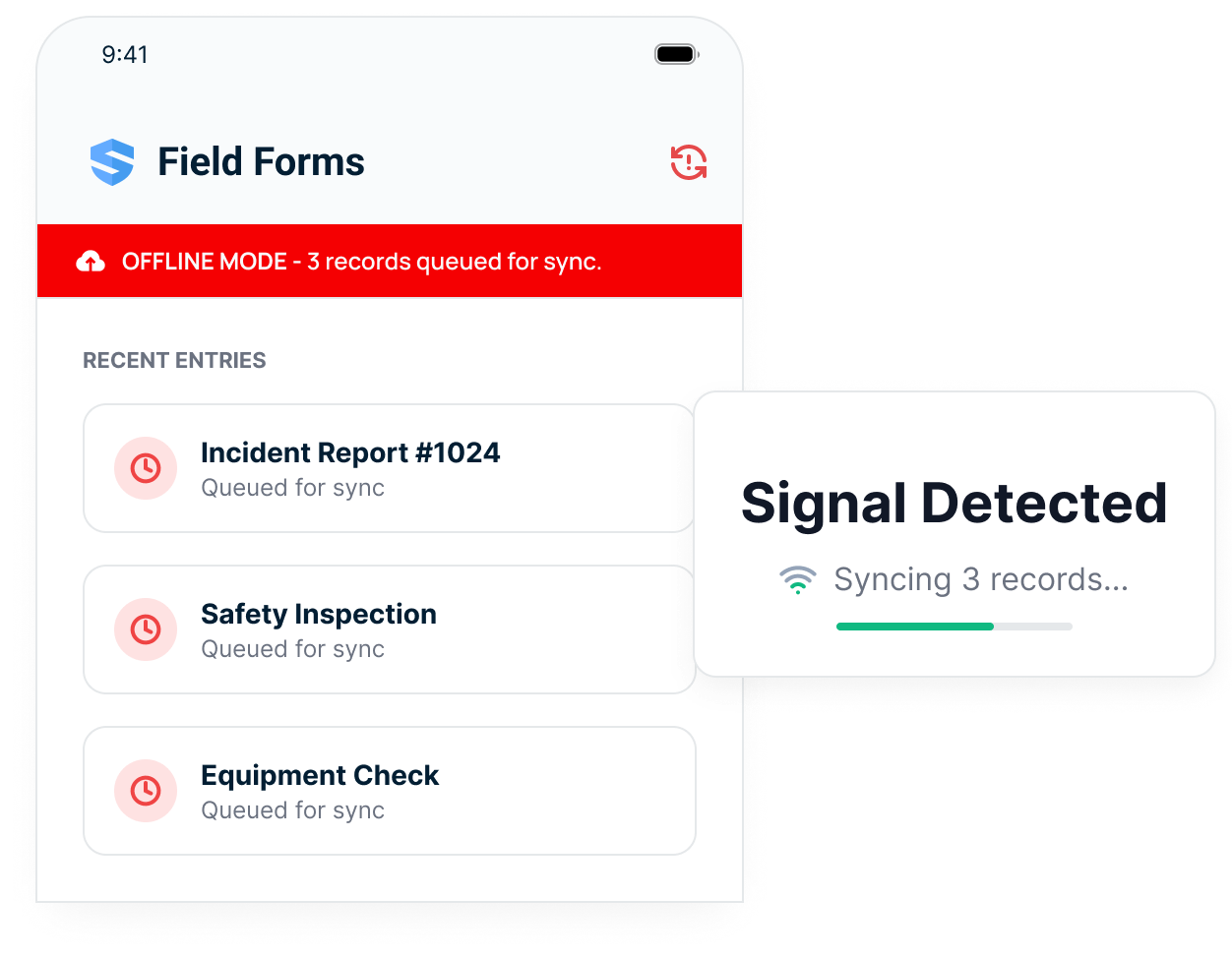
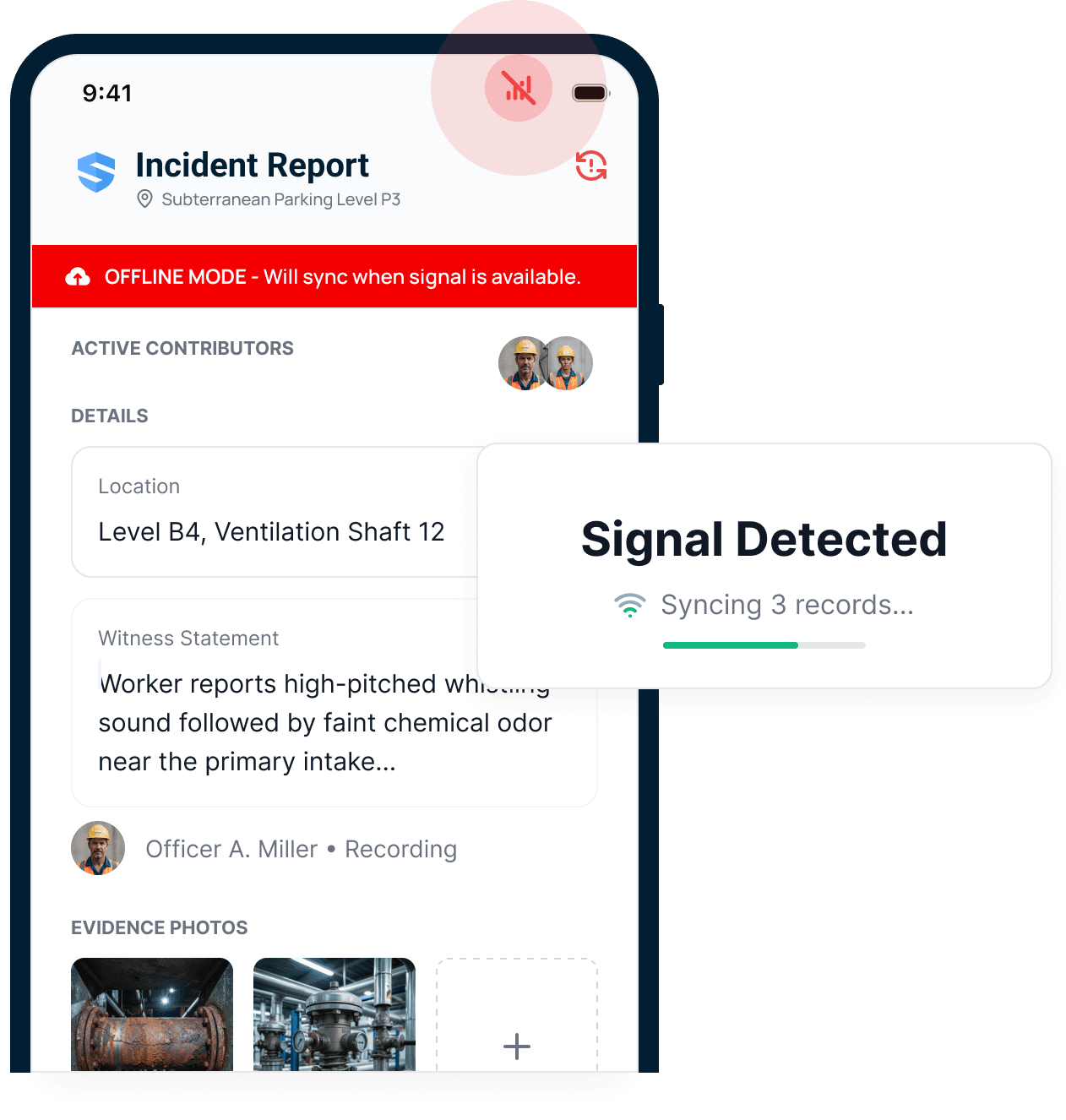
Foundation pits, riser shafts, electrical rooms — your highest-risk work happens exactly where signal dies. Every keystroke in SALUS saves locally, queues, and syncs the moment bars come back: captured at P3, queued in the stairwell, delivered before you reach the trailer. Two of you can work the same incident report from different floors in different signal conditions. Full functionality, not a read-only fallback — LMS crews run this on bridge decks with zero connectivity across 170+ sites.
Cleared · captured → queued → synced
Incident report on a phone at Subterranean Parking Level P3 with a red offline-mode banner and two active contributors
Field Forms screen with an offline-mode banner and three records queued for sync — an incident report and a safety form waiting for signal
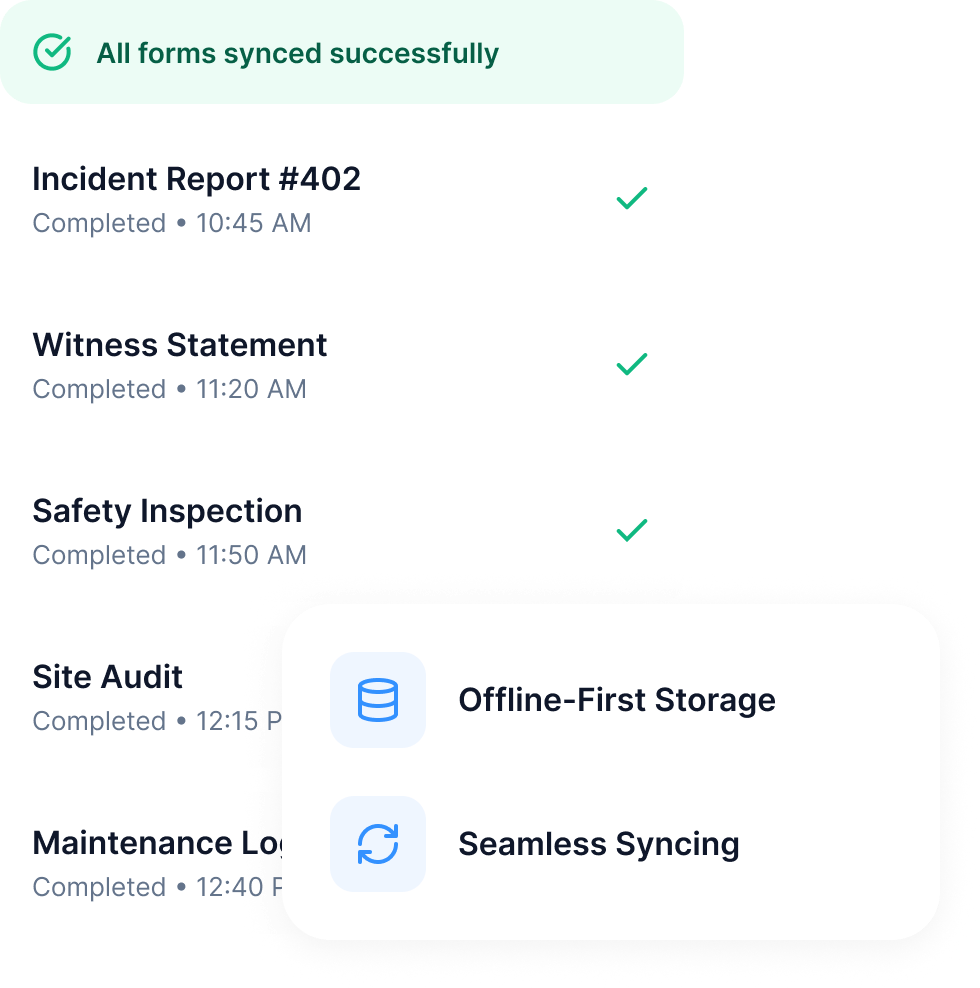
A green 'All forms synced successfully' banner above a checklist of completed records — incident report and witness statement delivered
Blockers · 07/07 cleared

Safety used to compete with production. That's over.
Now it keeps the job moving.

Operational safety: the same program, faster, easier, and with far less frustration — an hour back every morning, no crew idling on approvals, and an army of Rosie behind every fight.

The real job

What's left is the crew and the work.

Sequence the day. Watch the new guy on the lift. Make the call on the wind. Teach the apprentice what no form can. The paperwork was never the job — it was the tax on the job. SALUS pays the tax so the best foreman on the company's roster gets to actually be one.

The work

Your morning hour back, every morning — sequencing crews instead of copying yesterday's form.

The crew

Their certs current, their language spoken, their names protected by the record they build themselves.

The calls

Wind, access, sequence — your judgment, documented in seconds, defensible forever.

A crew gathered around a tablet at the jobsite, reviewing their pre-task plan together
Signatures before the stretch
Why it holds up

One loop, running on the work the crew already does.

AI without field data is autocomplete. Rosie runs on what your crew actually captures in SALUS — the scans, the photos, the sign-offs from the real day — which is why the JHA, the toolbox talk, and the answer to the GC are right the first time and hold up later.

01

Crews capture

One QR scan, a voice note, a photo — minutes, offline, 21+ languages. The crew builds the record because it beats paper.

02

SALUS connects

Every capture links the worker, the cert, the task, the site, and the time — one record the whole job runs on, not nine apps.

03

Rosie delivers

JHAs, toolbox talks, inspection answers, and the day's proof — drafted from that record, ready before the stretch.

Crew-level facts in. The job keeps moving.

FAQ

Is the 5-minute JHA real, or demo-real?
Real — it's why crews adopt the tool voluntarily. Hazards and controls pre-populate from the task, location, and equipment; conditional logic hides what doesn't apply; the crew reviews and signs from their phones. LMS generates 250+ forms a day across 170+ sites because the digital form is faster than the paper one was.
How does the permit approval actually get faster?
The request goes from your phone with the worker's certs already verified, the GC approves from theirs, and both sides see the status live. No trailer walk, no phone tag, no 'come back after lunch.' Conflicts in the same zone get flagged at the request — before approval, not after two crews collide.
Every GC we work for has different forms. Does that break this?
It's the core use case. The GC's requirements live inside the same workflow your crew already knows — their forms, your standards, one capture that feeds both records. Worker profiles travel from job to job, so the crew verified on the last project walks onto the next one already set up.
Half my crew speaks Spanish. A few barely use phones.
Workers complete everything in their own language — 21+ supported, both directions, including the text they type — and Rosie answers their questions the same way. The interaction is one QR scan: no logins, no app navigation. Professional Excavators rolled SALUS out to workers who 'struggle just to check their voicemail.'
Does this record get used against my crew?
It's what protects them. The record proves orientation, current certs, and a signed task-specific JHA — built automatically, timestamped, before anything went wrong. When the GC asks the hard question, your company answers with evidence instead of apologies. Crews figure that out fast; it's why the skeptics convert.
We work in basements and pits. What about signal?
Full functionality offline. Every keystroke saves locally, queues, and syncs when signal returns; two people can build the same report from different floors. The record from your worst dead zone is as complete as the one from the parking lot.
For trade foremen

Keep the job moving. SALUS clears the path.

Bring your worst blocker — the 40-question JHA, the permit that takes two days, the Monday your crew stood around — and watch it clear in a 15-minute demo.

Faster · Easier · Far less frustration · The job keeps moving