


Electric Plus
9.5/10
safety team rating, week one
Chose SALUS over HammerTech and executed 400+ forms in the first week.
A dozen sites. Unique GC's requirements. A hundred workers' certs. Audits, near-misses, three languages — and one of you. SALUS is the operational safety platform built for exactly you. Give Rosie — the AI Admin & Risk Assistant — the busy work, and see your impact grow with the business.
McBride Construction covers 100+ simultaneous projects with one safety professional. Below is how.
Me and my team have the bandwidth to actually focus on safety now that we're not constantly being bogged down in paperwork.
You can't be everywhere — so the program only works if the crew works it. SALUS doesn't mandate adoption; it trades for it. Give them capture that takes seconds — a QR scan, a voice note, a photo, with Rosie doing the writing. Give them answers, not binders. When safety gives more than it takes, the crew uses it.
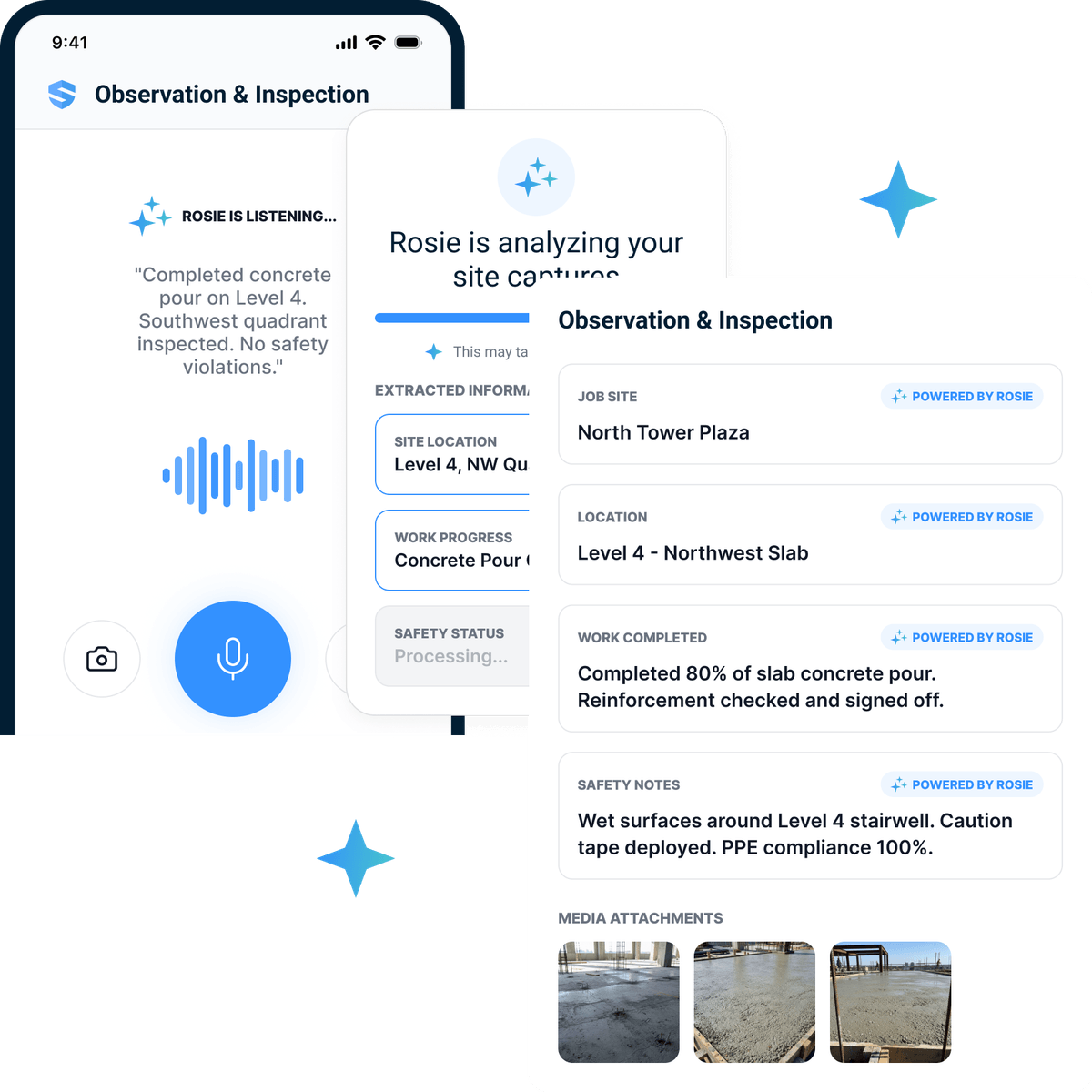
Because the crew captures everything in the flow of the work, your compliance record is the richest version of itself, built at the source. SALUS works that record ahead of time, so the lapse, the conflict, and the stale procedure never make it to the field.
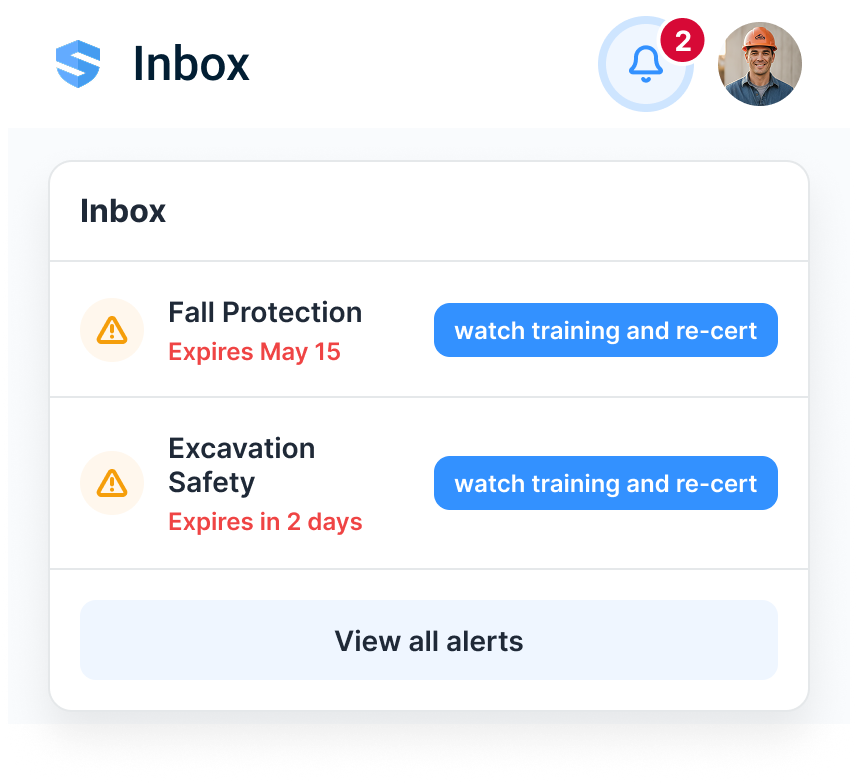
Expiring certs surface weeks ahead, ranked by who's mobilizing where. A 10-minute micro-training goes to the worker's phone — the cert renews before the crew ships, not after the fire drill.
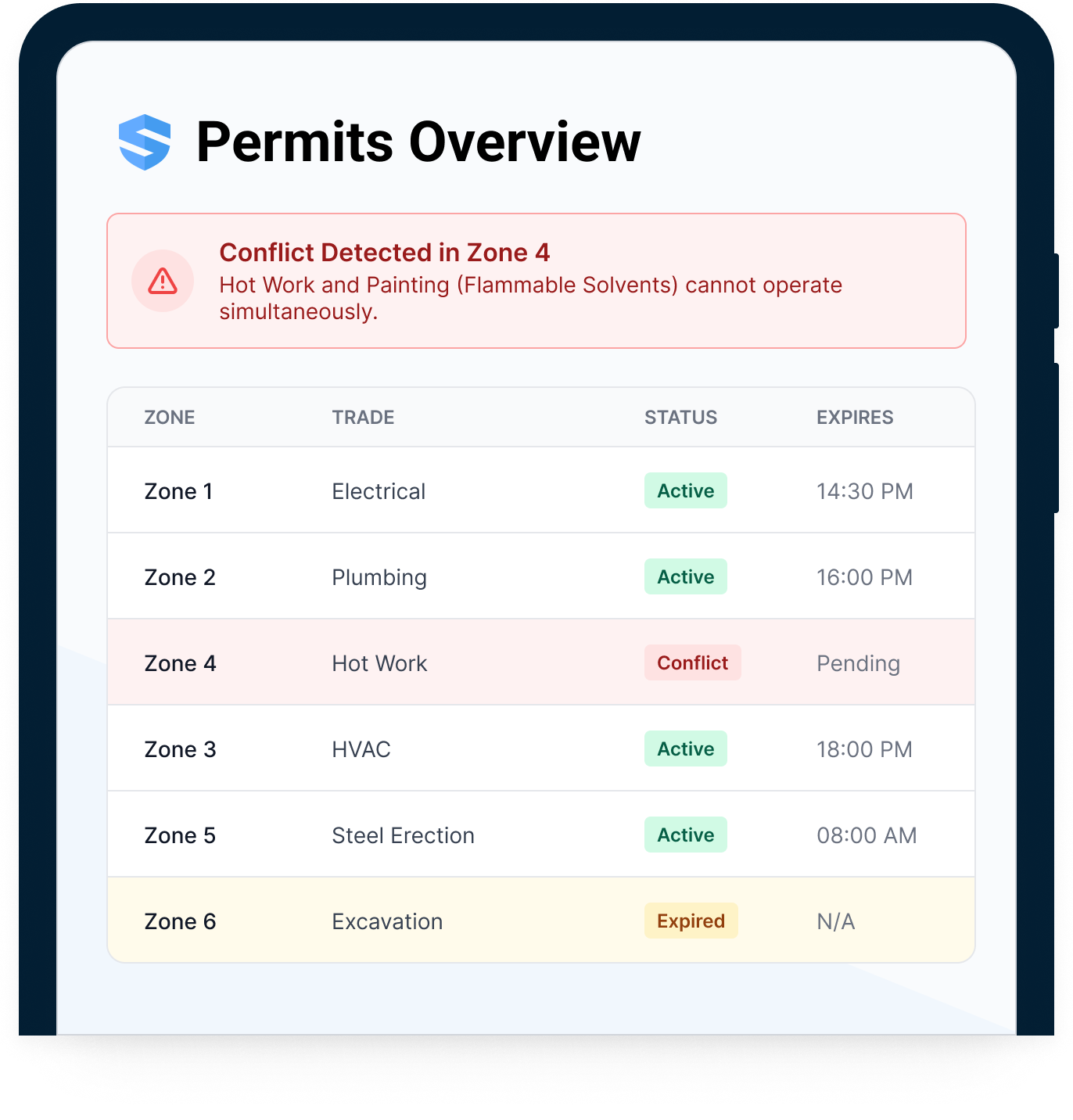
Digital permits cross-check automatically. Hot work scheduled next to the solvent crew gets caught at the request — not after both crews are working the same zone.
Rosie monitors regulations and near-miss trends continuously, flags the gaps in your procedures, and drafts the update — the program stays aligned with the field instead of aging in a binder.
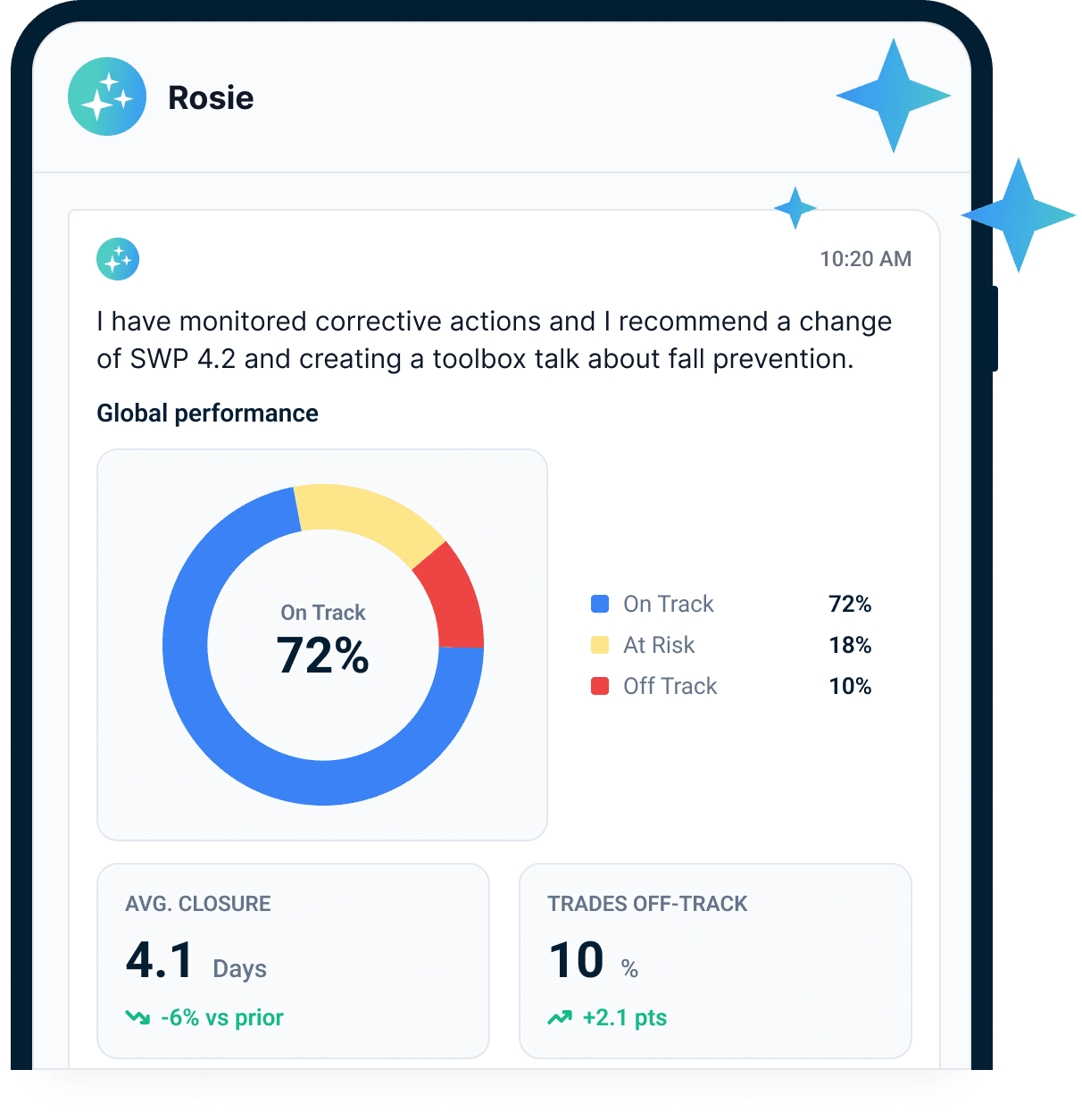
New job, new GC, new state. Describe the job to Rosie, attach the GC's requirements, and a draft comes back in seconds, built from your master program and the regs that apply. Toolbox talks draft themselves from last week's near-misses. When a code changes, live-edit once and push to every site.
The GC's compliance request, the OSHA 300A due in February, the insurer's renewal questionnaire, the prequal package for the bid your estimators want, the owner's audit. Assemble the package once, and it automatically updates with live data from the field.
OSHA 300 and 300A logs generate from incident records your crews already created.
LMS compressed audit documentation review from two full days to 1 hour 45 minutes.
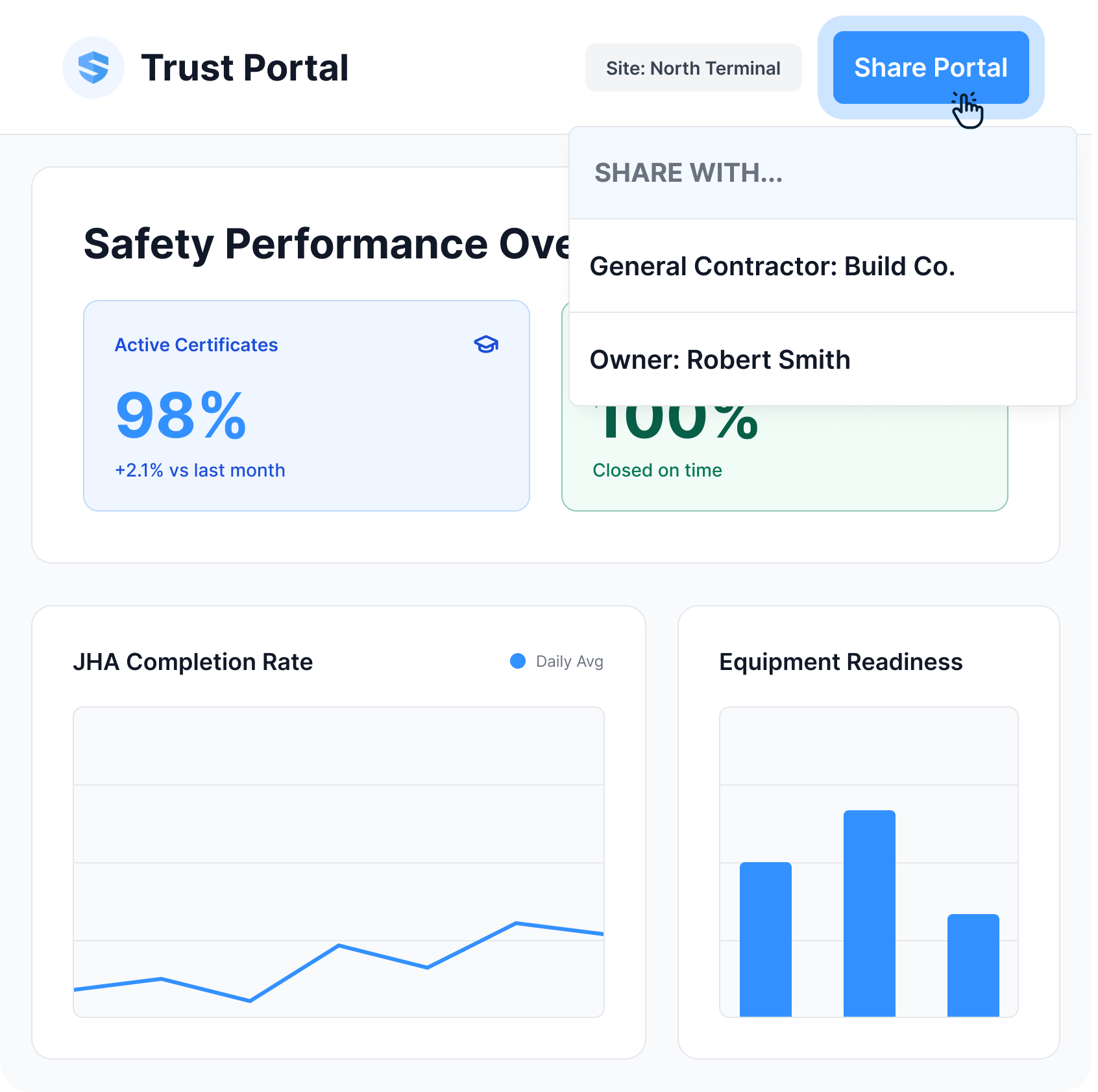
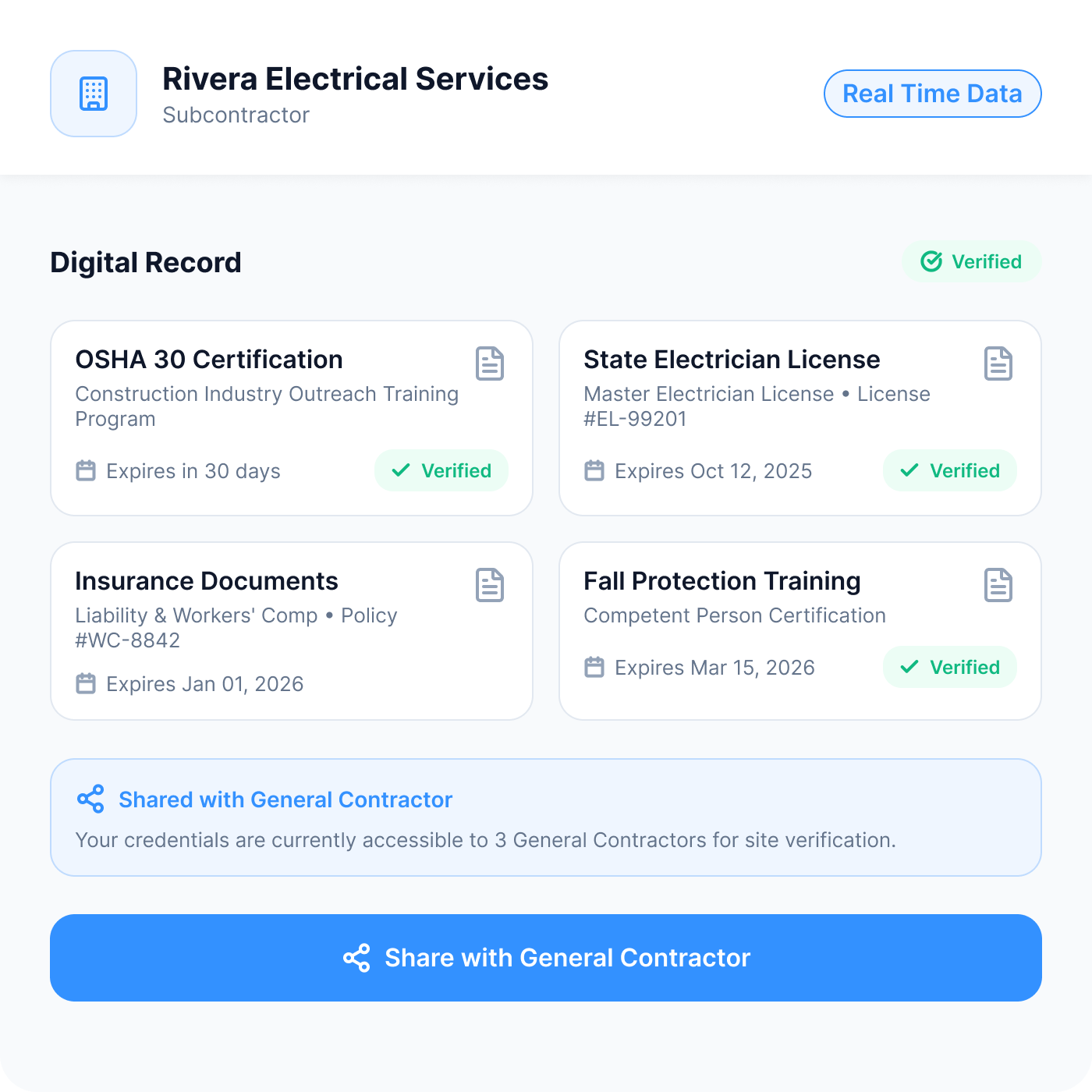
The Trust Portal is a live link any GC or owner can verify — training, form completion, corrective-action velocity.
Packets assembled by Rosie in seconds from one traceable field record.
Showing product visual 1 of 2
Most serious incidents are preceded by unreported near-misses — patterns invisible at human scale. Rosie reads every form on every site, continuously. The crew whose hazard assessments went quiet after a foreman change. The site that's under-inspected this month. The corrective actions about to age out. Instead of reacting to whatever is loudest, you start your week knowing exactly where your field time prevents the next recordable.
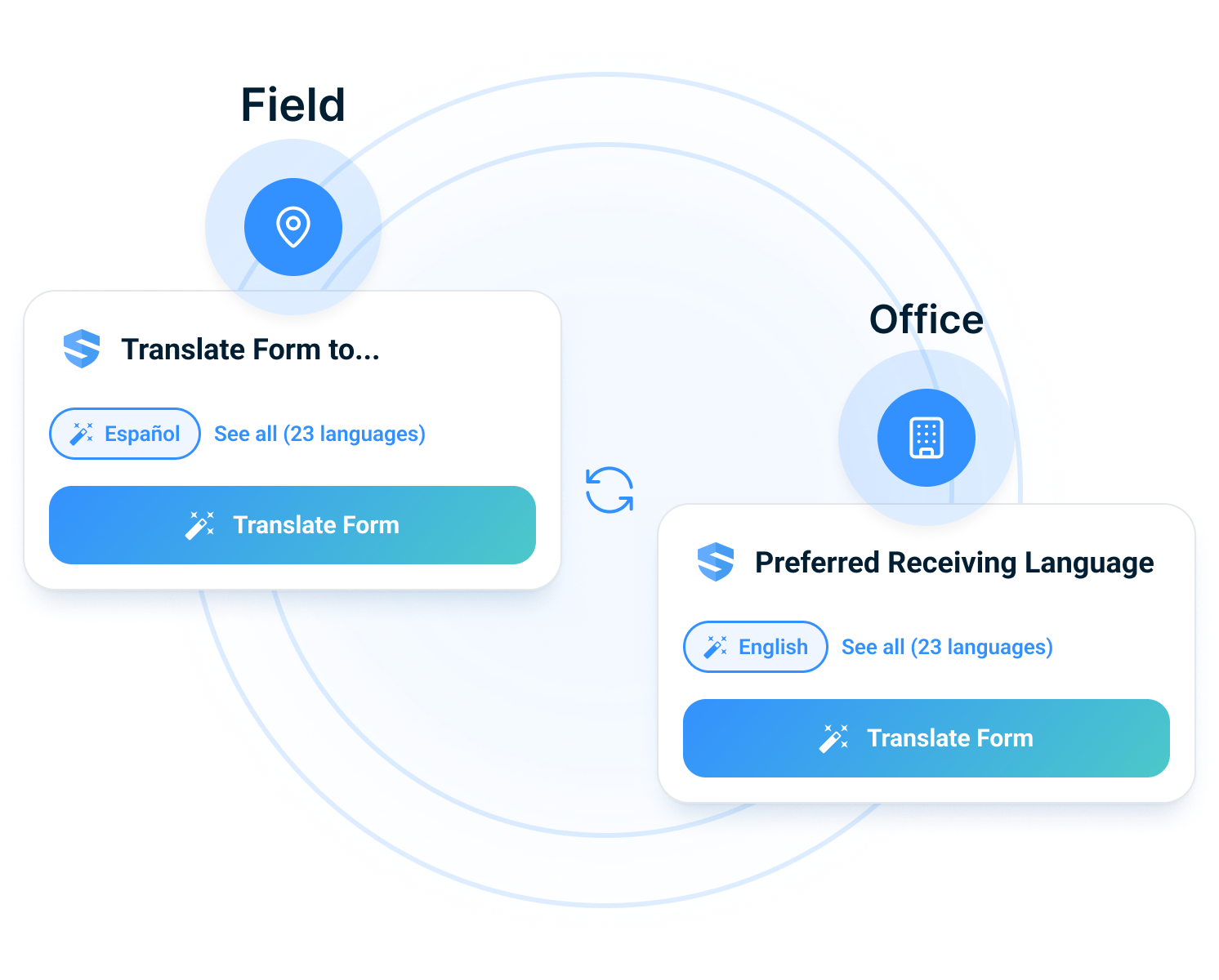
Your crews work in Spanish, Tagalog, French — and the fatality statistics track the comprehension gap with brutal precision. Rosie translates both ways: workers complete orientations, forms, and training in their own language; the office reads every submission in English — including the hazard text a worker actually types, not just the menus. Micro-training lands at the point of work, in the worker's language, at the moment it's needed.
The posting asked for ten people.
It's still one of you — with backup.
SALUS never replaces the safety professional. It absorbs the clerk-work the title quietly included, and gives the judgment room to operate.
Walk the site the rotation kept skipping. Mentor the new foreman before the near-miss, not after. Catch the hazard no form has a field for. Sit in the exec room with answers instead of homework. The compiling, formatting, and chasing that ate your weeks — that was never the job. It was what kept you from doing it.
Your presence, where the program actually lives — backed by data on where it's needed most.
Every Rosie draft lands for your review and sign-off. The trail records both the sources and the human approval.
You walk into the executive room as the person whose field data wins disputes and passes audits — not the cost center.

Conditional JHAs and SWPs scoped to today's task — the eight questions that matter, not the forty they've signed 200 times. That's what breaks pencil-whipping.
Every worker's credentials tracked against the task and renewed weeks before expiry — across a dozen sites and every GC's requirements.
Named owners, photo closure, automatic escalation — nothing dies in a folder, and the crew sees the loop actually close.
The OSHA log, the insurance packet, the GC audit — pulled in 30 seconds from the field record instead of rebuilt over a week.
Live compliance proof for every GC and owner — the prequal binder, retired.
Micro-training and refreshers that meet each worker in their language — 21+ supported, delivered at the point of work, not in a classroom.
Covers Washington and Oregon without scaling the safety office.

$180K/year of admin burden moved into the platform instead of headcount.
Chose SALUS over HammerTech and executed 400+ forms in the first week.

Reporting that beats paper is reporting that happens — the leading indicators finally reach the office.
Trusted across 400K users, 150K sites, and 14K companies.
Go deeper · admin cleared by Rosie
Watch one safety director's Monday backlog — five admin requests — cleared in under an hour.
Go deeper · field capture and crew proof
5-minute JHAs, two masters served with one capture, and proof that protects the crew.
Go deeper · scale and margin protection
Scale standards without scaling overhead — and plug the leaks that drain margin.
Bring us your most impossible week — the new GC's program, the audit, the cert chase across twelve sites — and watch SALUS cover it in a 15-minute demo.
Crews capture · SALUS prevents · Rosie drafts · You lead