

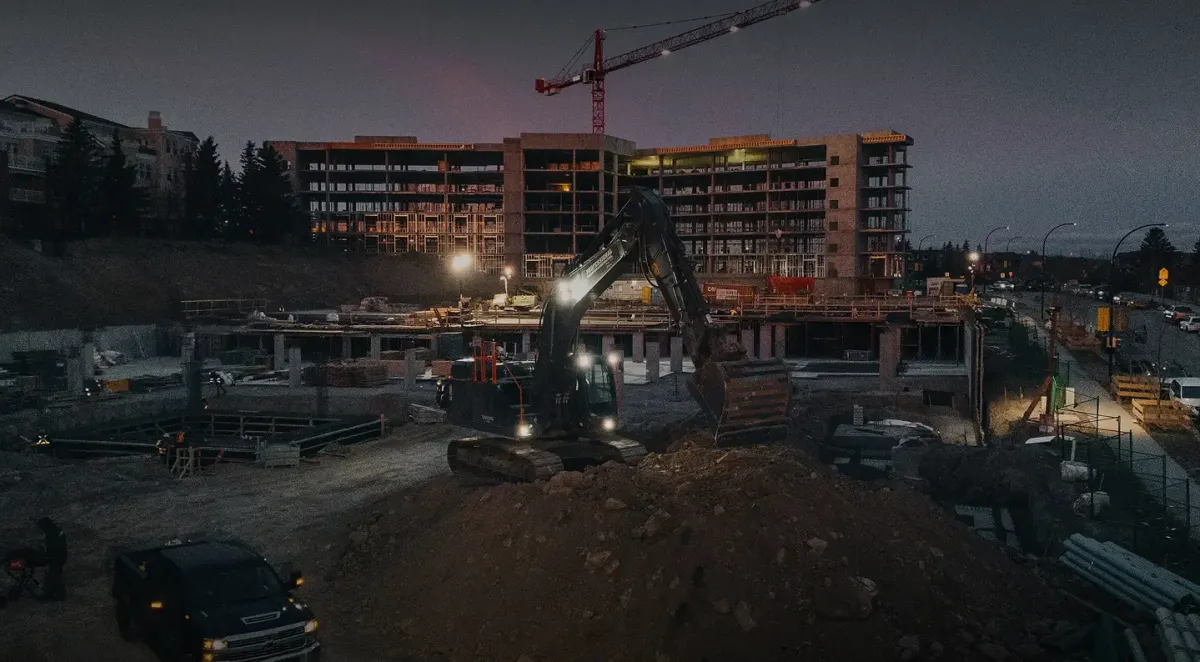
Professional Excavators & Construction Inc.
Voice-to-text solved accuracy problems for multilingual workforce
A multilingual workforce that couldn’t write legible incident reports. A platform that let them voice-to-text their way to the most accurate data the company has ever had.
Company profile
- Industry
- General Contractor — Civil Construction / Earthworks
- Workforce
- Multi-division workforce, Major Calgary infrastructure
- Geography
- Alberta, Canada
- Challenge
- Illegible reports no one could act on
Voice-to-text
Solved accuracy problems for multilingual workforce
Full scope
Maintenance, equipment utilization, QA/QC, incidents, forms — all in one platform
Custom forms
Built for PECI’s specific workforce demographic
More accurate
And more timely reporting across every department
The biggest change has been communication. Everybody knows what’s going on. We’re getting more timely reporting and more accurate reporting.
Professional Excavators & Construction Inc. (PECI) is a Calgary-based civil construction contractor founded in 1975.
Part of the JAVA Group of Companies operating across North America and Europe, PECI has been involved in the construction of most of the major skyscrapers in downtown Calgary. Their multi-disciplinary team delivers earthworks, site services, concrete, asphalt paving, and environmental services for civil and commercial projects throughout Alberta. Over 50 years in the market. More than 1,500 projects completed. And a workforce where English frequently isn’t the first language.
Operational safety turns field work into usable proof.
Illegible reports no one could act on
Paper failed PECI in two specific ways: legibility and timeliness. Both turned safety documentation from a decision-making tool into a filing exercise.
Unreadable forms
In a large multilingual workforce, handwritten forms were often illegible. When an incident report can't be read, it can't be acted on — safety leadership made decisions on incomplete or misinterpreted information.
Data arrived stale
By the time the office compiled field submissions, the window for action had closed. Safety meetings relied on outdated data. The safety director sat at a desk compiling reports instead of coaching in the field.
Voice-to-text turned unreadable forms into accurate data overnight
Voice-to-text for the field
Voice-to-text let workers who struggled with written English provide detailed, accurate information by speaking into their phones. Custom forms adapted to their specific workforce.
Full operations in one platform
Full operational scope — maintenance, equipment utilization, QA/QC, incidents all in one platform. No more juggling separate systems.
Voice-to-text let workers who struggled with written English provide detailed, accurate information by speaking into their phones. No more unreadable handwriting. No more guessing what someone meant.
Faster, more accurate reporting in every language
Safety program effectiveness
- ✓Voice-to-text solved accuracy problems for multilingual workforce — illegible paper forms replaced with clean, accurate data
- ✓Custom forms adapted to the workforce — platform adapts to workers, not the other way around
- ✓Full operational scope in one platform — maintenance, equipment utilization, QA/QC, incidents, and forms
- ✓Even tenured employees who couldn’t check voicemail adopted the platform successfully
- ✓COR certification ready — accurate, timely documentation across every department
Productivity gains
- ✓More timely reporting — data available immediately instead of waiting for paper compilation
- ✓Eliminated illegible handwriting and guesswork from incident report interpretation
- ✓One platform replaced multiple fragmented systems — single login for all operational functions
- ✓Comprehensive onboarding support enabled confident, fast rollout to entire staff
The workflows behind the result
Each result traces back to a specific way field work was captured, routed, and made visible.
- 01reporting
Voice-to-Text for Multilingual Crews
Professional Excavators’ workforce speaks multiple languages. Illegible handwriting and spelling errors made paper incident reports unreadable. SALUS’s voice-to-text lets workers speak their observations and the platform transcribes them accurately. The accuracy problem that plagued paper disappeared the moment workers stopped writing.
Explore the feature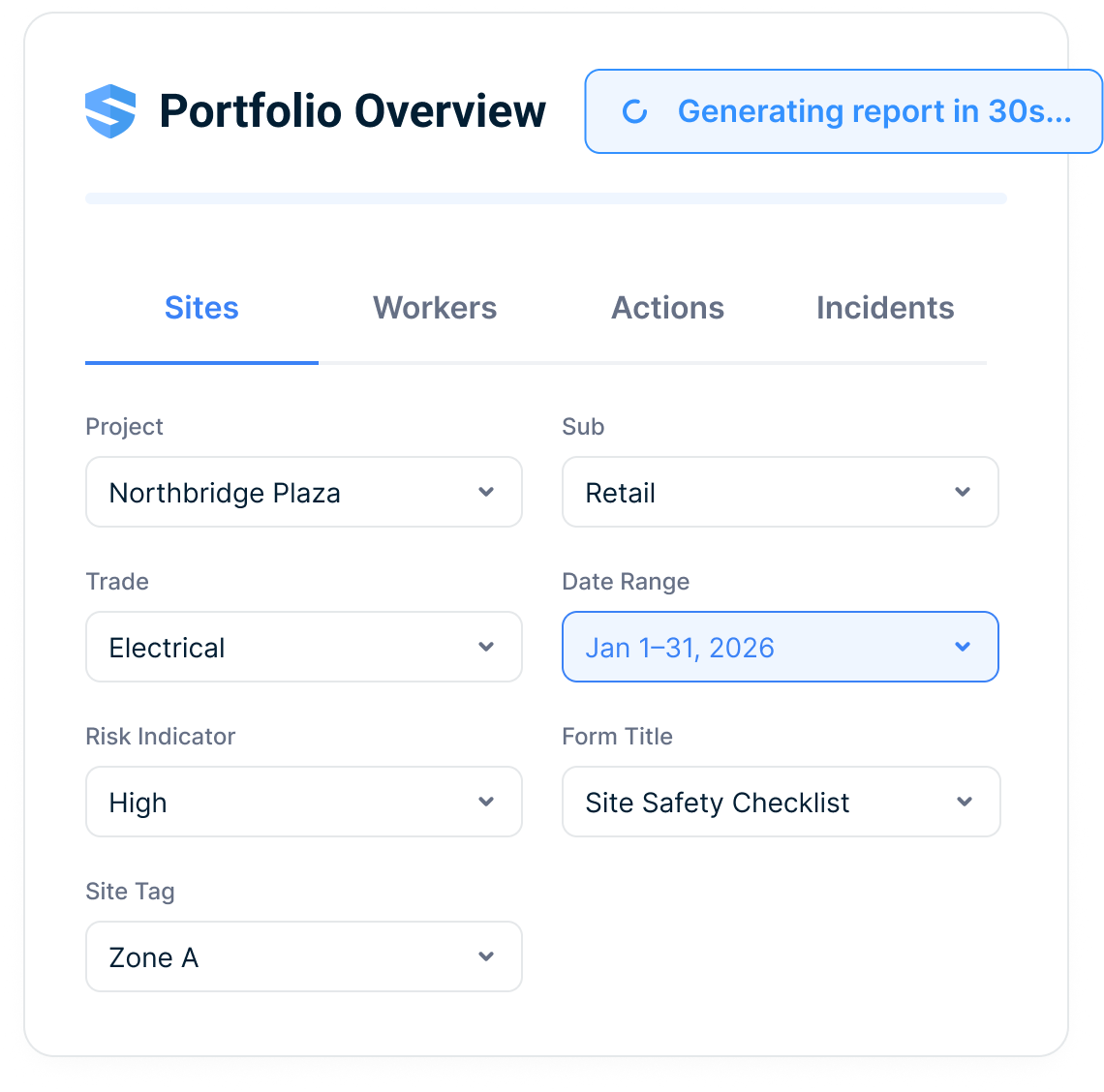
- 02field forms
Custom Forms Adapted to the Workforce
"If you can add a contact to your phone, you can fill out these forms." SALUS’s forms were built around how Professional Excavators’ crew actually works — not the other way around. The platform adapts to the workforce. The workforce doesn’t adapt to the platform.
Explore the feature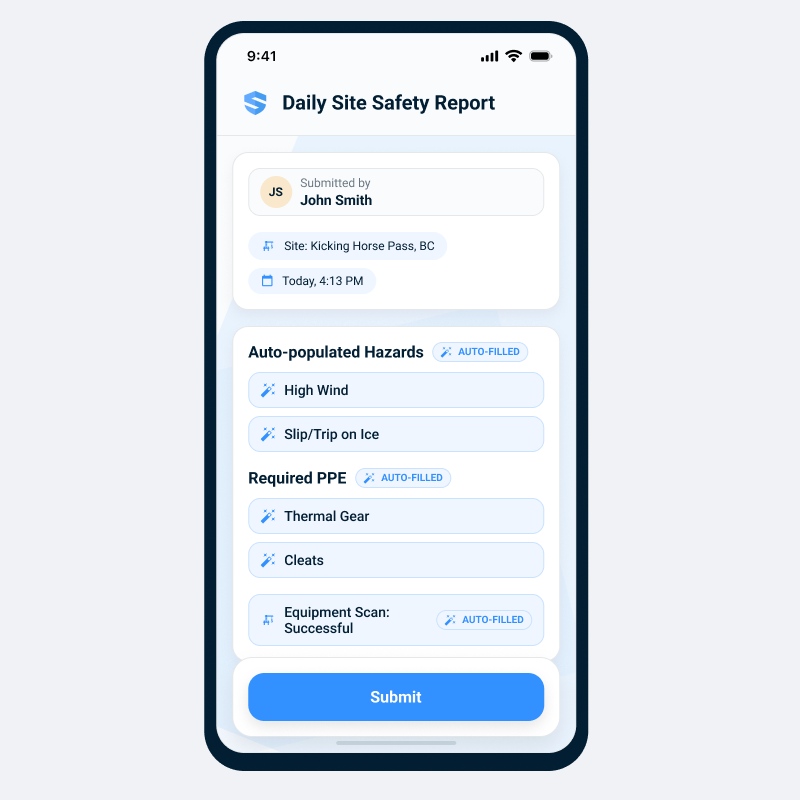
- 03support resolution
Full Operational Scope — One Platform
Maintenance tracking, equipment utilization, QA/QC, incident management — all in one platform. Professional Excavators doesn’t use SALUS for safety alone. They use it for everything, because the architecture supports the full operational scope of a construction company.
Explore the feature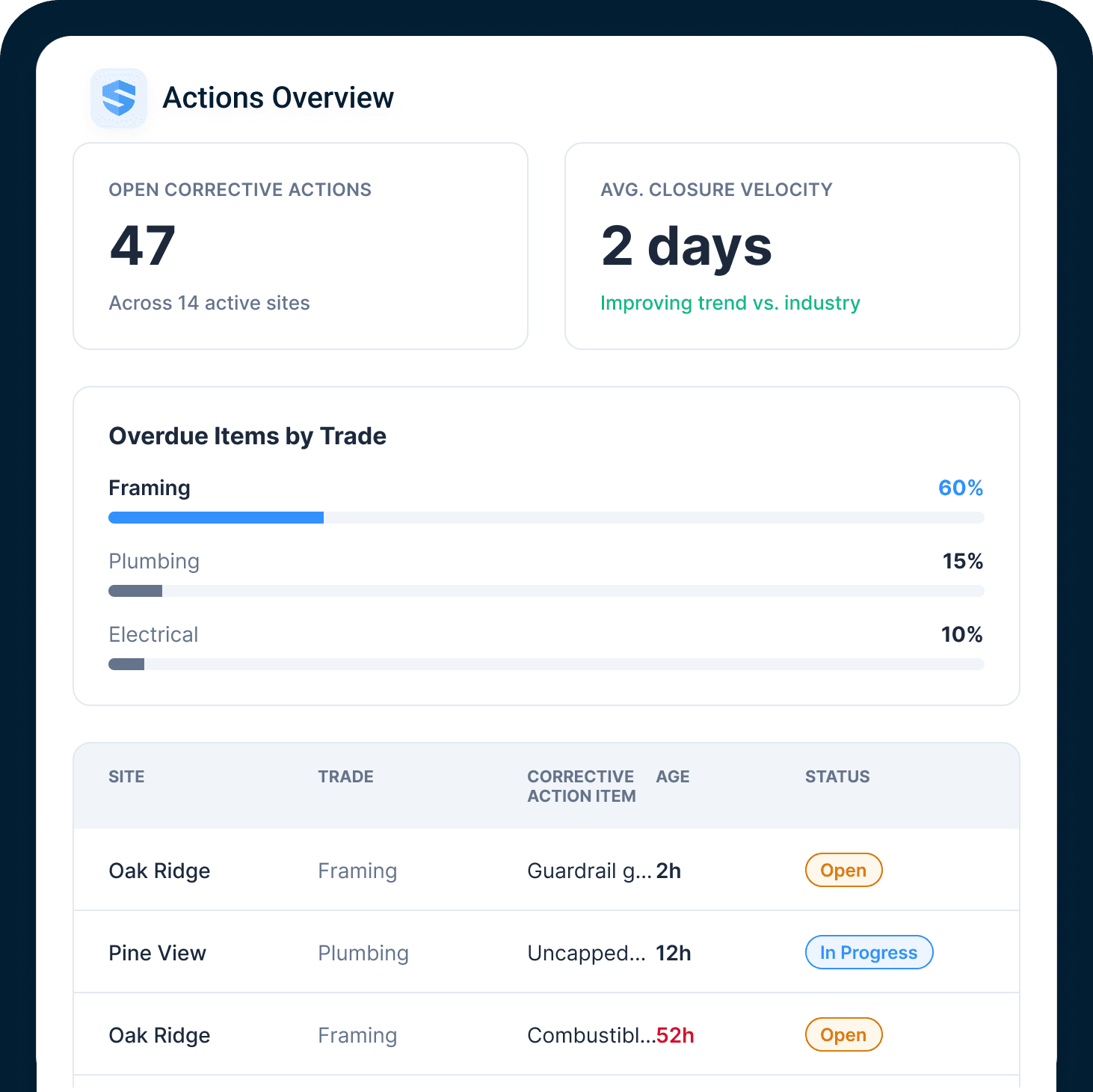
- 04support resolution
Comprehensive Onboarding Support
As an early SALUS customer, Professional Excavators helped shape the platform. That relationship meant hands-on onboarding support — not a self-service portal. The tool was configured to their workflow because they were in the room when it was built.
Explore the feature
Explore the AI field-intelligence model
Connect multilingual voice capture to the source-grounded assistant and workflow architecture behind it.
Hear it from Professional
More from Professional Excavators & Construction
If you’re out there looking for a safety software that’s going to check every box, you’re not going to find it. You’re not going to find any program that does absolutely everything you want unless you develop it your own. And the nice thing with what I’ve experienced with SALUS is that you guys have always worked with us to make the program our own. We’re able to do everything from our maintenance tracking to our equipment utilization to incident reporting, forms, our quality control, quality assurance — everything that we do on an operational side of things is done through SALUS.
You get some of those tenured employees that are not used to using their phones at work. You get people from certain backgrounds that they aren’t even allowed to have their cell phones at work. You have employees that are like, ‘I struggle just to check my voicemail. How am I going to do an equipment checklist on my phone?’ But the reassurance was that when myself and my team did the onboarding with SALUS, we were provided with so much information and support on how we can support our employees that it made it very easy for us to roll that out to our staff. If you can add a contact into your phone, then it’s as easy as filling out these forms.
The biggest thing that has changed is definitely the communication side of things. Everybody knows what’s going on. We’re getting more timely reporting, we’re getting more accurate reporting and of the two of those, I would say the accuracy is most important because in our industry we have a ton of employees that English isn’t their first language. So we do have the availability where they can voice to text. Some of them aren’t very good at spelling, their legibility of their writing when they were doing paperwork — we just couldn’t read it. Going to SALUS, we’re able to have those functionalities where they can provide as much information as possible and then we’re getting accuracy in our reporting.