

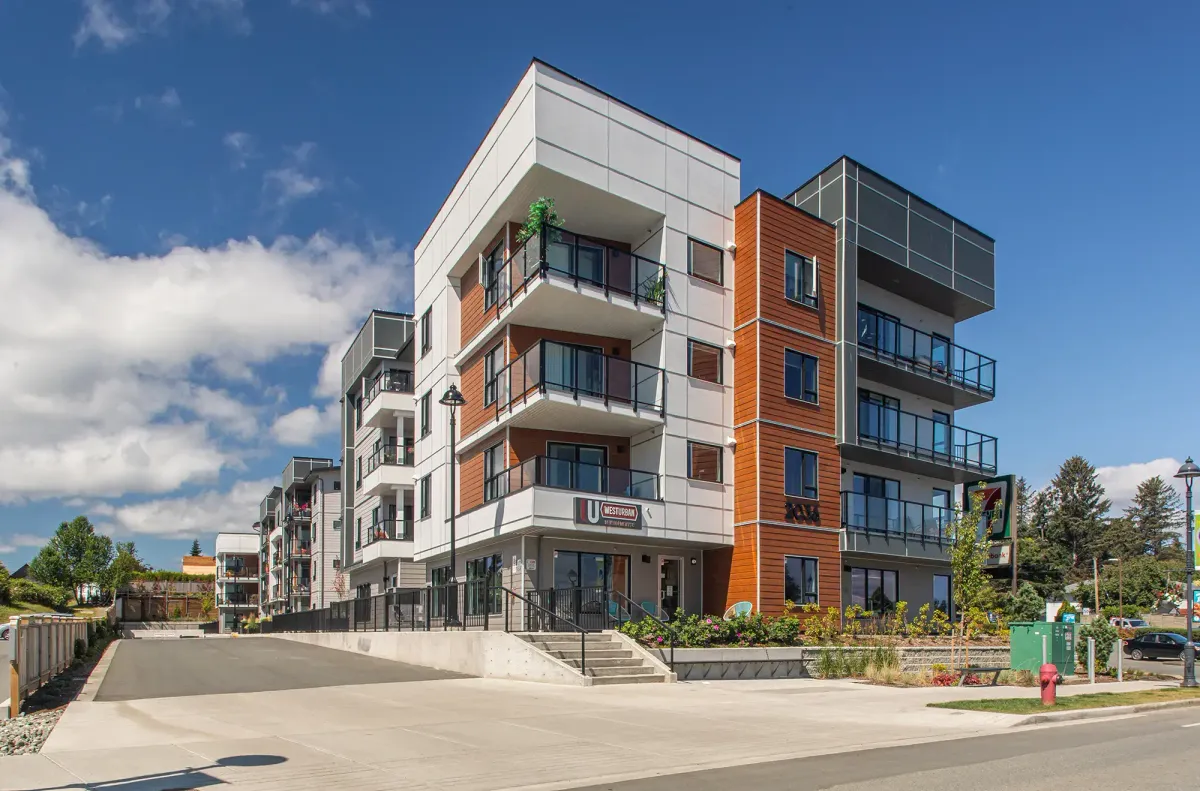
WestUrban Developments
900+ days lost-time injury free
25% surcharge to 30% discount. 900+ days lost-time injury free. Workers said they’d quit before going back to paper.
Company profile
- Industry
- Developer — Property Development
- Workforce
- Multi-site field crews, Active BC developments
- Geography
- British Columbia
- Challenge
- Paper was the problem
900+
Days lost-time injury free
25% → 30%
Surcharge to discount on WorkSafeBC experience rating
94–95%
Score on first external COR audit
30 minutes
From field feedback to live form changes
Within a month or so of us starting to use SALUS, some of the comments were that if we were to take it away and go back to paper, that they would quit.
WestUrban Developments is a developer based in British Columbia that doesn’t just talk about safety culture — they measure it, prove it, and get paid for it. Their workforce spans multiple active sites, and like every developer managing field crews, they live and die by the quality of their safety documentation.
In BC, WorkSafeBC sets an industry rate for every employer, then applies an experience rating — a surcharge or discount — based on actual safety performance. When WestUrban started, they were paying a 25% surcharge. That’s the penalty for having injuries on your record.
Operational safety turns field work into usable proof.
Paper was the problem
Before SALUS, safety documentation was paper. And paper created two problems.
Slow & clunky mornings
Getting crews to identify hazards, discuss mitigations, and complete their documentation before starting work was a friction point. The longer it took, the more corners got cut.
Accountability was aspirational
You could tell workers to do their pre-trips. You couldn't prove they did. You could tell the safety department a hazard was reported. You couldn't track whether it was addressed. And when the external auditor showed up, paper meant collecting stacks of documents, sorting through them, and hoping everything was there.
Crews threatened to quit if they had to go back to paper
Speed on every phone
The platform gave every crew the ability to quickly complete their daily hazard assessments on their phones. No delays, no paper, no excuses.
Buy-in through ownership
Within 30 minutes, forms were restructured based on crew feedback. Within a month, field crews told leadership that if they took the platform away and went back to paper, they would quit.
Within a month of using SALUS, field crews told leadership that if they took the platform away and went back to paper, they would quit.
900+ injury-free days, a 55-point insurance swing
Safety program effectiveness
- ✓900+ days lost-time injury free through genuine safety engagement
- ✓55-point insurance swing from 25% surcharge to 30% discount
- ✓Workers became stakeholders in safety program — not just participants
- ✓COR certification ready — scored 94–95% on first external audit
Productivity gains
- ✓Morning hazard assessments completed in seconds instead of minutes
- ✓30 minutes from field feedback to live form changes
- ✓COR audit prep eliminated — auditor pulled every record instantly from one system
- ✓Paper collection and sorting replaced with searchable digital records
The workflows behind the result
Each result traces back to a specific way field work was captured, routed, and made visible.
- 01support resolution
AI Form Builder with Rapid Customization
When WestUrban’s field crews gave feedback, the safety team rebuilt forms and pushed them back out within 30 minutes. That’s not a support ticket. That’s real-time responsiveness that turns skeptical workers into stakeholders. The AI Form Builder creates and modifies forms in minutes — no coding, no waiting on vendors.
Explore the feature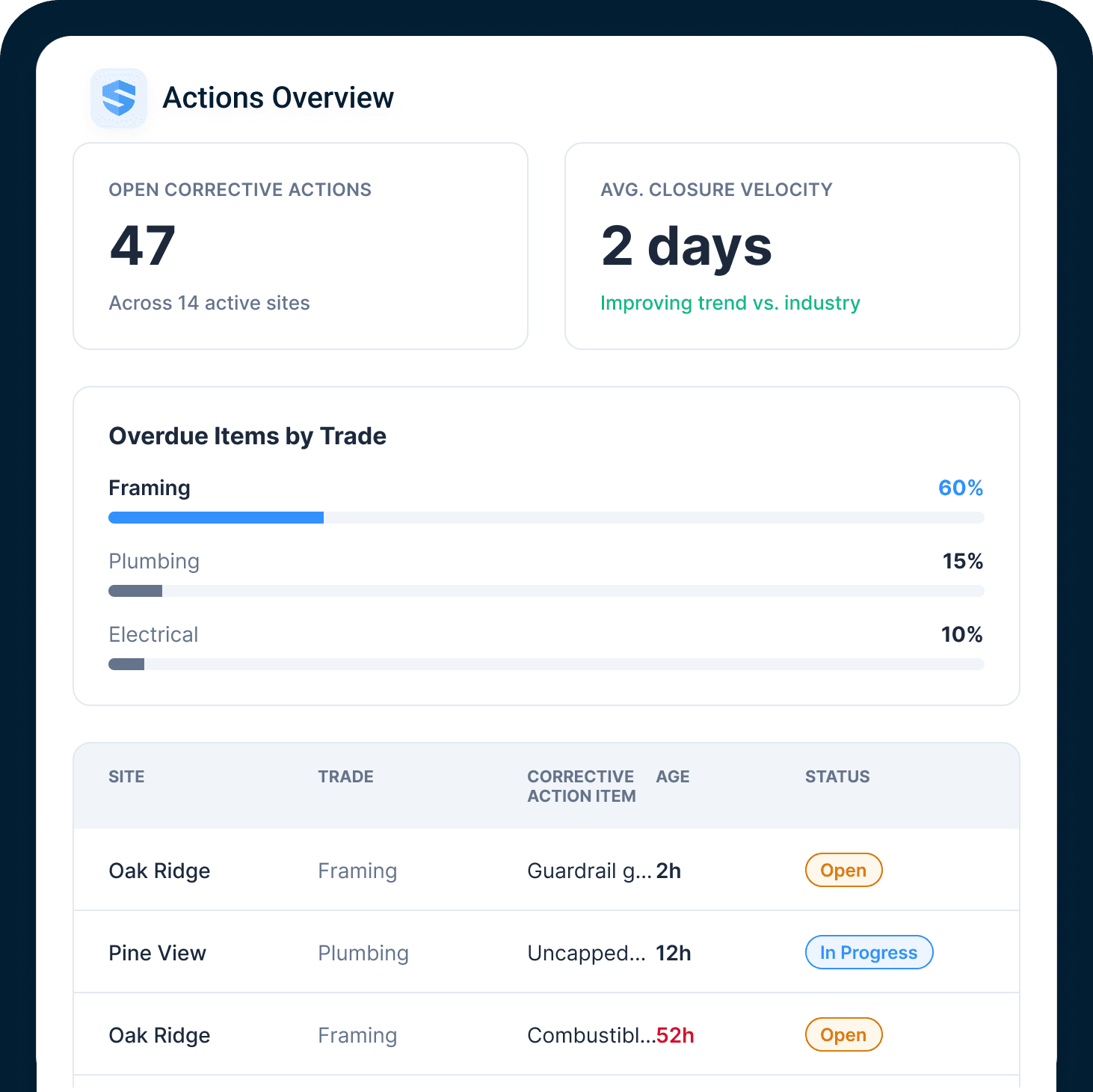
- 02offline mode
Field-First Design for Real Adoption
QR codes instead of app menus. Offline auto-save instead of “Save” buttons. Conditional logic instead of 12-page templates. Within one month, WestUrban’s workers said they’d quit if forced to go back to paper. That’s not compliance. That’s preference.
Explore the feature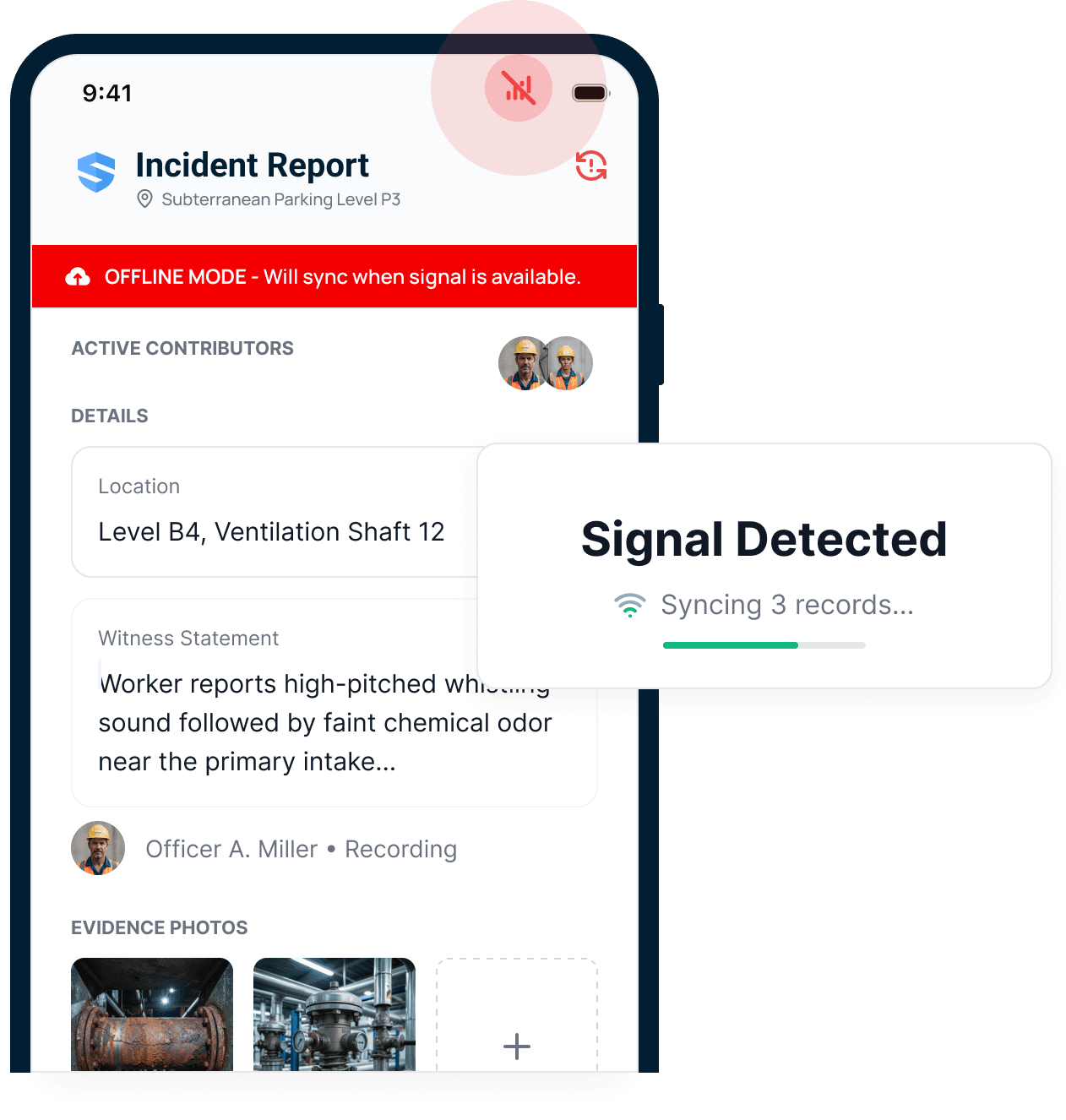
- 03searchable documents
Insurance Premium Impact
WestUrban went from a 25% WorkSafeBC surcharge to a 30% discount — a 55-point swing. The documentation that drove the rating change wasn’t a special project. It was a byproduct of daily field operations captured automatically by SALUS.
Explore the feature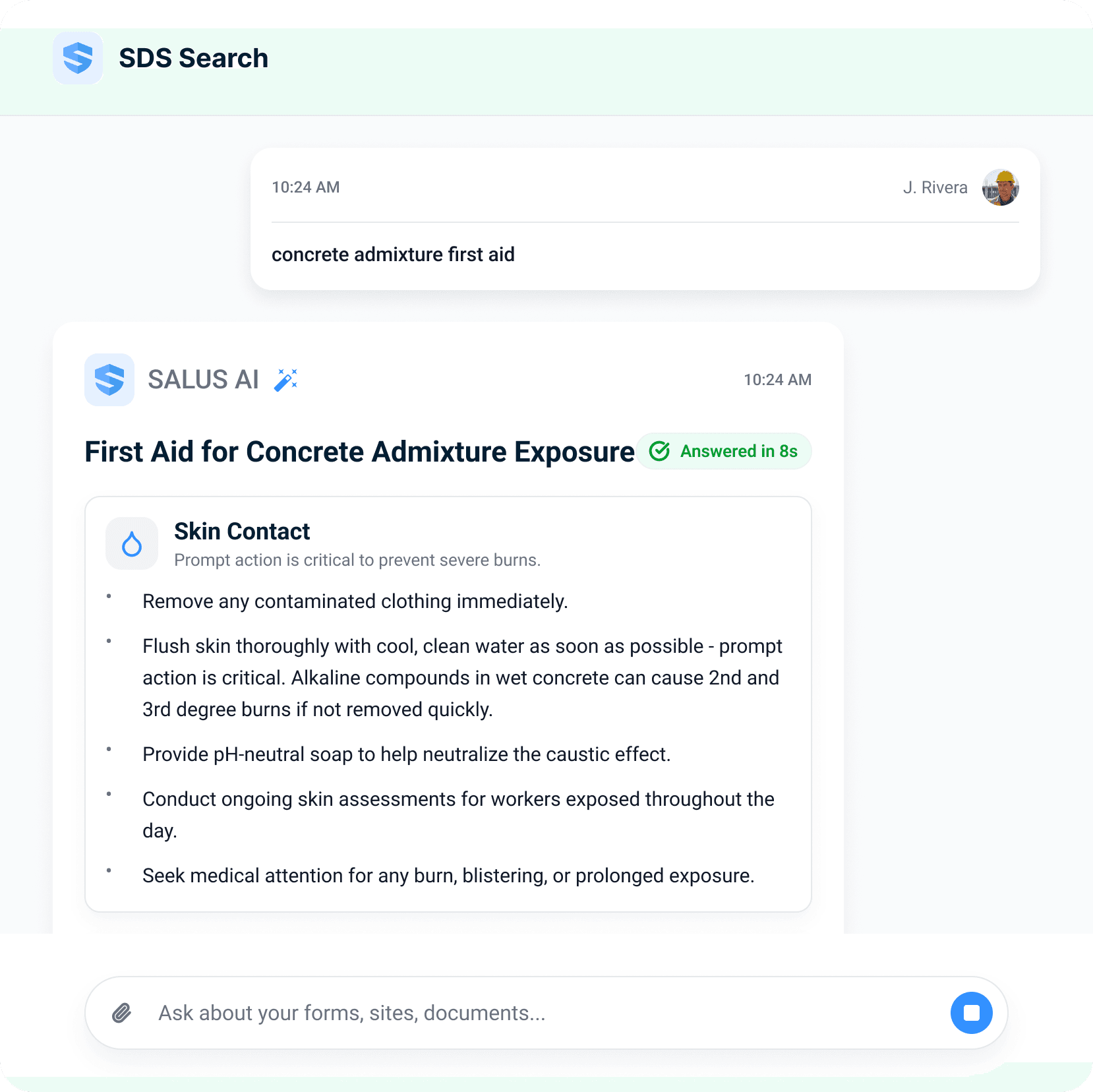
- 04qr workflows
COR Audit Readiness
94–95% on their first COR audit — where 80% is passing. Every form, every orientation, every corrective action was already documented, searchable, and organized. The auditor didn’t wait. Neither did the score.
Explore the feature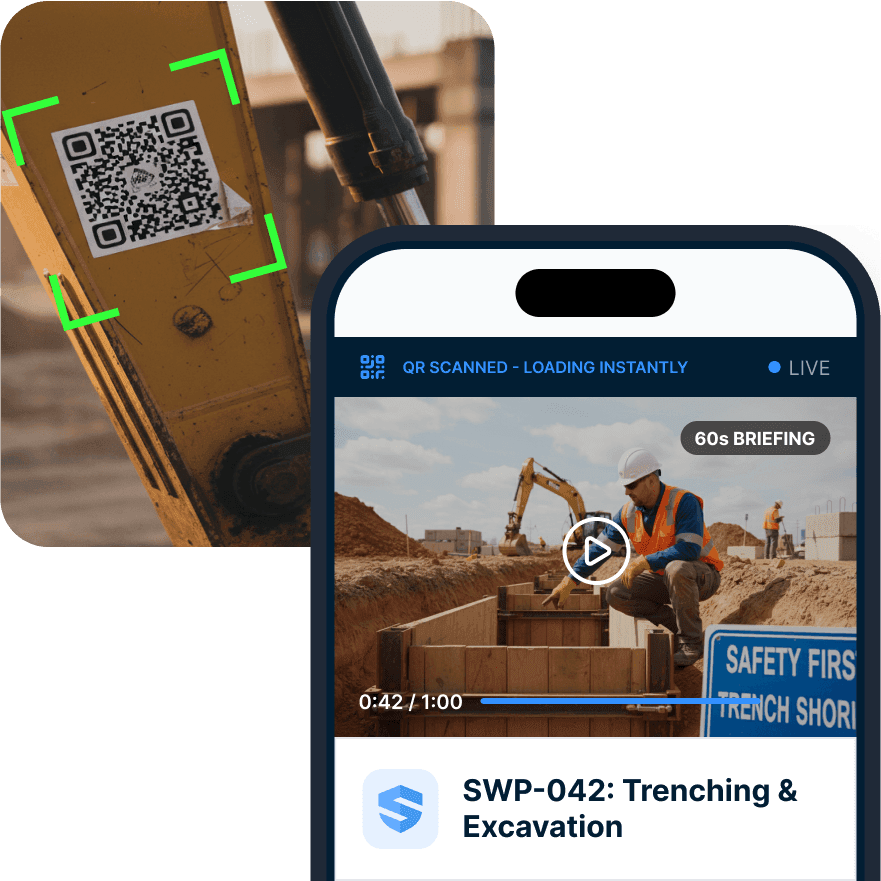
Hear it from Kelly
More from Kelly Kursteiner
When I first started, we were paying an industry rate and had some injuries, some lost-time injuries. So we were at that 25 percent surcharge. And this year we’re at a 30% discount. We just crossed over the threshold of 900 days lost-time injury free.
I rolled it out to the sites the way that I felt the form should be and got immediate feedback that they didn’t like the order of some of the questions and how it was laid out. So I was able to change the order and manipulate it and reword some of the questions on their suggestions within 30 minutes and then they could see that it was going to be beneficial. They had buy-in and ownership — they became a big stakeholder because they could see that they could influence the way the forms were to make them worker friendly.