
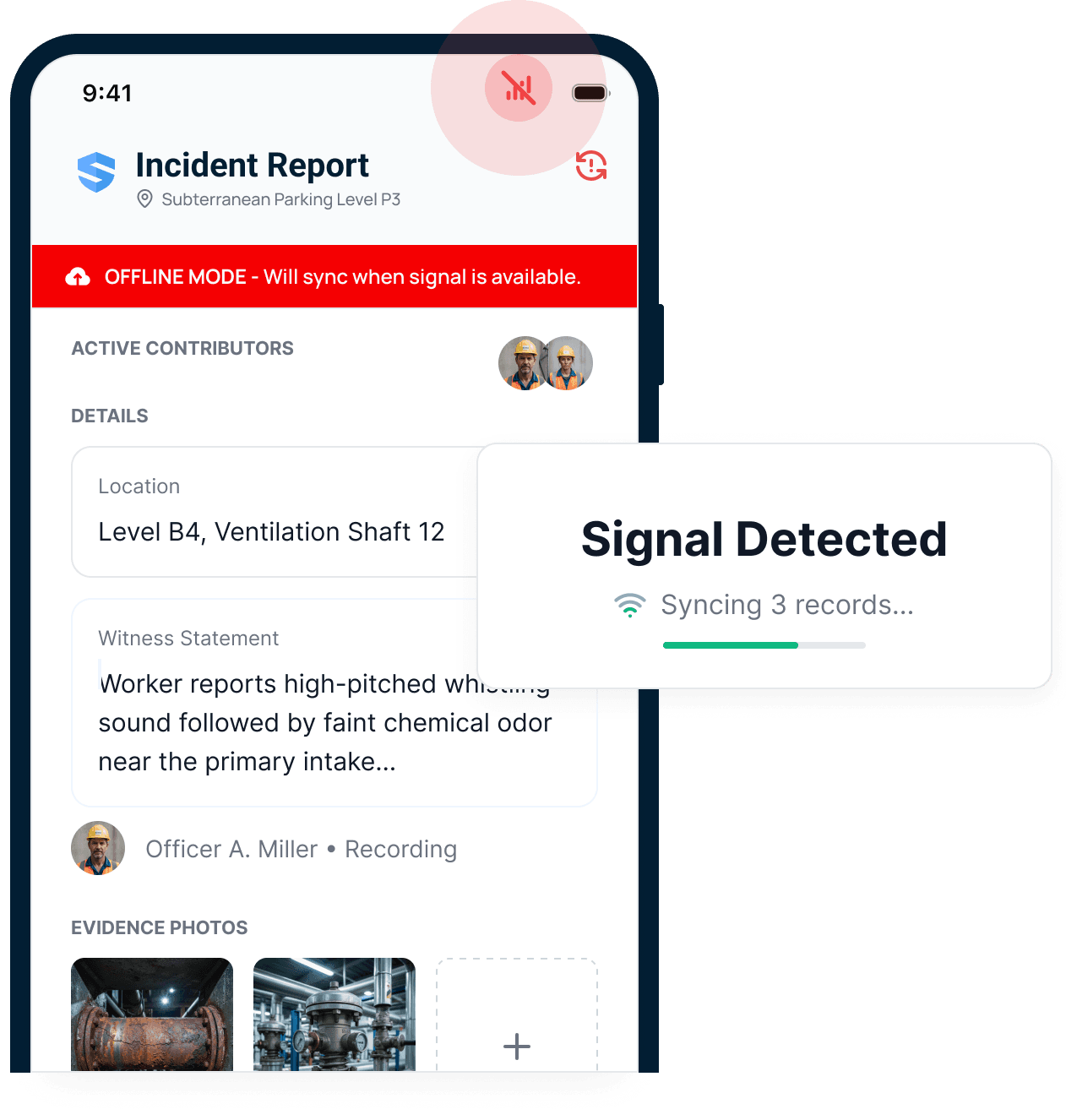
Offline mode
Only SALUSWhen the signal dies
Most platforms stop working without a signal. With SALUS, work keeps moving. Workers fill JHAs, photos, inspections offline, and everything syncs when the signal returns.
US construction contractors need EHS software that connects daily field work to their OSHA safety program. SALUS gives crews one place to complete JHAs, inspections, incident reports, and assigned follow-up, while safety leaders review the source records across active jobsites. When contractors outgrow paper and disconnected forms, the same worker, task, and project context carries through to reporting. Your team can see what happened, who owns the next action, and which evidence supports the response. The result is an operational safety platform built around construction work, with records ready for qualified review.
SALUS Pro has transformed our safety program and employee buy-in.
 Mike B.Safety Officer
Trusted by construction teams that expect safety to enable the work



SALUS is designed to maximize crew adoption, connect field and office EHS workflows, eliminate admin work and friction, and increase the efficiency, visibility, and accountability of safety work across every jobsite.
Still defining the category? Read what EHS software does in construction. For the wider system architecture, explore the complete SALUS platform.
Will crews complete the EHS workflow where the work happens?
EHS programs live and die in the field. Test real JHA, orientation, inspection, incident, corrective-action, permit, and certification workflows on a phone—in poor-to-no connectivity, with Spanish workers or any worker who speaks one of the 21 languages supported by SALUS, on Android, iPhone, or any regular phone.
We recently did a poll and we have a 92% satisfaction across 600 employees.
Scroll for more
Most platforms stop working without a signal. With SALUS, work keeps moving. Workers fill JHAs, photos, inspections offline, and everything syncs when the signal returns.
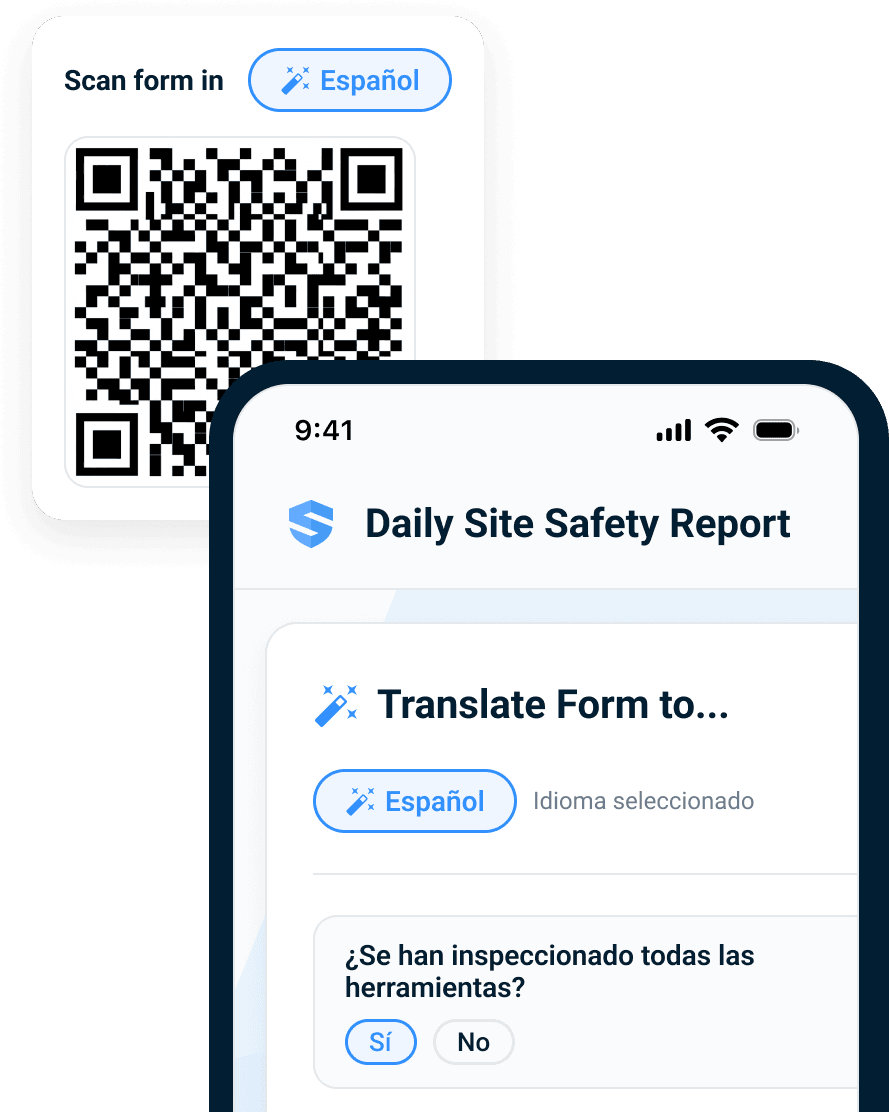
Workers complete the workflow in Spanish. The office receives a clean record in English.
Can one connected platform replace the module maze?
Most EHS platforms are organized as separate modules. SALUS connects the worker profile, jobsite, task, equipment, controls, training, incidents, corrective actions, and reporting so the crew sees exactly what it needs and leadership sees one operational record. Worker and company profiles travel across jobsites, so registration and orientation happen once.
Scroll for more
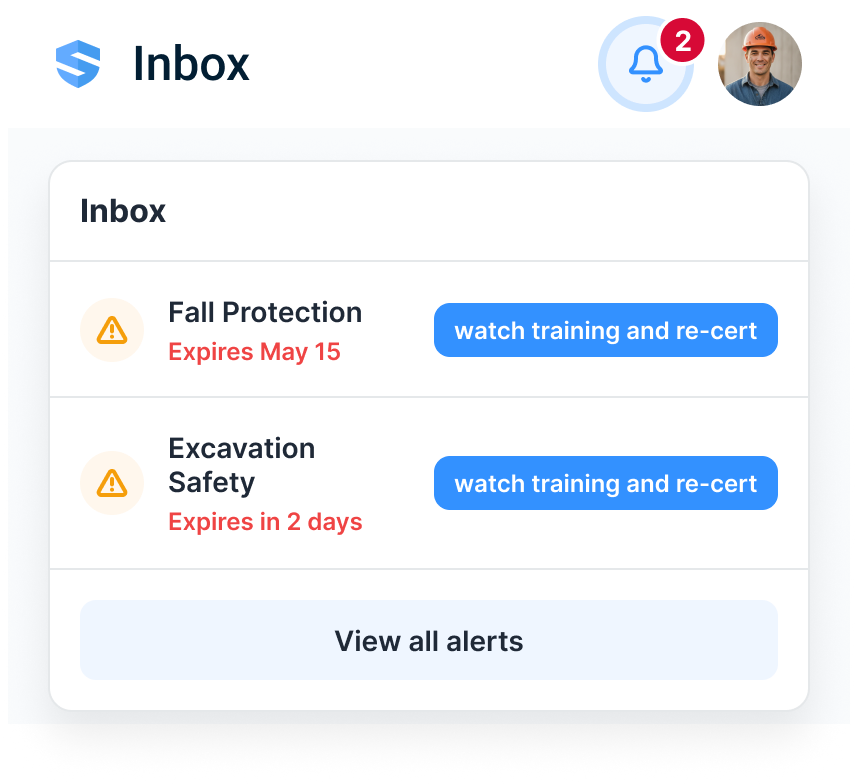
Instead of a dead end, the worker gets the required micro-training on their phone. Completion updates the record immediately—without a separate LMS.
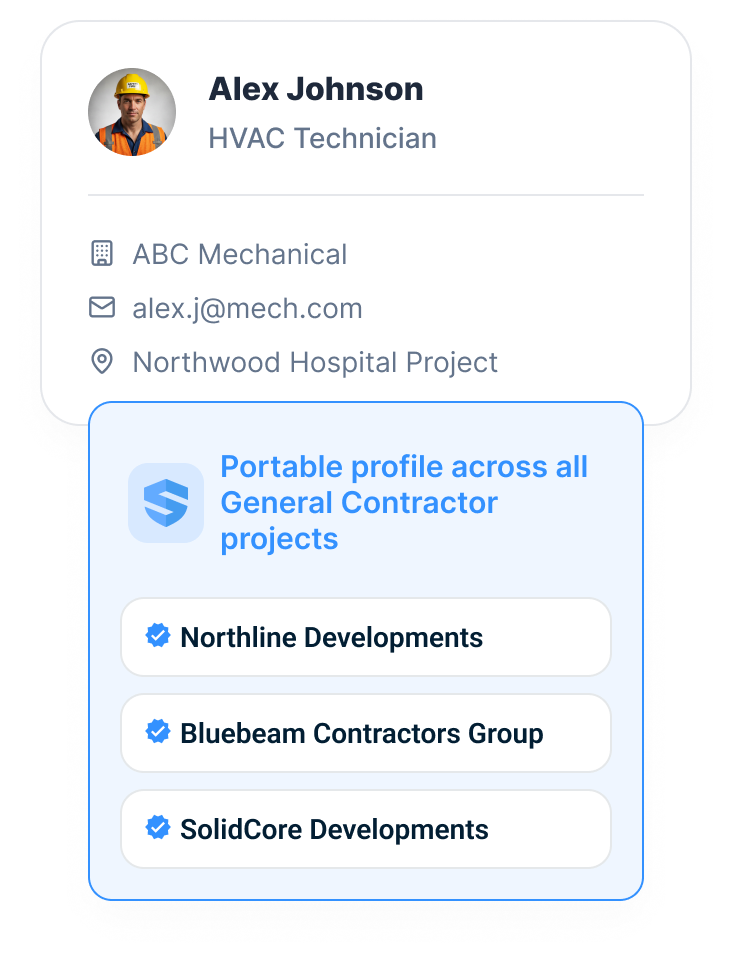
Their orientations, certifications, training, and work history travel with them. No duplicate profile. No re-entry. No fresh onboarding at every gate.
Can every EHS signal open back to its source?
SALUS preserves who did what, where, when, for which crew and task, with the original form, photo, voice note, signature, and approval trail attached. Corrective actions are assigned to named workers, while Rosie monitors the connected record for missing data, overdue work, and emerging risk.
Scroll for more
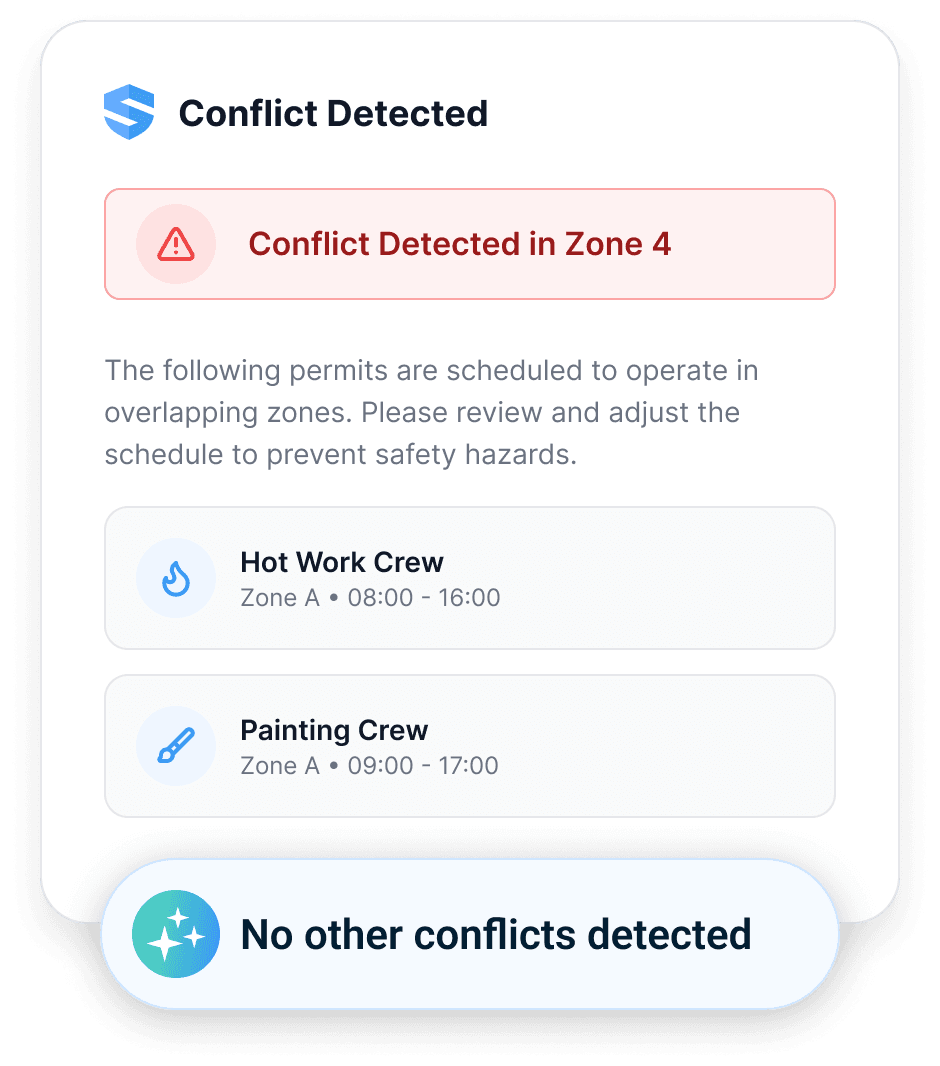
SALUS checks the work, area, time, equipment, and credentials, then flags conflicts before approval.
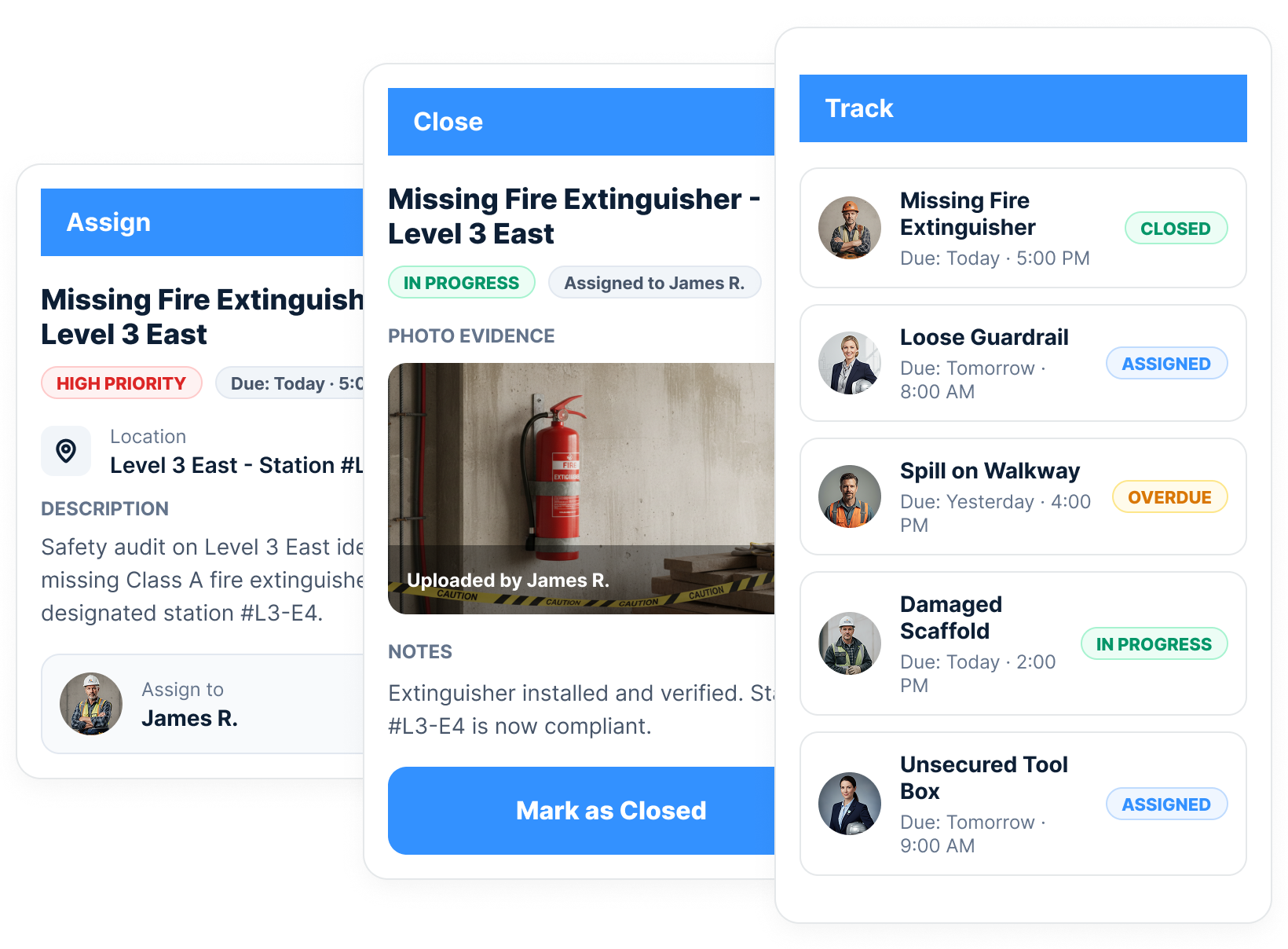
Assign each action to a named worker, track its due date and status, require photo evidence, and preserve closure with the original finding.
Can leaders use the record without rebuilding it?
SALUS generates crew-level operational data at the source and in the moment. Enriched with project data synced from Procore or another project management platform, it gives EHS and operations leaders live intelligence. Beyond dashboards, Rosie generates GC and prequalification packets, OSHA-supporting responses, executive reports, and contemporaneous, defensible proof in seconds.
Scroll for more
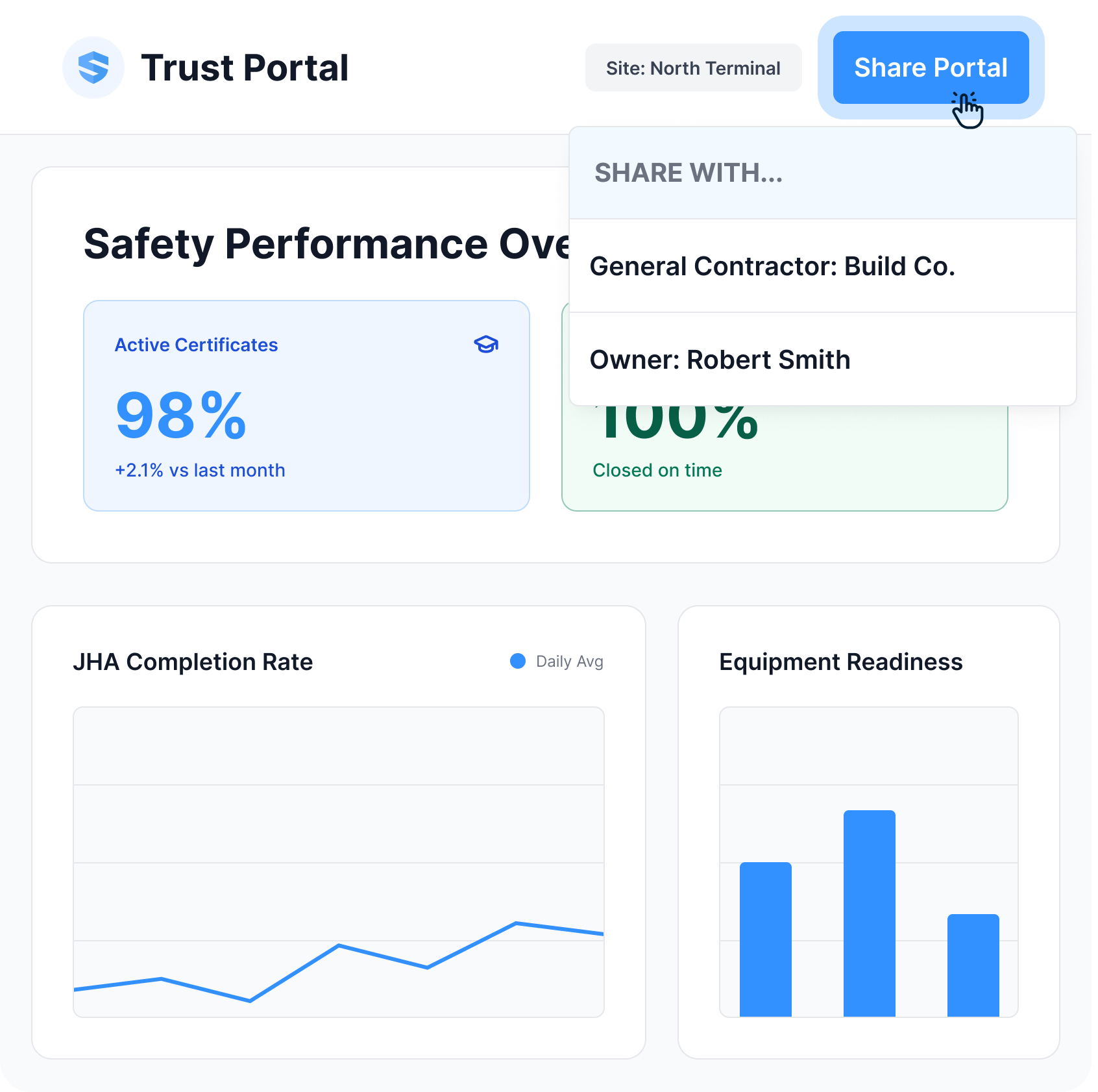
Share a live, permissioned view of current training, certifications, incidents, corrective actions, and performance. No stale PDF. No last-minute evidence hunt.
FindingEvidence-backed3 of 4 alleged delays trace to Titan's own crew shortfalls—not site access. Every point below is timestamped and source-linked.
SALUS preserves the contemporaneous field record. Rosie cross-references the evidence and assembles the delay story while it can still protect the business.
SALUS organizes EHS around the work contractors actually perform—not separate modules or a flat feature list. Each workflow uses the same worker, crew, site, task, and source record, so field execution, risk monitoring, reporting, and Rosie stay connected.
It is the most powerful tool that we use.
· 01 · Workforce readiness
Verify orientation, training, certifications, required documents, and site access before the shift begins.
· 02 · Field EHS operations
Give foremen and crews the job-specific forms, procedures, training, equipment checks, or answers they need at the right moment.
· 03 · Risk intelligence
Let Rosie mine thousands of connected EHS data points, identify gaps and patterns, and keep every signal open to its source.
· 04 · Compliance, reporting & proof
Produce OSHA-supporting records, owner and GC packets, insurer evidence, executive reporting, and source-linked dispute reports without rebuilding the work by hand.
Rosie is not a separate chatbot or another EHS module. She works across the connected SALUS record to create controls, structure field capture, surface risk, and assemble source-linked outputs—without removing human judgment.
Draft controls, plans, talks, and forms from your approved programs and project context.
Structure voice, photos, scans, signatures, and multilingual field input at the source.
Surface readiness gaps, overdue actions, and risk signals while there is still time to act.
Assemble source-linked answers and reports for a qualified person to review and approve.
Permission-aware · source-linked · human-approved
Showing Rosie example 1 of 4: Turn GC requirements into a site-ready plan
For US contractors, OSHA 1926.20(b)(2) requires frequent, regular inspections of jobsites, materials, and equipment by employer-designated competent persons. An EHS purchase should therefore be tested against the inspection process your company actually runs. Start with a real project, the person responsible for inspecting it, and a finding that needs attention. A completed form alone does not show how the issue was handled.
In SALUS, the inspection, attached photos, assigned action, and closure evidence share project and worker context. Safety leaders can review open findings across sites and trace a report back to the original submission. Use your demo to check how supervisors record observations, how actions reach their owners, and how reviewers distinguish an outstanding hazard from a completed response. Those steps make the record useful when management or an inspector asks how a particular condition was addressed.
Set the workflow to your applicable federal or State Plan requirements and your own safety program. Software helps organize the evidence; it does not designate a competent person, perform the inspection, or establish compliance by itself. Keep the responsible people and their review decisions visible alongside the documents.
Regulatory references: OSHA 1926.20.
EHS is a broad software category. A buyer may need environmental reporting, industrial hygiene, sustainability, or health and safety operations. Construction safety software focuses the evaluation on changing jobsites, mobile crews, trade partners, equipment, and the work happening today. The useful question is which of those responsibilities your team needs one system to manage.
SALUS concentrates on construction health and safety operations. Bring a JHA, a worker orientation, an inspection finding, and the report your safety director needs. Follow each through field capture, review, assigned action, and reporting. Check the phone experience and offline workflow as carefully as the dashboard. If your shortlist also requires emissions, waste, or ESG management, assess those specialist requirements separately. This page is the product evaluation; the EHS explainer covers the category and terminology.
Construction teams need EHS workflows that earn crew adoption, capture more ground truth, and turn the same connected record into faster work and better risk intelligence.
SALUS connects crew-level activity to the project and enterprise systems that need it. Keep the source record intact, eliminate double entry, and route the right proof to the right people automatically.
The Procore integration created more tangible value in the form of time back to the field. We eliminated double entries.
Safety activity can become part of the project record without double entry.
Connect safety data to enterprise workflows, BI tools, and reporting systems.
Send certificate alerts, overdue-action escalations, report digests, and stakeholder updates automatically.
Deliver weekly, monthly, owner, insurance, or executive reports without manual assembly.
Procore · API · Automations · Scheduled reports
Join 400K users across 150K sites already on SALUS.
No commitment · 30-minute personalized walkthrough