

Aquicon Construction
40–50% → 80% field worker adoption (doubled from previous platform)
The COR-certified GC that doubled field adoption — by giving workers a tool worth opening.
Company profile
- Industry
- General Contractor — General Contracting
- Workforce
- 200+ field workers, $2B+ cumulative project value
- Geography
- Ontario, Canada
- Challenge
- Half the workforce refused to go digital
40–50% → 80%
Field worker adoption (doubled from previous platform)
98%
Of recurring tasks pre-loaded with hazards and controls
Real-time
Equipment maintenance routing — issues reach the right people immediately
Significant
Time savings on daily job safety analysis and data collection
If the solution you’re using isn’t easy to use at the end-user level, you’re not going to get the adoption you want. We had maybe 40 to 50 percent of our field workers using the previous system; with SALUS, we’re at about 80 percent.
Aquicon Construction is a family-owned general contractor founded in 1986, headquartered in Brampton, Ontario. With cumulative revenues exceeding $2 billion, they deliver medium to large-scale projects across healthcare, education, recreation, transit, and multi-family residential sectors throughout Ontario.
They’re COR-certified, members of the Canada Green Building Council and the Ontario General Contractors Association — and they manage a significant subcontractor base across every project.
Operational safety turns field work into usable proof.
Half the workforce refused to go digital
Aquicon had already invested in safety software. The problem wasn't the concept — it was the execution. In an industry where crews range from 20-year-olds to 60-year-olds and tech skepticism runs deep, the tool confirmed every worry that technology makes things harder.
Adoption stalled at 50%
The previous platform wasn't user-friendly at the worker level. On multilingual jobsites with wide age ranges, adoption plateaued at 40–50% and wouldn't budge.
Hazard lists rebuilt from scratch
Supervisors manually populated hazards and controls from memory each morning. It took long enough that crews rushed through or skipped parts — turning the morning safety conversation into a box to check.
A hazard database that auto-populates 98 percent of daily tasks
Mobile-first and usable at every level
SALUS was mobile-focused and usable at every level. They loaded a master hazard assessment database covering 98 percent of recurring tasks.
Equipment inspections gone mobile
Equipment inspections moved to mobile with real-time maintenance routing. No more paper checklists sitting in truck cabs.
They loaded a master hazard assessment database covering 98 percent of their recurring tasks into the SALUS backend — what used to be guesswork became a structured process that takes a fraction of the time.
Twice the adoption, faster daily work
Safety program effectiveness
- ✓Doubled field worker adoption from 40–50% to 80% by providing a platform usable at every level
- ✓98% of recurring tasks pre-loaded with associated hazards and controls — structured database eliminates manual guesswork
- ✓Real-time equipment maintenance routing ensures deficiencies reach the right people immediately
- ✓Subcontractor digital submissions through SALUS increase visibility across trades and sites
- ✓COR certification ready — structured, consistent documentation across all projects
Productivity gains
- ✓Daily job safety analysis time reduced to a fraction — hazards and controls auto-populate from master database
- ✓Eliminated manual paper filing, hole-punching, and binder sorting for supervisors
- ✓Equipment inspection process moved to mobile — faster completion and instant routing
- ✓Subcontractor form submissions save supervisor time previously spent on paper processing
The workflows behind the result
Each result traces back to a specific way field work was captured, routed, and made visible.
- 01searchable documents
Pre-Populated Hazard Assessments
98% of tasks pre-loaded with associated hazards and controls. An Aquicon worker starting a daily JSA doesn’t face a blank screen — they see the hazards relevant to their task already populated. Fewer taps, faster completion, dramatically higher adoption. That’s how you go from 40–50% to 80%.
Explore the feature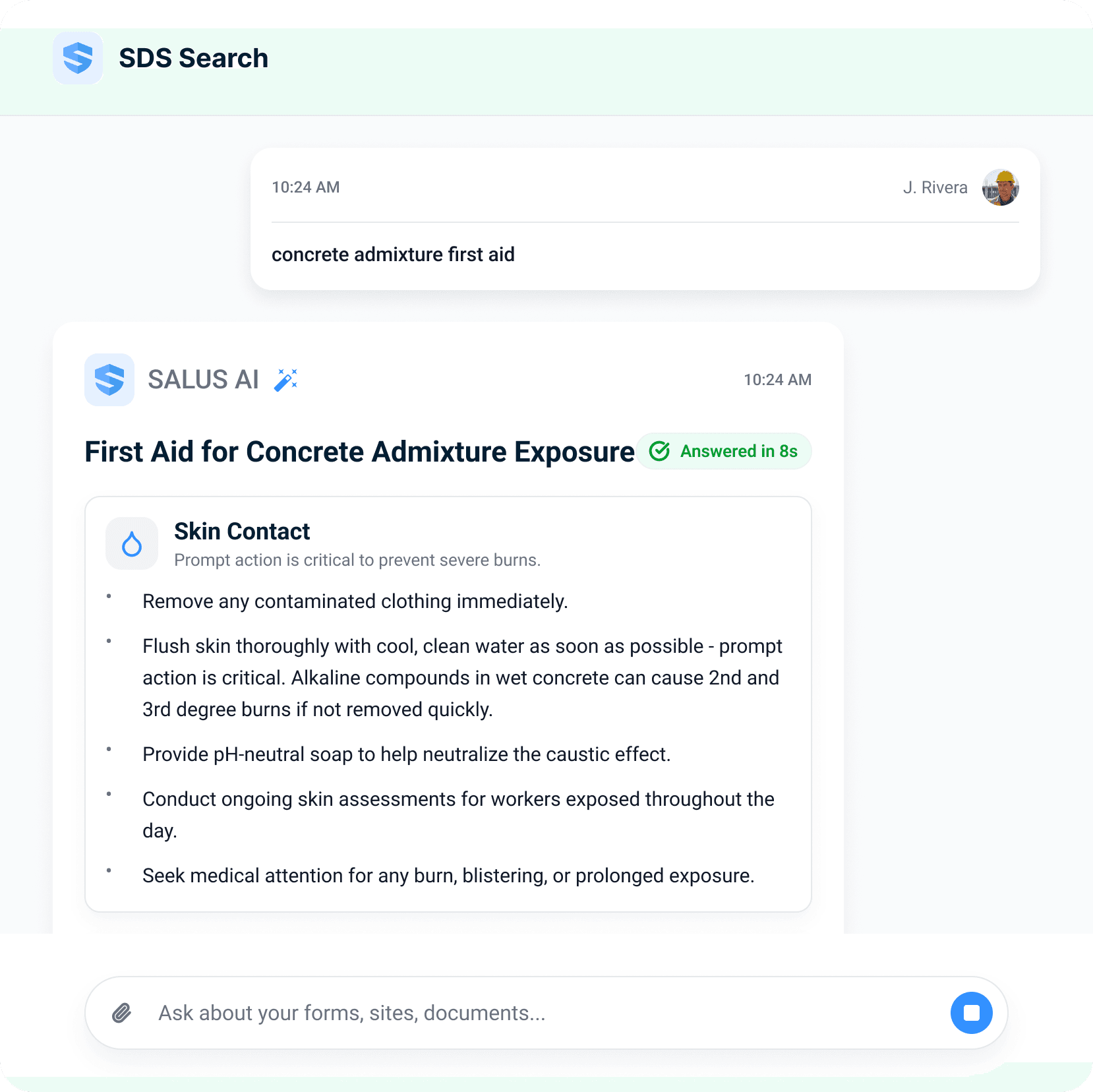
- 02qr workflows
Equipment Maintenance Routing
A deficiency identified on an excavator in the field routes directly to the maintenance team in real time — with photos, location, and severity. Aquicon’s equipment doesn’t stay broken because the report is sitting in someone’s inbox. The repair loop starts at the scan.
Explore the feature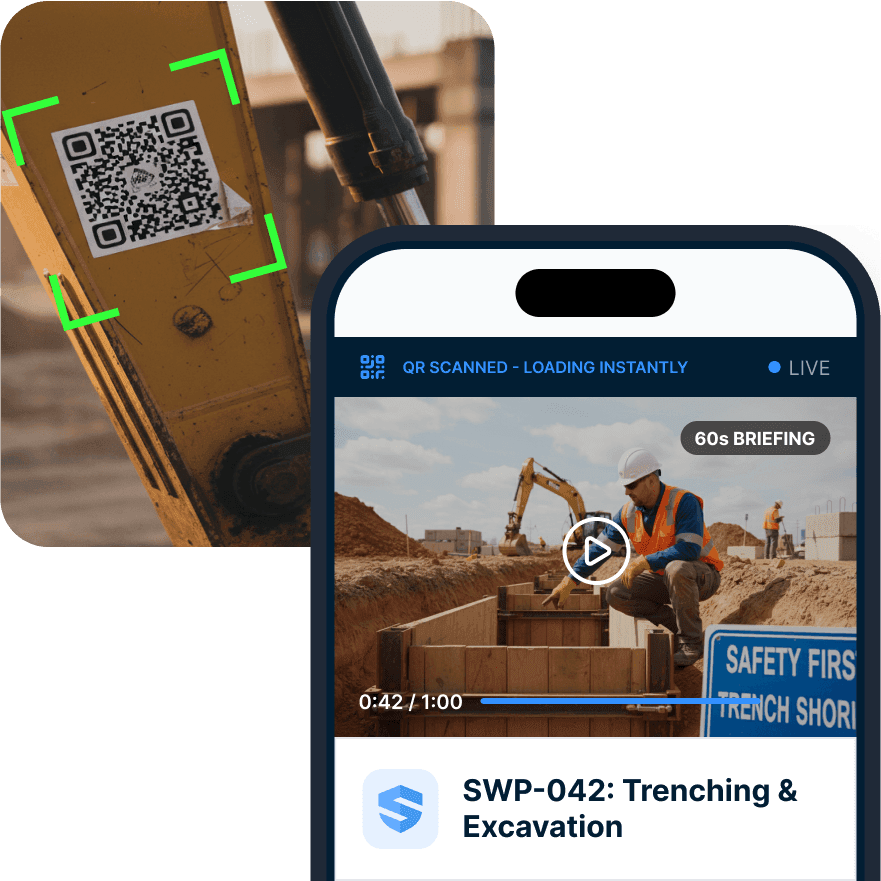
- 03subcontractor management
Subcontractor Digital Submission
Aquicon’s subcontractors submit safety documentation digitally through SALUS — a capability that exceeded what their previous platform could deliver. Orientation records, daily forms, equipment inspections. All verified. All searchable. All in one place.
Explore the feature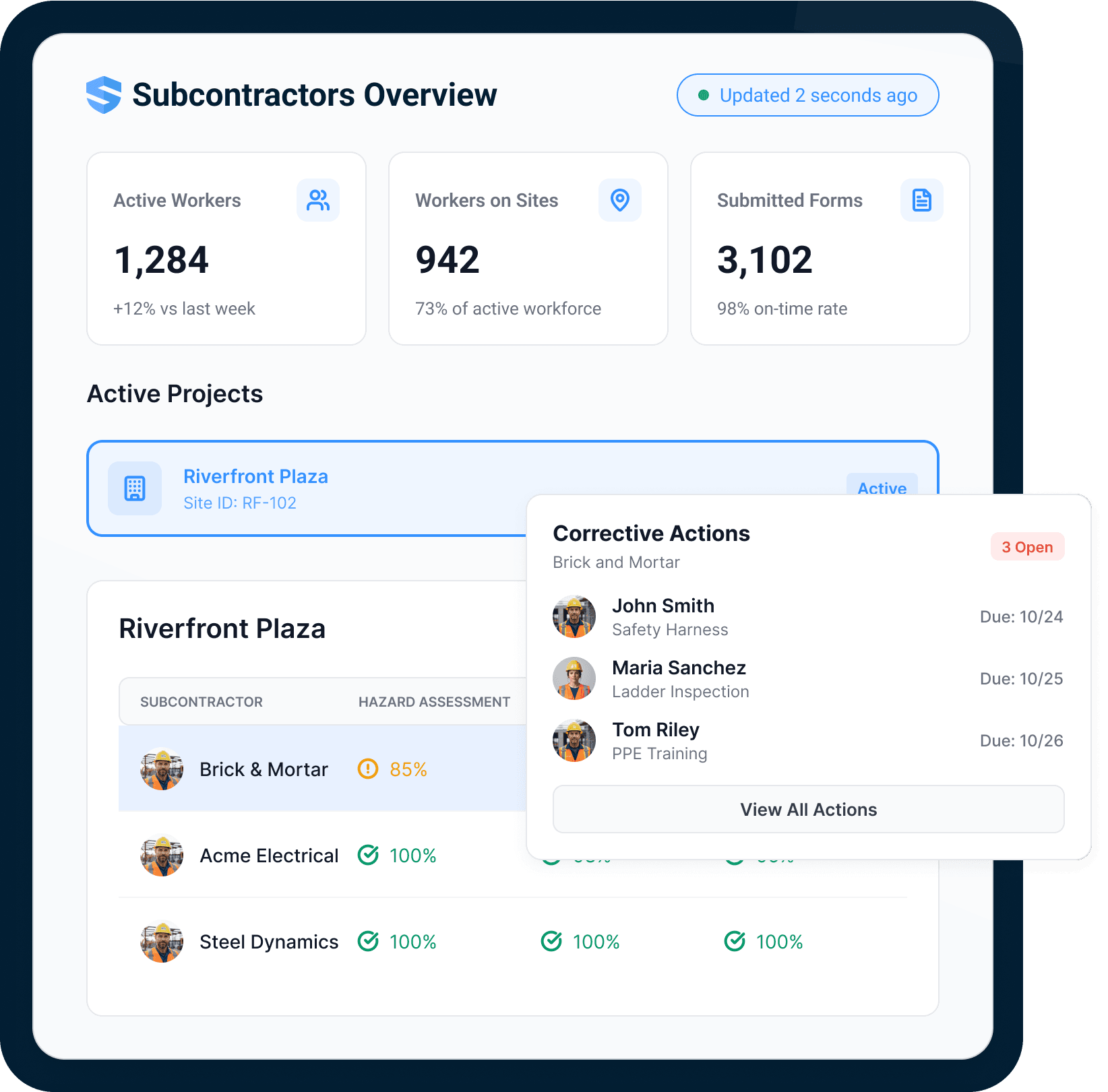
- 04offline mode
Field-First Design for Universal Adoption
"Usable for everyone in the company, from the president to the field worker." SALUS’s design philosophy starts with the person standing next to the excavator, not the person sitting at the desk. QR codes, offline mode, conditional logic — every decision removes friction for the end user.
Explore the feature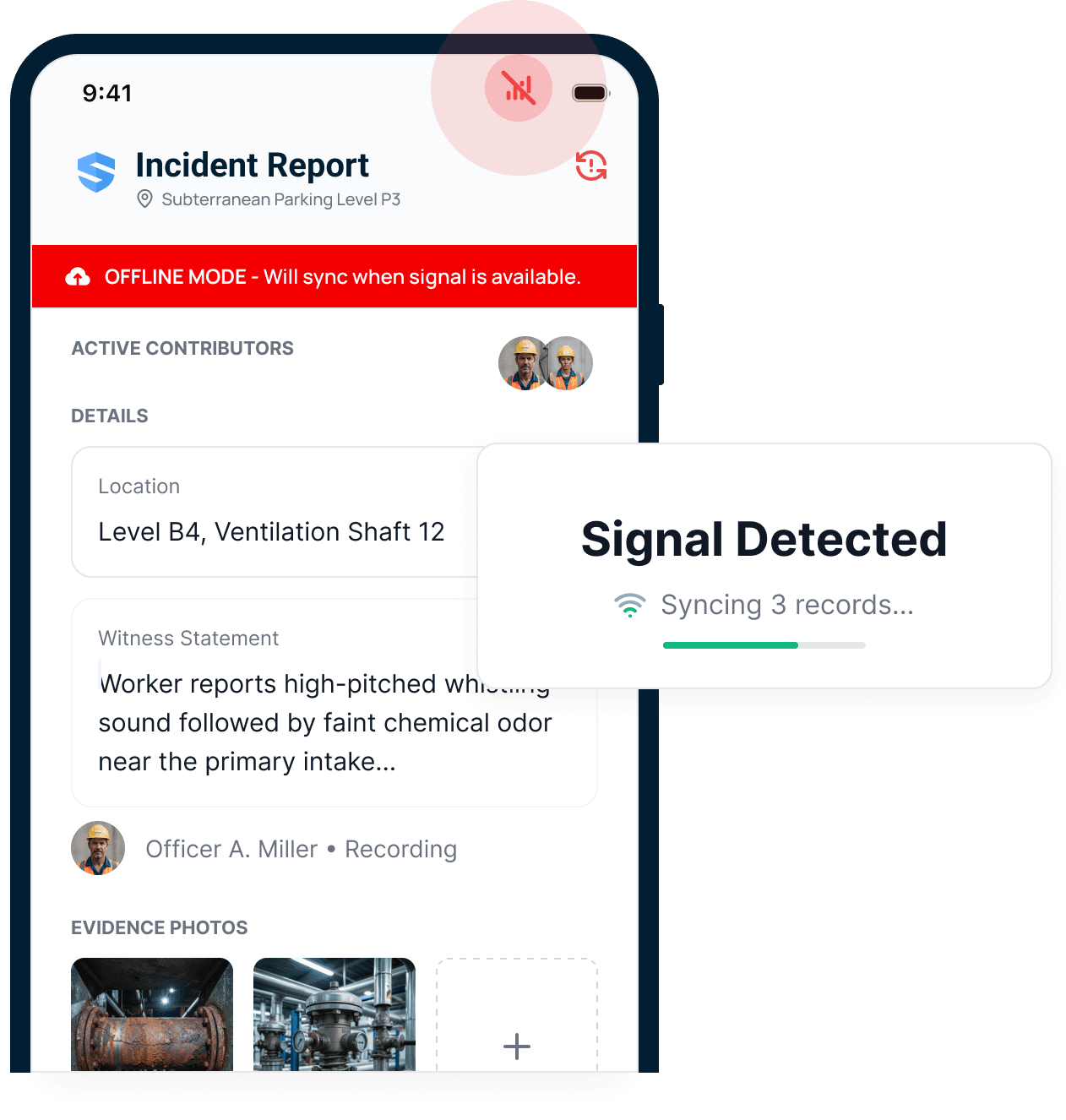
Use the crew-adoption playbook
See why making capture easier for the crew is what turns a reporting rollout into usable field intelligence.
Hear it from Aaron
More from Aaron Hamill
One of the big factors into our decision to move towards SALUS was finding a platform that was very usable for everyone in the company. We came from a software solution that was not necessarily the most user friendly at the worker level. So we really wanted something that was mobile focused. And we narrowed down a few options and SALUS really stood out. It’s a platform that works for everyone. From the president at the top of the company, to the managers and supervisors, down to the field worker level. We’ve seen a lot more field worker adoption since we implemented SALUS.
The other thing was rolling out digital submissions to our subcontractor base as well, which SALUS really stands out from some of the other providers, I think. So we’ve seen a lot of uptake from our subcontractor base in submitting documents on the site and forms using SALUS, and that saves our supervisors time from punching holes in paper and filing them in binders and sorting through everything.
The biggest factor, in my opinion, is it has to be usable for everyone in the company. Safety in general, it needs to be everyone on board. And if you want to really build a strong safety culture, everyone has a role to play. So, if the solution you’re using isn’t usable or easy to use at the end user level, you’re not going to get the adoption that you want. And if you don’t have the adoption, then the whole system is going to kind of fall apart, which is where we found ourselves with the previous solution that we were using. Comparatively I think we had maybe, 40 to 50 percent of our field workers actually using the system, and I would say we’re at about 80 percent with SALUS.